Matador Resources: Building Delaware Inventory Ahead of Production
By
Avik
on August 19, 2026
in
Articles
Inventory Is Growing Faster Than Production
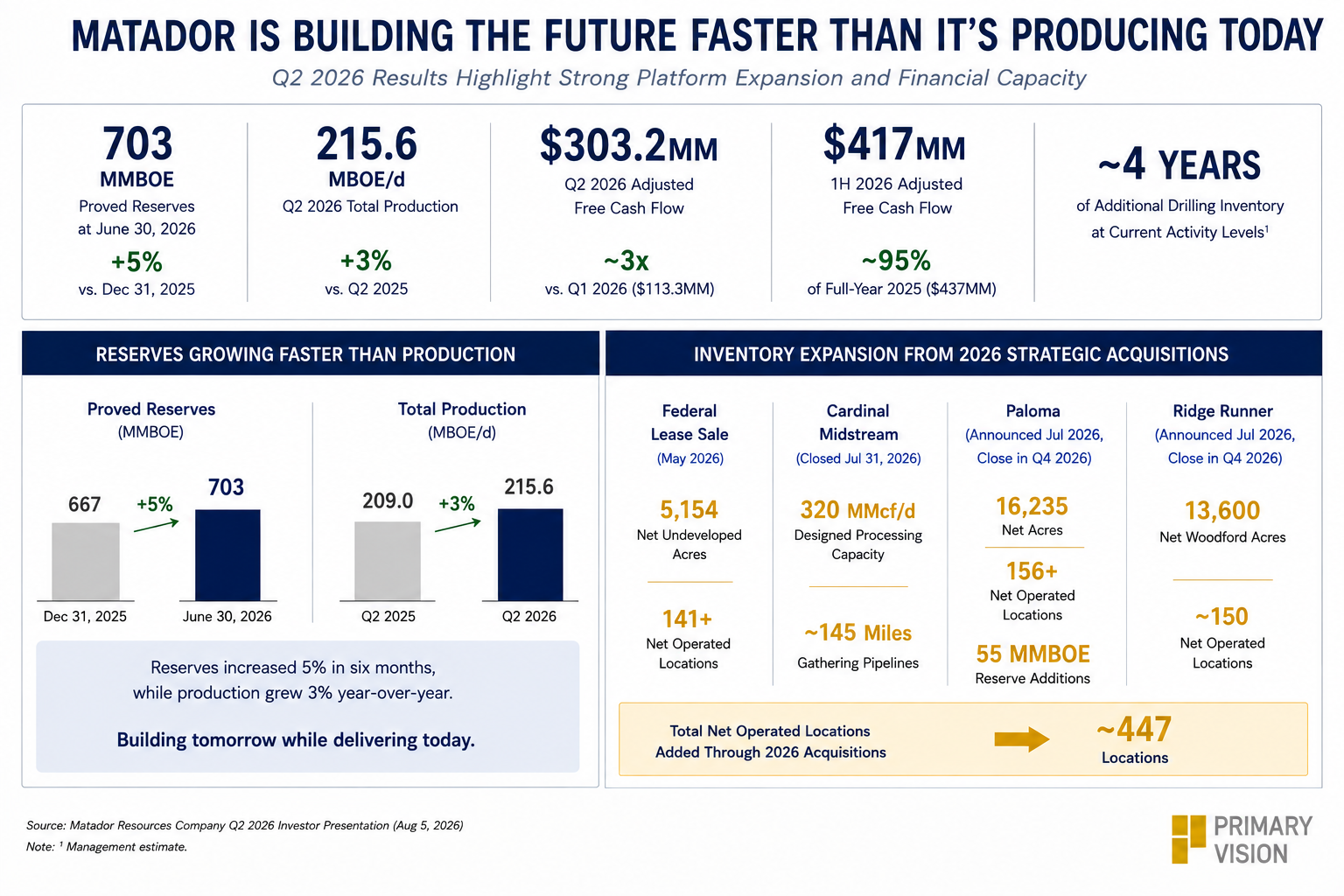
Matador Resources entered 2026 focused on expanding its Delaware Basin position, and the strategy is now showing up in the numbers. Proved reserves increased 5% in just six months, while Q2 total production grew 3% year over year. That divergence is important: Matador is adding future development capacity faster than it is growing current volumes.
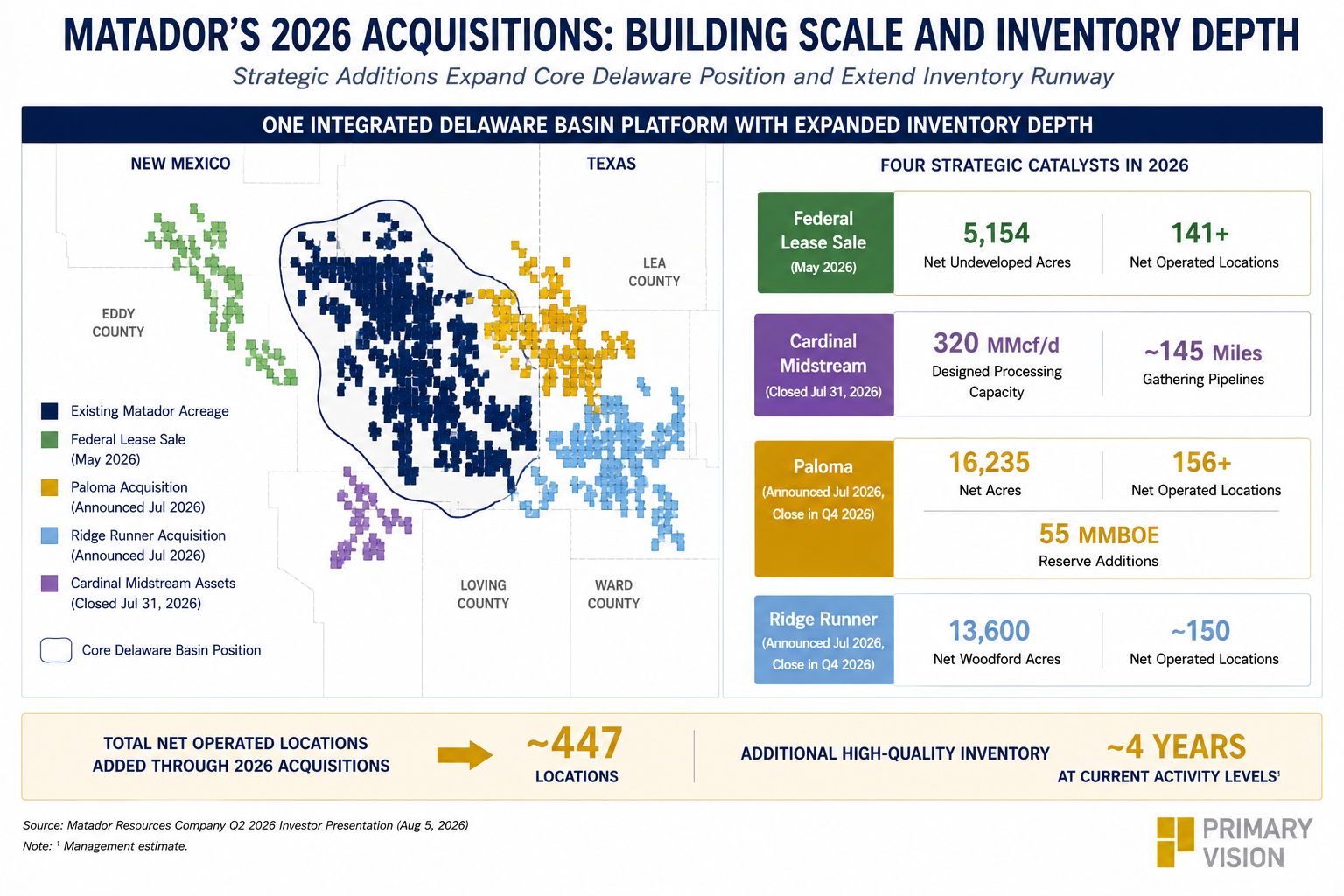
The acquisition program is driving much of that expansion. The Federal lease sale, Paloma and Ridge Runner transactions together add roughly 450 operated locations, while management expects the completed deals to provide approximately four additional years of drilling inventory at current activity levels. More importantly, Matador expects the Federal and Paloma assets to deliver 20% to 30% higher 12-month cumulative oil production and 15% to 20% higher EUR per lateral foot than its historical inventory averages.
The Quality of the Inventory
This is where the strategy becomes more interesting than simply adding acreage. Matador expects well costs on the Federal and Paloma properties to be 15% to 20% below its current drilling and completion cost per completed lateral foot. That combination of lower costs and higher productivity could make the newly acquired inventory more competitive for capital than some of the company's existing locations.
Ridge Runner adds another dimension. Once completed, the transaction would bring Matador's Woodford position to approximately 50,000 contiguous acres, giving the company another development option within the Delaware Basin. Management expects the Woodford acquisitions to contribute approximately 150 operated locations, but the more important point is the additional depth they provide to the company's longer-term development program.
Midstream Expands, Too!
Matador is also strengthening the infrastructure around that inventory. San Mateo's Q2 natural gas gathering volumes increased 18% year over year, while processing volumes increased 14%. The Cardinal Midstream acquisition subsequently expanded San Mateo's designed processing capacity to more than 1 Bcf/d and added approximately 145 miles of gathering pipelines.
This matters because inventory only has value if it can be developed and moved efficiently. Matador's upstream and midstream expansion therefore reinforces the same strategy: build more locations while improving the infrastructure needed to develop them.
Cash Flow Support
The financial picture also improved materially in Q2. Adjusted free cash flow nearly tripled sequentially, rising from $113.3 million in Q1 to $303.2 million in Q2. First-half adjusted FCF reached roughly 95% of the full-year 2025 level, giving Matador greater capacity to fund acquisitions and reduce debt.
At the same time, Matador raised its 2026 production guidance midpoint by 4%. Total CapEx is now expected to be only about 1% below 2025, while D/C/E CapEx increased ~9% from the May estimate and midstream CapEx increased roughly 48%. The capital shift therefore appears directed toward integrating and developing the expanded platform rather than simply chasing production growth.
Takeaway
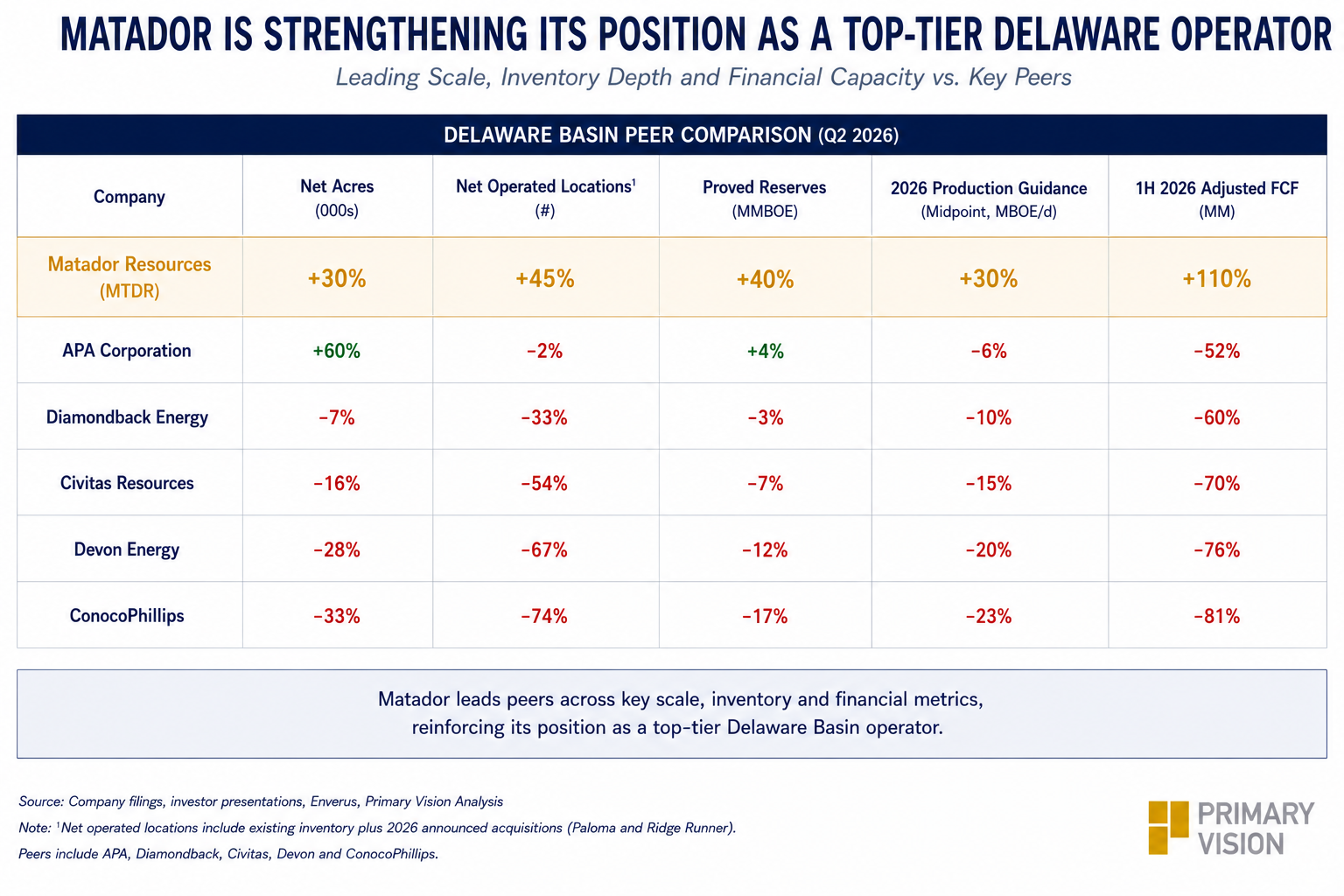
That is the key change at Matador: more inventory, better-quality locations and greater infrastructure support, with production growth still being managed within a disciplined capital framework. Part 2 will put that expanded inventory into perspective against Matador's Delaware Basin peers.
Upgrade to Pro Today and get…
• This article — plus dozens more each month, all within our full Research Module
• Frac Hits — our National-Level Frac Spread Count and Frac Job Count, updated weekly
• Frac Operator Monitor — detailed FSC & FJC by operator
• And so much more, designed to help you track, forecast, and outperform