Outlook Explained
In Q2, RPC’s management cited improving pricing and better activity visibility during the quarter, creating opportunities to support targeted growth through a modest increase in capital spending. While commodity price volatility continues to warrant caution, RPC believes its strong balance sheet provides the flexibility to invest.
Higher investment need not compromise its disciplined focus on full-cycle shareholder returns, meaning it aims to generate attractive returns across the entire OFS cycle. The company also recently announced the planned leadership transition following CEO Ben Palmer's retirement, while emphasizing continuity in strategy and capital discipline.
Segment Performance
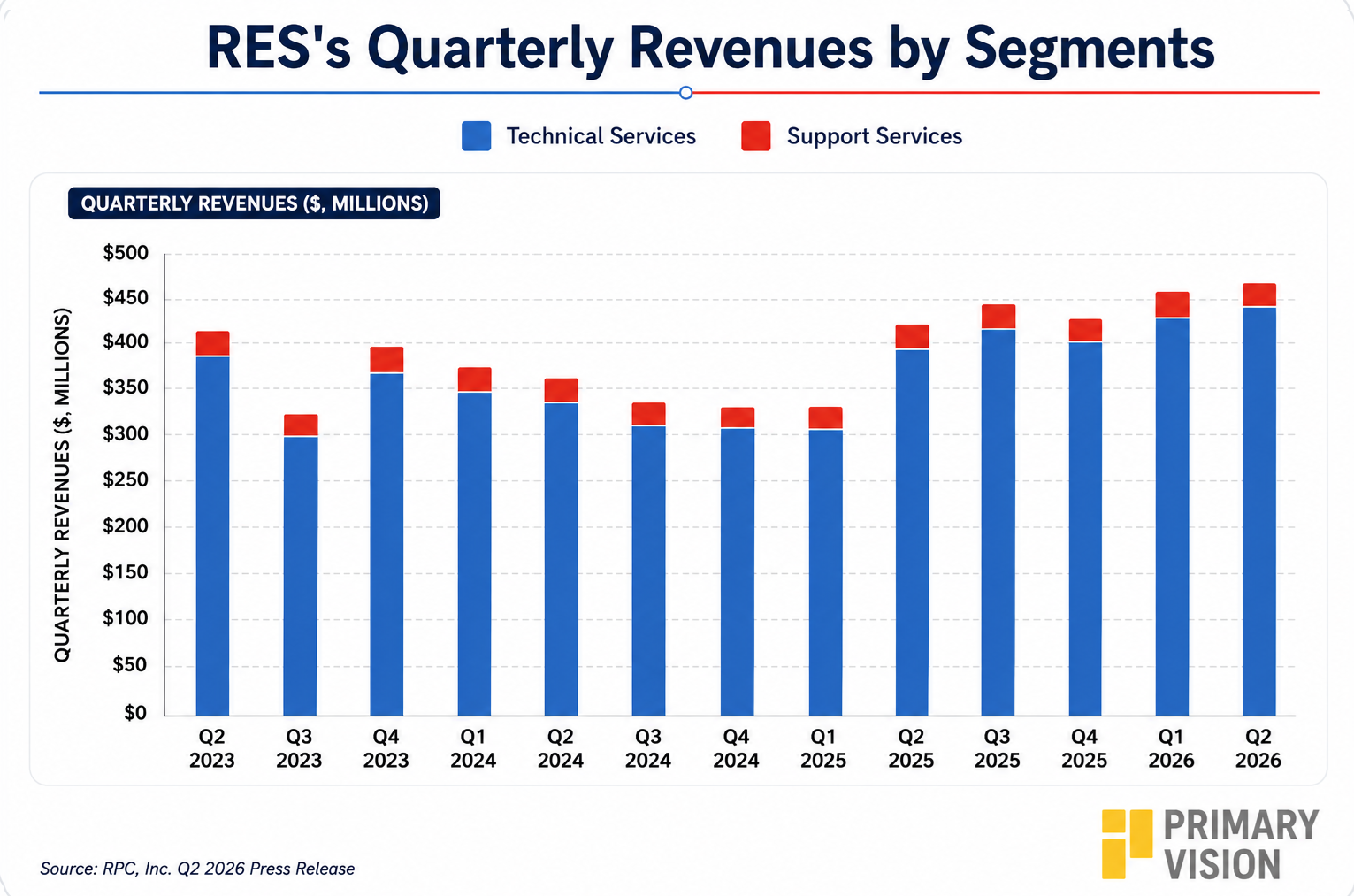
FTI’s Technical Services segment continued to drive its recovery. Segment revenue increased 1% sequentially, while operating income jumped 72%, supported by stronger performance across pressure pumping, cementing, snubbing, and downhole tools. It was partially offset by weaker wireline activity.
Support Services delivered an even stronger top-line recovery, with revenue increasing 11% and operating income rising by $1.9 million. This was driven primarily by a 21% increase in Rental Tools activity and the segment's favorable fixed-cost operating leverage.
Cash Flows & Capital Allocation
RPC’s cash flows weakened during 1H 2026 due to a significant working capital build tied to higher customer activity and collection timing. The company modestly increased capital spending to support targeted growth while maintaining a strong balance sheet, ending the quarter with $179.5 million of cash. RPC also extended the maturity of its revolving credit facility to June 2031, further strengthening its financial flexibility.
Thanks for reading the RES Take Three, designed to give you three critical takeaways from RES's earnings report. Soon, we will present a second update on RES earnings, highlighting its current strategy, news, and notes we extracted from our deeper dive.