







Articles
Can we talk about Gold please?
By Osama on October 14, 2026 in Free Articles
Gold should, in theory, be flourishing. The conflict in the Middle East has disrupted energy trade, oil is again threatening inflation, and investors face an increasingly uncertain geopolitical landscape. Yet spot gold stood near $4,152 an ounce on October 14, having traded above $5,000 earlier this year. The apparent contradiction has a plausible explanation: higher oil prices keep inflation risks alive, which raises the prospect of restrictive US monetary policy. Higher Treasury yields and a stronger dollar then compete with gold, which produces no income. The difficulty is that history supplies several cases in which gold rallied despite inflation and rising rates—and others in which it initially sold off during extraordinary danger.
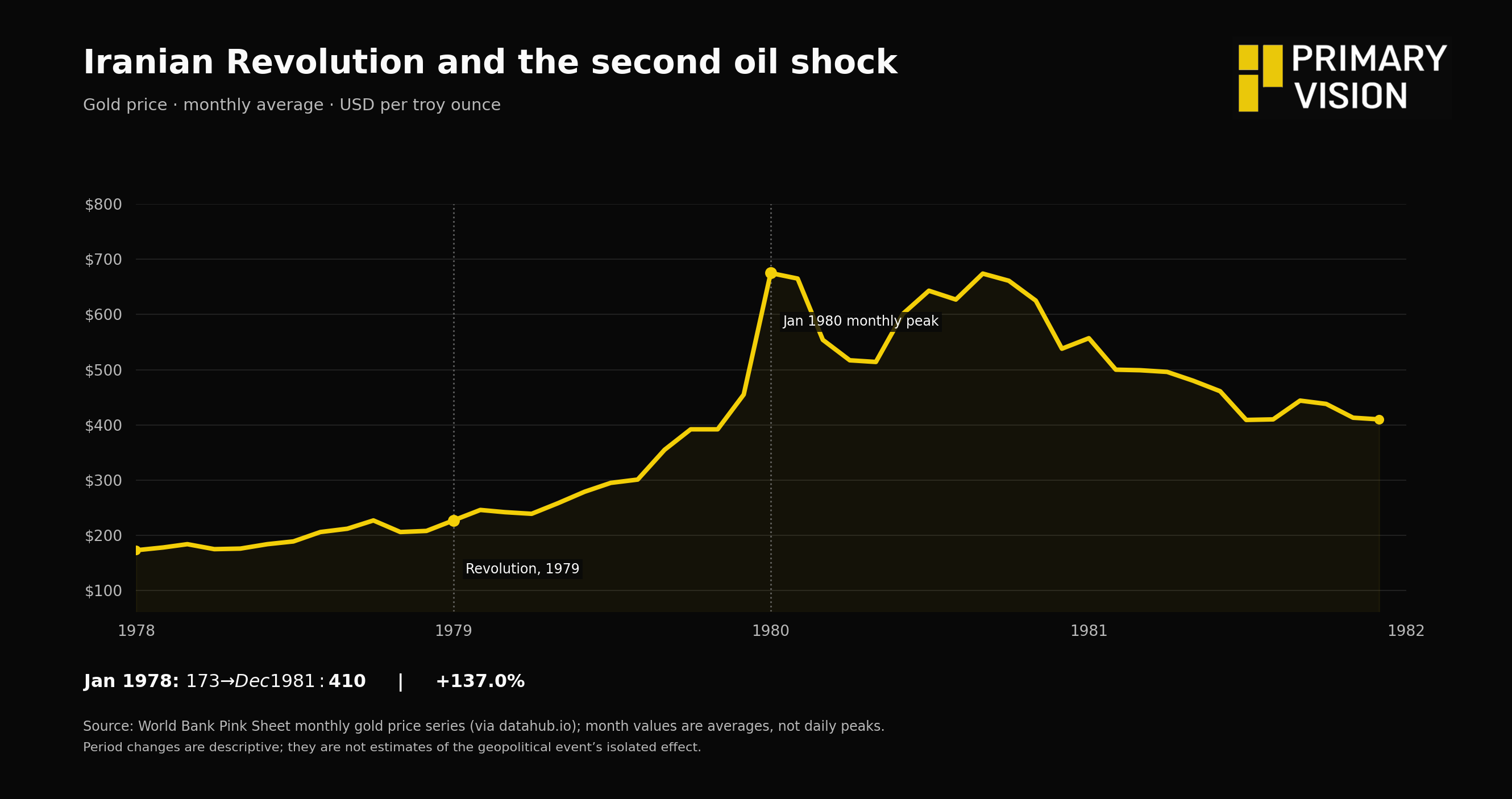
The Iranian Revolution and second oil shock show why nominal interest rates alone cannot explain gold. In the annual-return series used for the accompanying historical charts, gold advanced 120.6% during 1979 and another 29.6% in 1980 before falling 32.8% in 1981. Oil shortages and inflation did not merely create a temporary demand for protection against conflict; they raised doubts about the purchasing power of money. When investors lack confidence that policy will preserve that purchasing power, higher nominal yields offer limited reassurance. The reversal in 1981 is just as significant as the rally: gold responds to the perceived credibility of policy as well as the severity of the original shock.
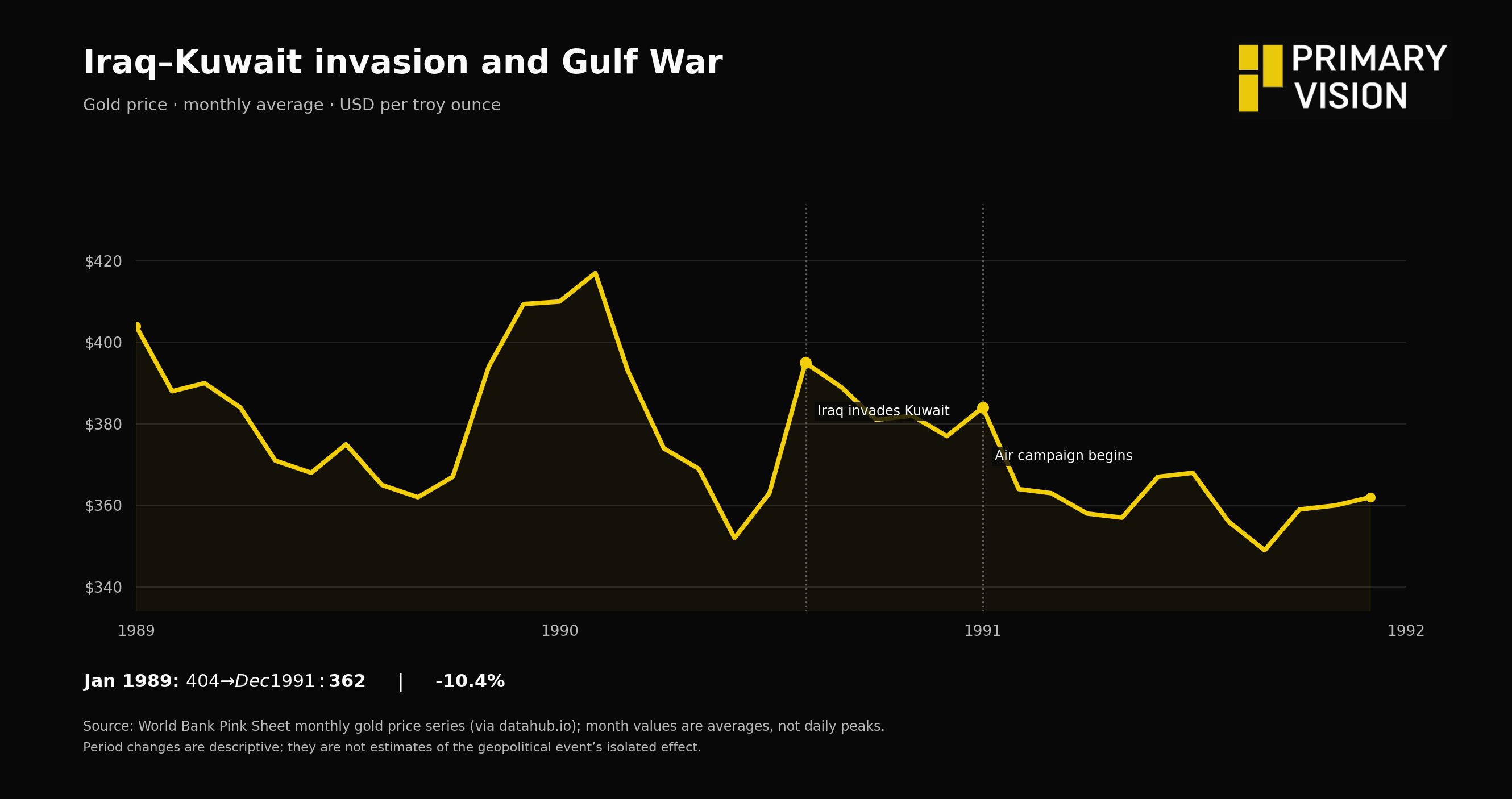
The Gulf War demonstrates the opposite outcome. Iraq’s August 1990 invasion of Kuwait initially lifted gold, but the premium proved fleeting. Gold finished 1990 down about 3.7% in the annual series and lost another 8.6% in 1991. Those figures do not measure the return from invasion day to ceasefire: they show that fear did not translate into a sustained annual advance. Once markets began reassessing the military trajectory and the wider economic consequences, the early move reversed. A geopolitical event can be enormously consequential without permanently repricing gold.
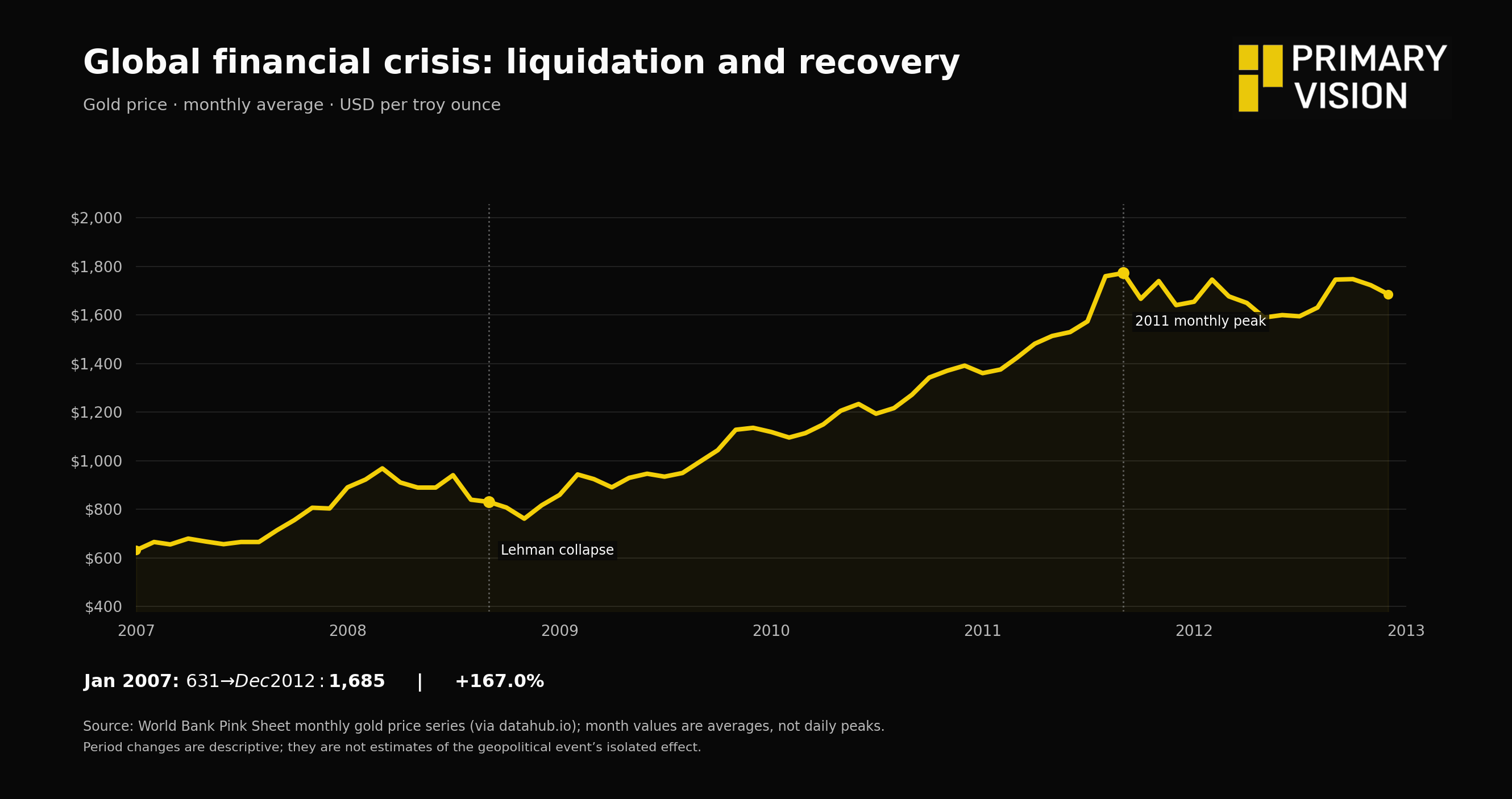
During the 2008 financial crisis, the market introduced a different mechanism: the scramble for dollars. When funding markets seized up, investors sold liquid positions, including gold, to meet collateral calls and raise cash. But the liquidation phase was followed by the Federal Reserve’s emergency easing and an increasingly uncertain monetary outlook. Gold gained roughly 4.0% in 2008 in the selected annual series, then climbed 25.0% in 2009 and 30.6% in 2010. Looking at September or October 2008 alone would miss the mechanism that subsequently supported the metal. The crisis initially strengthened the demand for cash; its aftermath raised questions about the future purchasing power of cash.
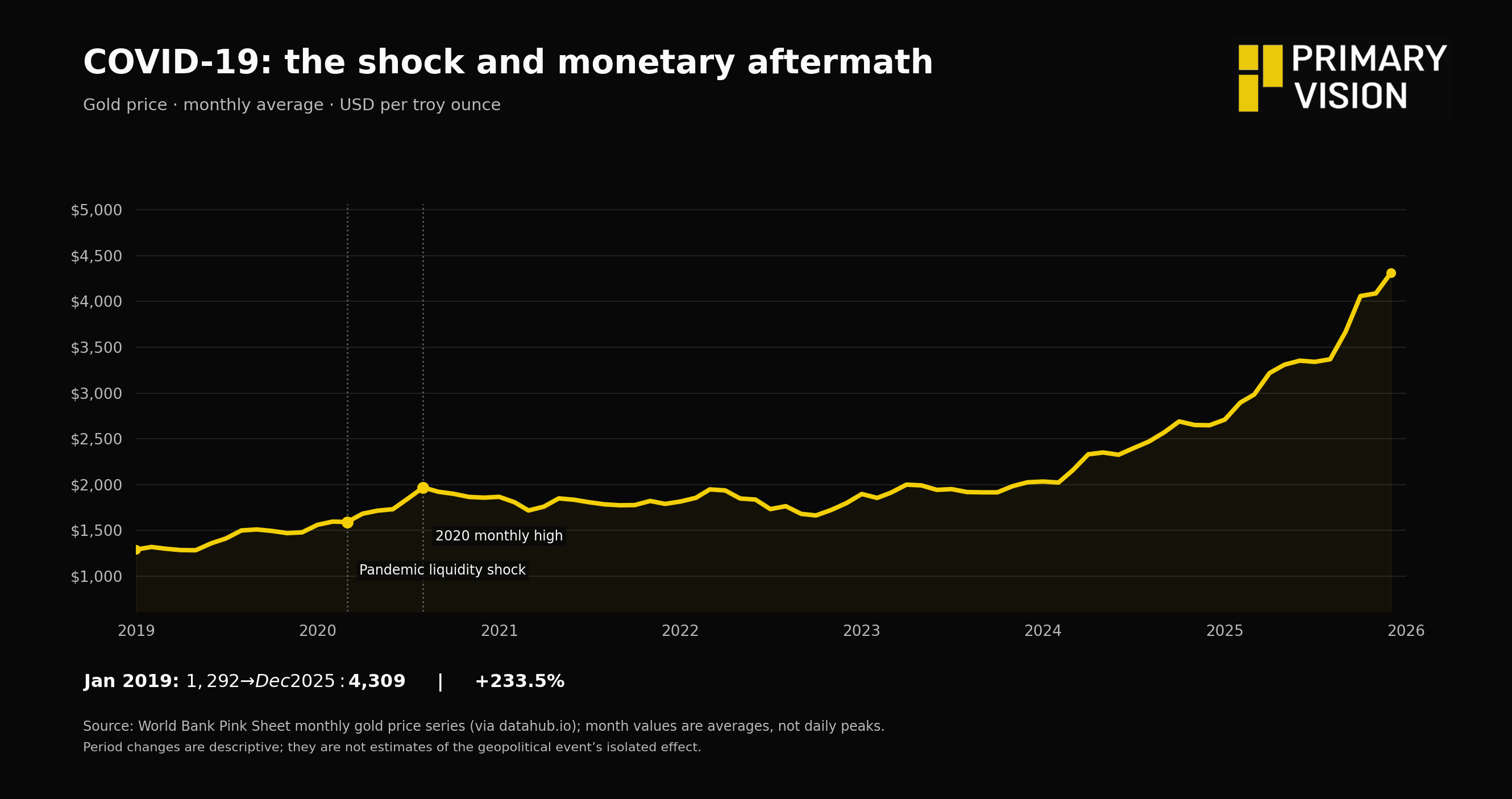
COVID-19 followed a recognisable, though not identical, sequence. Gold was sold during the March 2020 liquidity shock before rebounding as interest rates collapsed and central banks injected liquidity. It gained roughly 25.8% in 2020. But stopping there would be misleading. From the end of 2019 through the end of 2025, the gold-price series underlying the charts records a cumulative advance of approximately 193%. That entire gain cannot sensibly be attributed to the pandemic: inflation, monetary tightening, the invasion of Ukraine, reserve diversification and later political and fiscal concerns intervened. The useful historical lesson concerns the path of prices through successive monetary regimes, not a six-year “COVID return.”
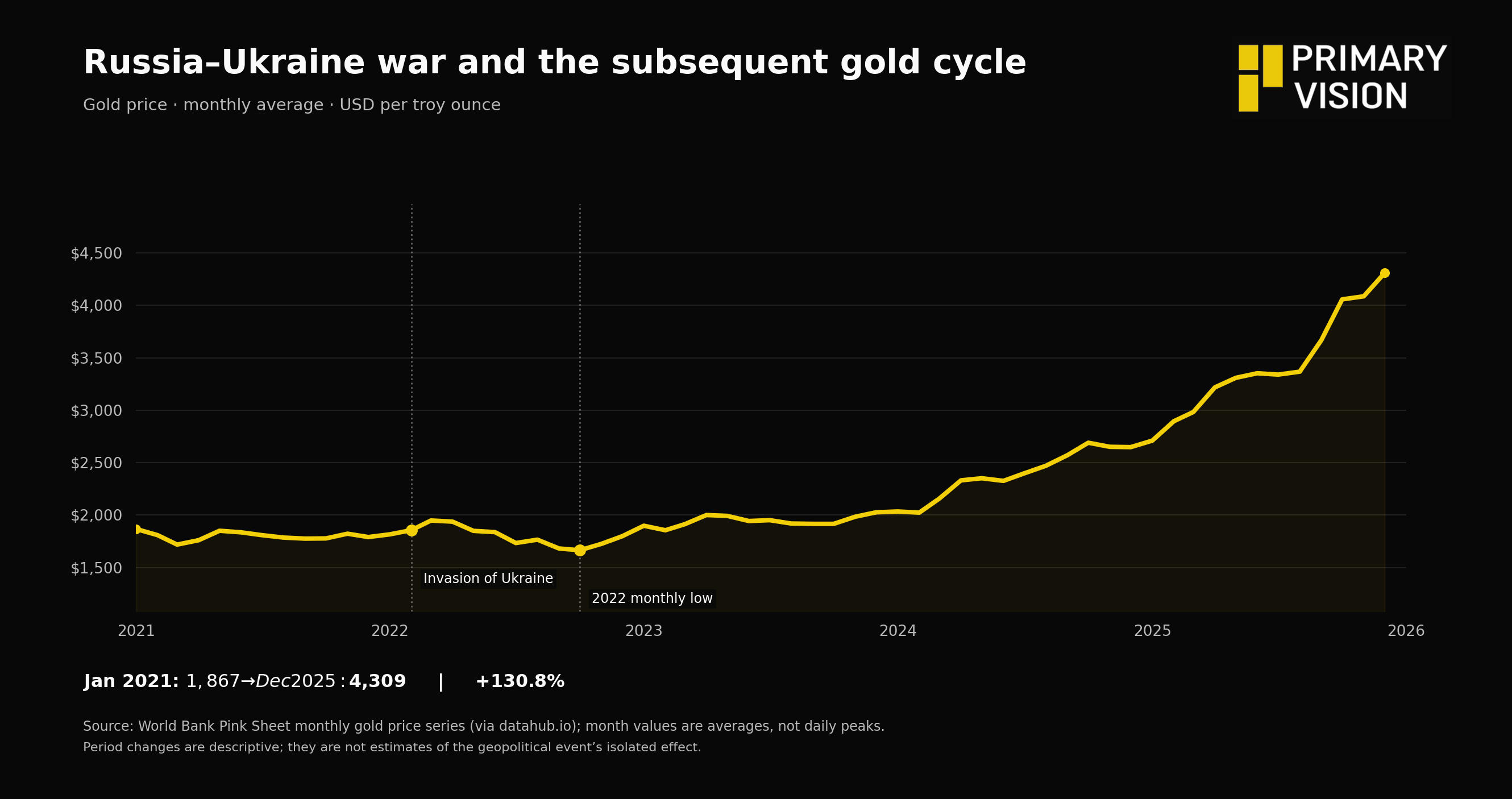
Russia’s February 2022 invasion of Ukraine makes that point especially clearly. Gold initially rose as war and energy-price fears intensified, only to face aggressive US monetary tightening. On the annual series used here, gold finished 2022 approximately 2.1% higher; other benchmarks record a slightly different, similarly subdued result. Its subsequent advances—13.1% in 2023, 27.2% in 2024 and 64.6% in 2025 in that same series—occurred during an ongoing war but cannot be assigned solely to it. The dollar, real yields, central-bank accumulation and fresh geopolitical shocks all influenced those later moves. The war’s duration and gold’s response to the war are not interchangeable things.
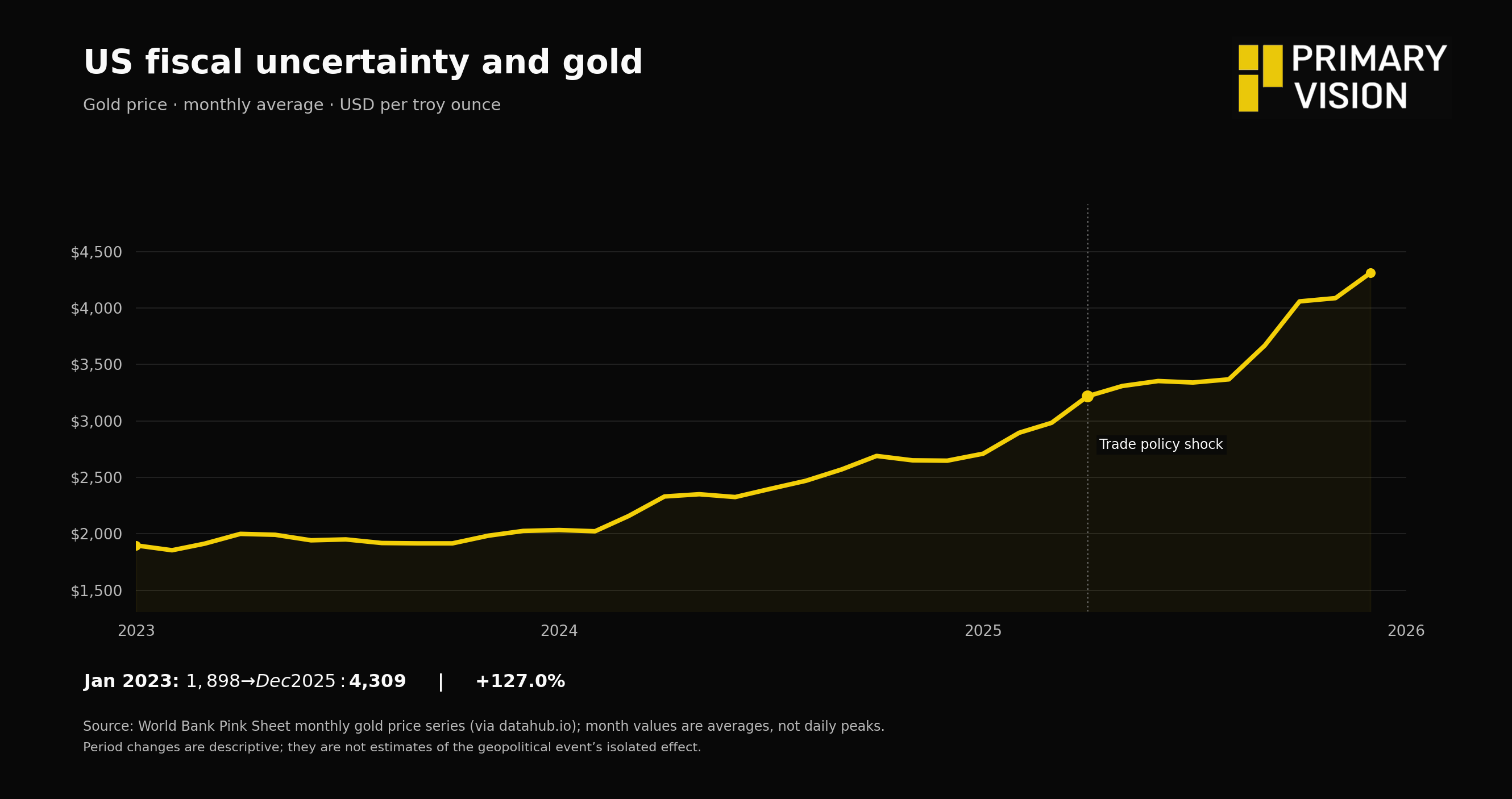
That takes us to 2025, when gold’s large advance challenged the simplistic assumption that higher government borrowing costs always drive investors out of bullion. High Treasury yields can reflect attractive expected real returns and confidence in dollar assets; alternatively, they can include compensation for fiscal deficits, inflation uncertainty and growing term premiums. In the second case, investors may seek gold even while yields rise. Recent research has identified unusually persistent gold ETF inflows in parts of Europe during periods of rising sovereign yields, consistent with—but not proof of—fiscal anxiety becoming part of the demand story.
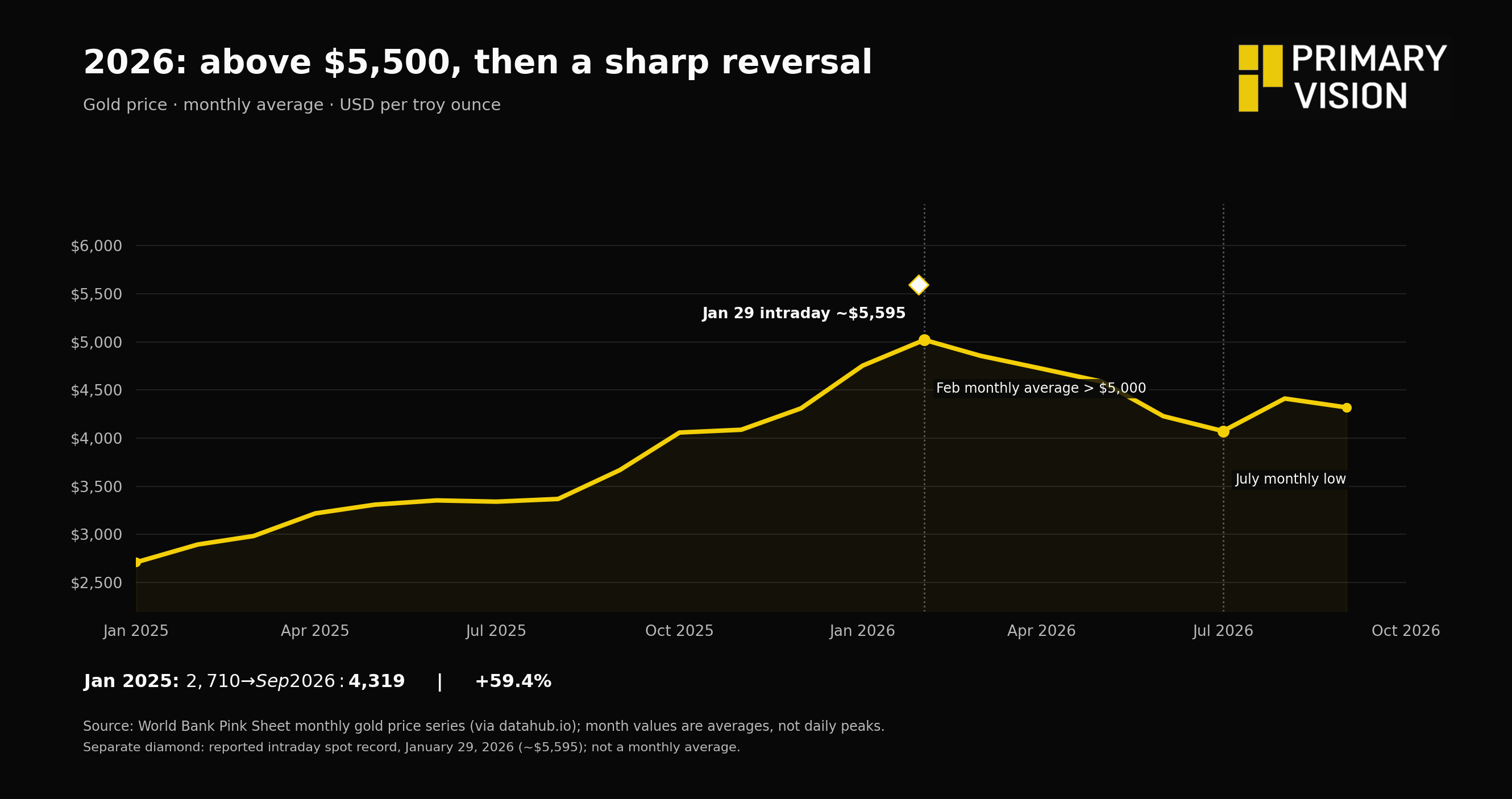
The present reversal deserves the same two-sided analysis. The World Gold Council records a comparable gold benchmark high of $5,405 on January 29, 2026, against $4,176 at September’s close, a decline of 22.7%; an intraday high quoted by other feeds was higher, and must not be mixed with that benchmark. Gold then traded near $4,152 on October 14. During September alone it lost 8.5%, as the US ten-year Treasury yield rose 53 basis points to 5.3% and the dollar index gained 2%. Yet global gold ETFs attracted $10 billion while managed-money futures positions fell by about $12 billion. This was not a unanimous flight from gold. Longer-horizon holders were buying into weakness while leveraged investors cut exposure, making the price a product of competing time horizons as well as competing macroeconomic forecasts.
The remaining question is whether the Treasury market can remain an alternative refuge indefinitely. A higher Treasury yield may attract capital today, but it also raises the government’s refinancing costs. If investors eventually interpret increasing yields primarily as a premium for fiscal instability or declining currency credibility, a seemingly attractive nominal return may offer little reassurance about real purchasing power. That is not a claim that the United States faces an imminent funding crisis, nor that gold must rally whenever debt yields reach a particular level. It is a distinction between yields rising because American assets are trusted and yields rising because holding those assets requires greater compensation.
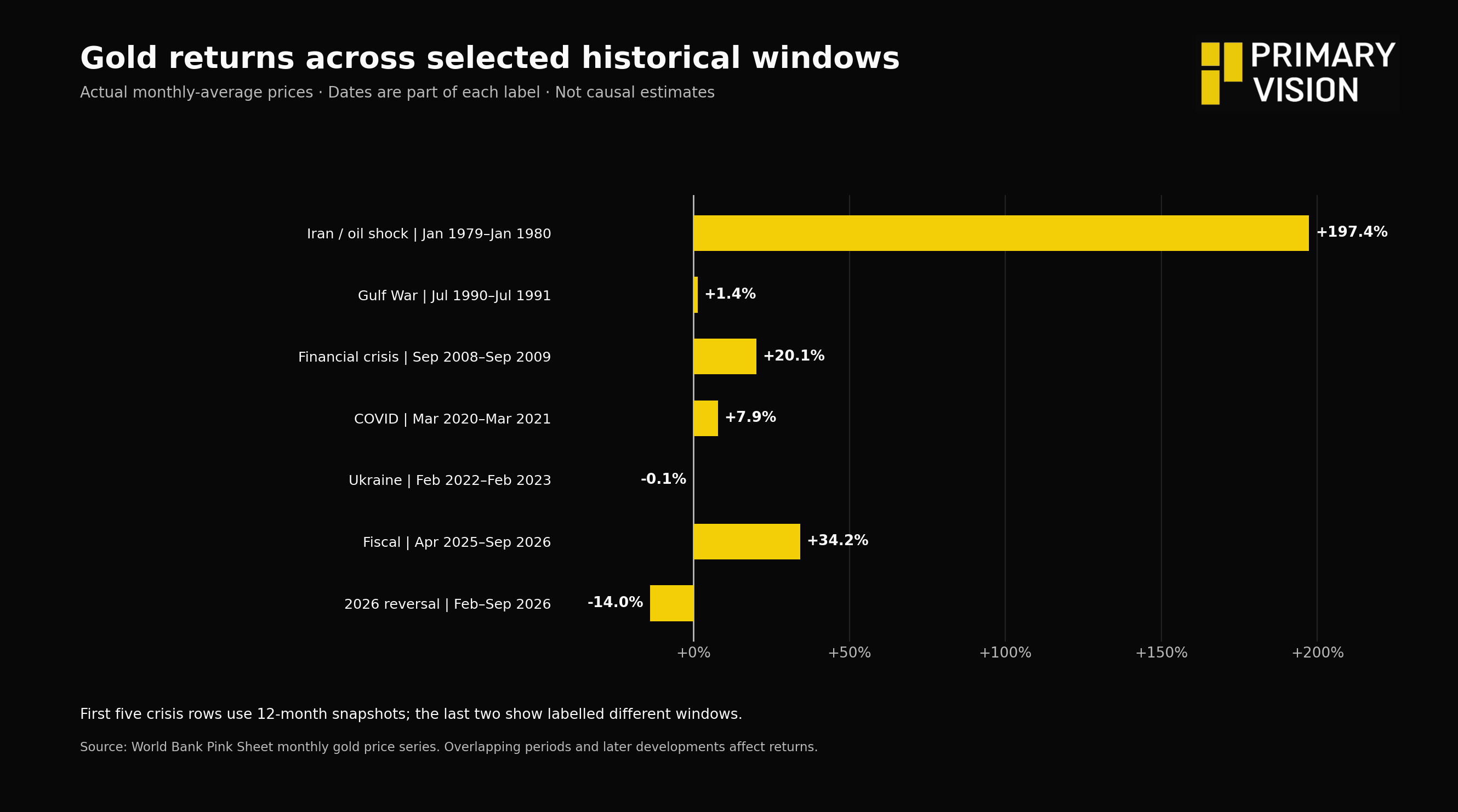
The historical episodes therefore point to a conditional conclusion. Gold need not rise during the opening months of war, and its sharpest advances may arrive during the policies and financial rearrangements that follow. For the present crisis, the critical evidence will be whether higher US yields continue to support the dollar and real returns—or begin to coincide with dollar weakness, rising inflation risk premiums and persistent demand for assets outside sovereign balance sheets. Gold’s next major move may depend less on the next battlefield headline than on how investors interpret the cost of financing the world’s principal reserve currency.
Tags: