







Articles
Is the US quietly saving global energy markets?
By Osama on August 6, 2026 in Free Articles
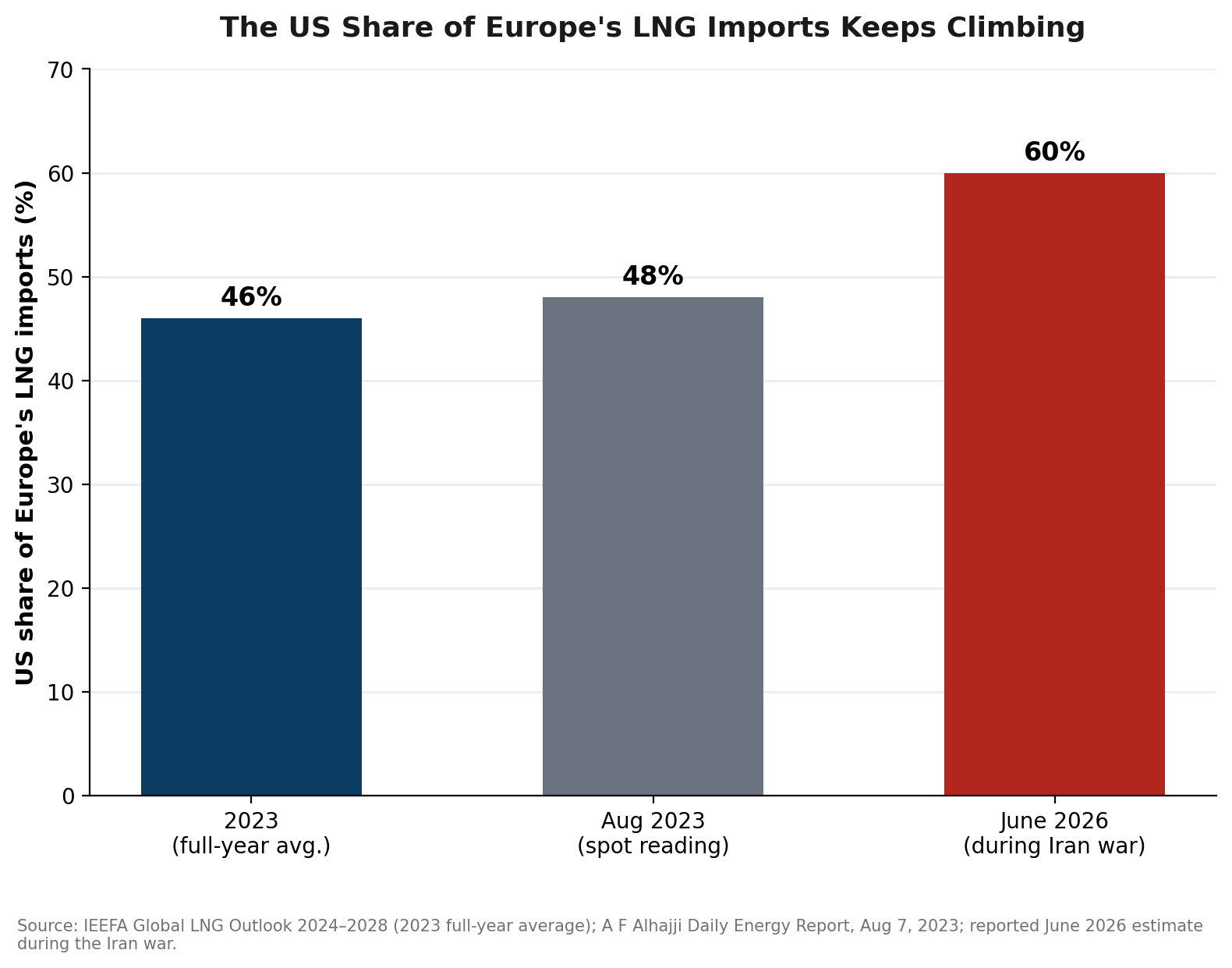
In June, the United States supplied roughly 60% of Europe's LNG imports and around 30% of Japan's oil imports. Much of that was circumstantial, a byproduct of the US-Iran war scrambling global supply chains rather than pure market dominance. But even with that caveat attached, it points to one of the most underappreciated geo-economic shifts of the last twenty five years. Pull the thread further and the story gets considerably bigger than a single statistic can hold.
Start with why the world needed the US this badly in the first place. Since late February, Iran has kept the Strait of Hormuz functionally closed, a corridor that normally carries about 20.5 million barrels of oil a day, roughly a fifth of global consumption, along with a substantial share of the world's LNG.
This is where the miracle of US shale industry comes in which has now saved Europe's energy security twice, once in 2022 after Russia weaponized its gas exports, and again now, in 2026, as the Gulf goes dark. That is not a coincidence of timing. It is what happens when a country spends two decades building the infrastructure to turn rock into fuel at a scale nobody else on earth can match.
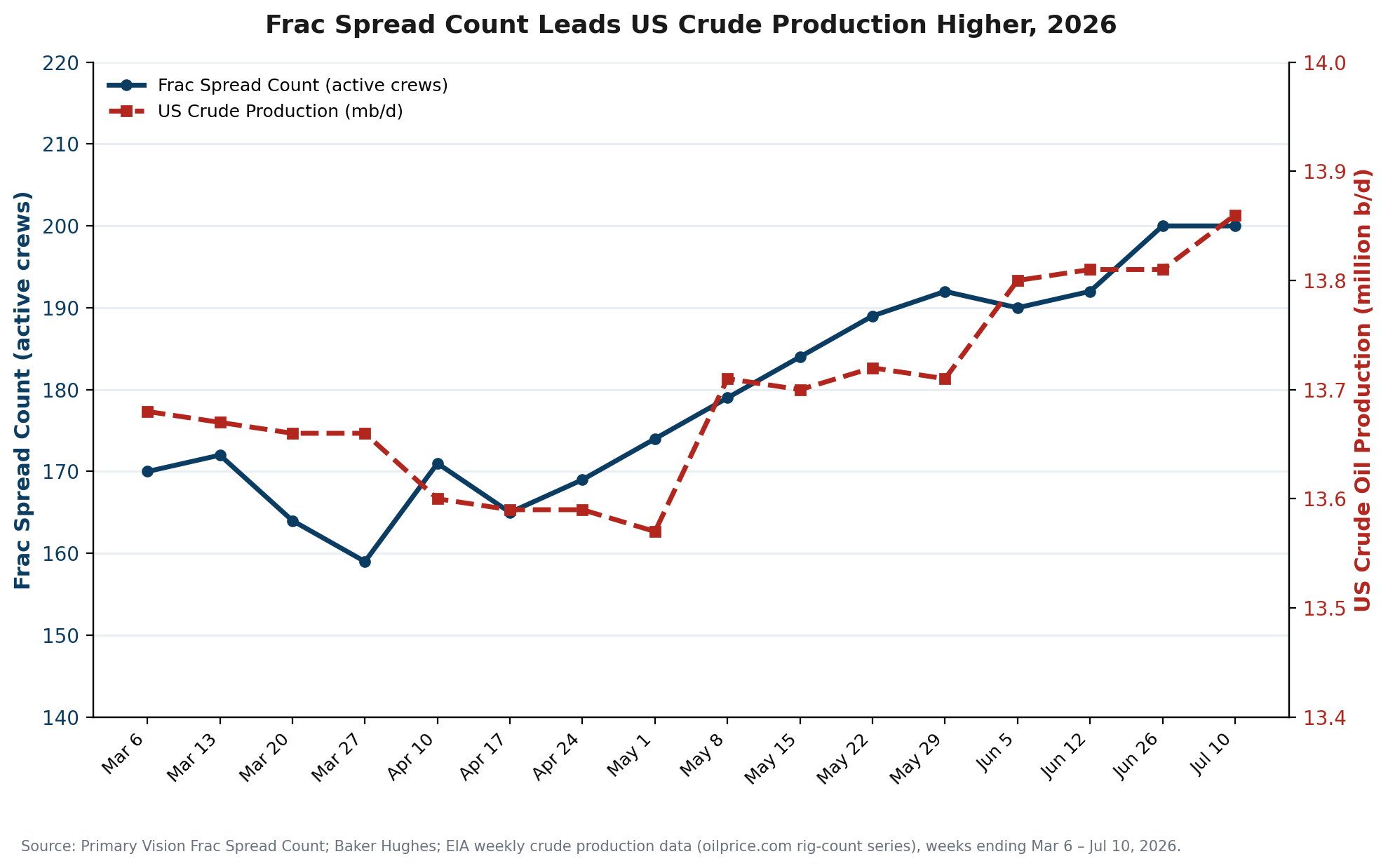
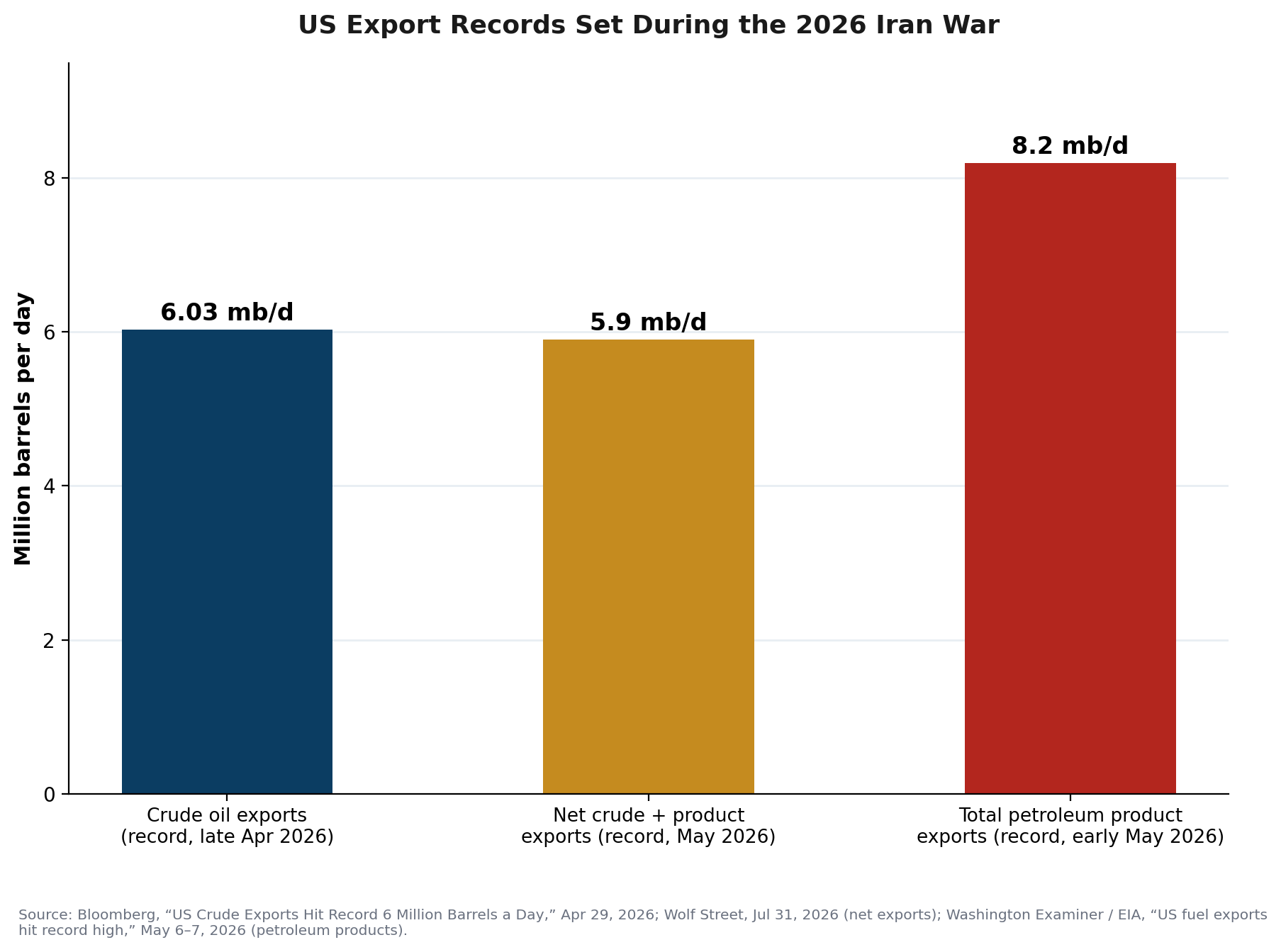
The oil side of the ledger is even starker. US crude exports hit a record above six million barrels a day this spring, up 58% from a year earlier, as buyers who would normally be sourcing from the Gulf turned to American cargoes instead. The Port of Corpus Christi alone saw outbound flows climb from roughly 2.2 million barrels a day a year ago to about 2.5 million now. Net exports, exports minus imports, hit a fresh record of 5.9 million barrels a day in May, partly because Washington kept draining the Strategic Petroleum Reserve and sending that oil straight into a market that was starving for it. US production itself climbed to a record 13.86 million barrels a day in July, more than either Saudi Arabia or Russia pump on their own.
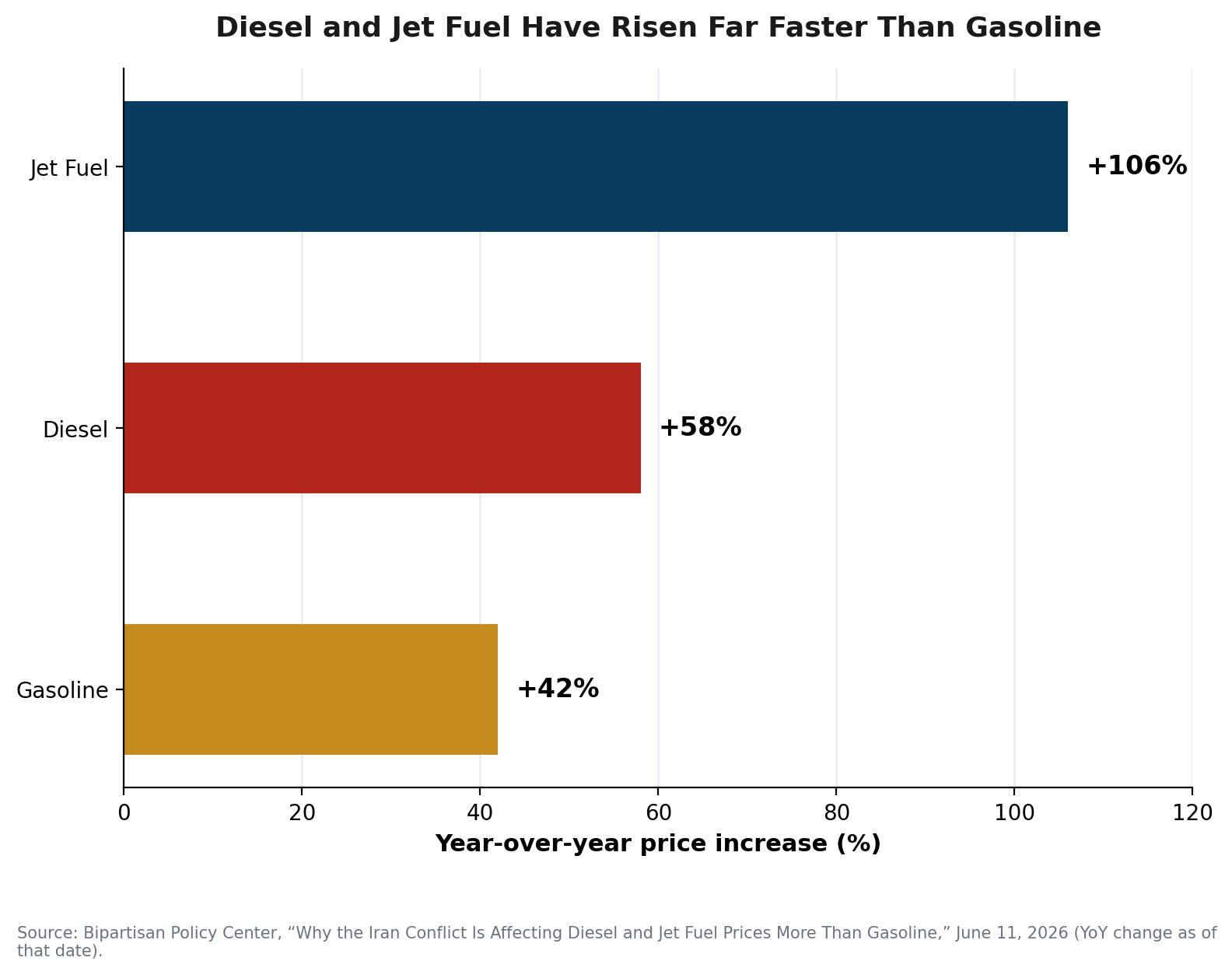
This was never just a crude oil story, though. It's a refined product story too, and that side gets less attention than it deserves. Gasoline, diesel, and jet fuel are what actually keep planes flying and trucks moving, and the Gulf disruption hit that market harder than it hit crude, because Middle Eastern crude yields more diesel and jet fuel per barrel than most crude the US pumps, and the region supplied roughly a fifth of the world's seaborne jet fuel before the war. Diesel prices are up 58% year on year, jet fuel up 106%. US refiners answered by running flat out. Weekly petroleum product exports hit a record near 8.2 million barrels a day in early May, up about 23% year on year, even as domestic pump prices climbed toward $4.54 a gallon and consumers here started grumbling. Refining margins on products like diesel and jet fuel have climbed to record highs in the process. American refiners kept exporting anyway, because Washington explicitly refused to restrict outbound shipments even while gasoline got expensive at home. That is a genuinely strange position for the US to be in.
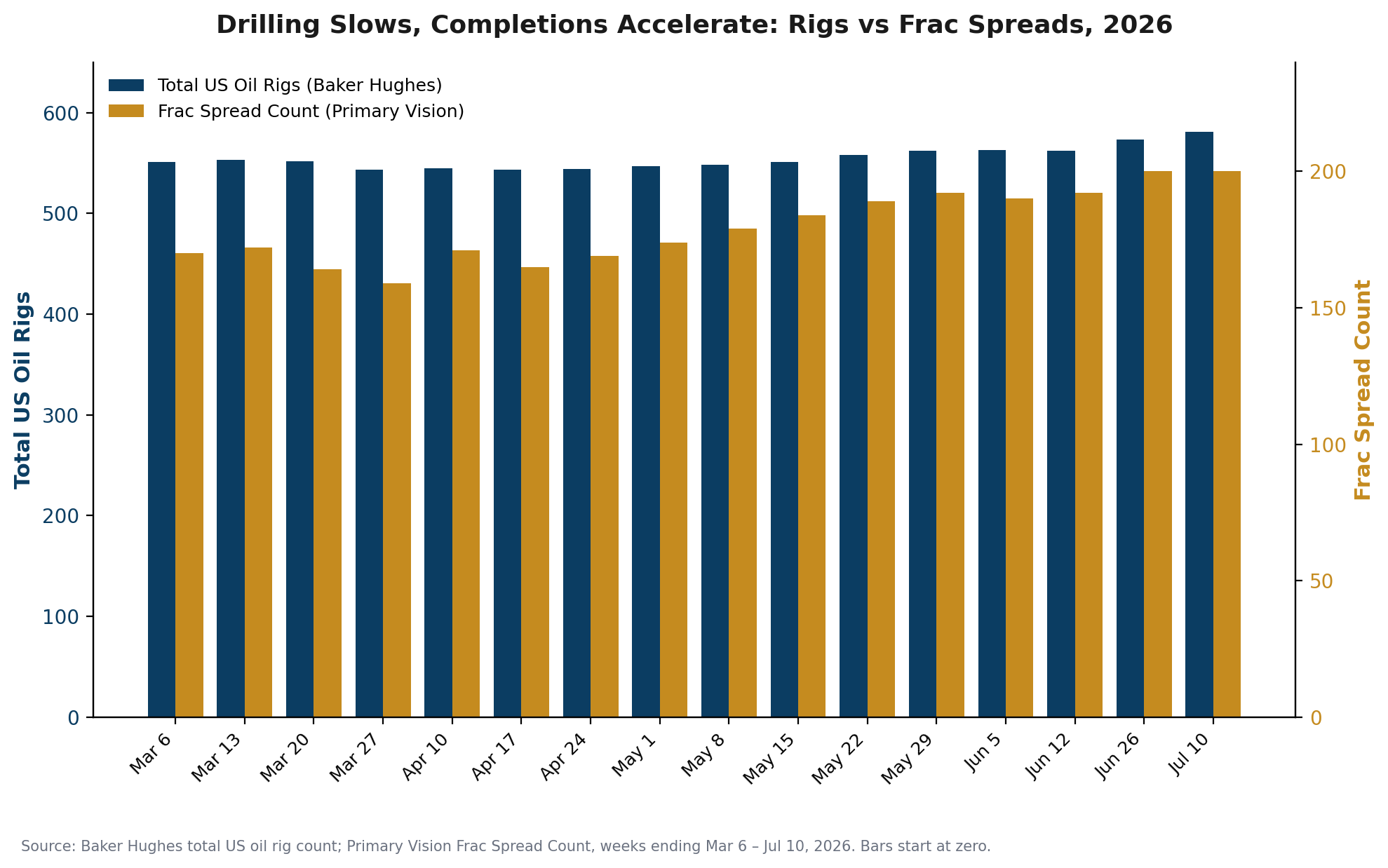
None of this happens without the completions side of shale, which is the part almost nobody outside the industry tracks. The number worth watching isn't the rig count, it's Primary Vision's Frac Spread Count. It functions as the industry's real-time pulse on output that's about to hit the market, since there is typically a lag of several months between spudding a well and it actually producing anything. The count climbed steadily through the first half of 2026, from 174 spreads in early May to 184 by mid-May, 192 by late May, and has now held at near 200 through late June and into July, even as the Baker Hughes oil rig count sat below where it was a year earlier. As per Primary Vision's own tracking, that count is expected to stay elevated in this 200-ish range for the next several weeks, which matters because it means the completions pipeline, not the drilling pipeline, is what's carrying near-term supply growth. That divergence tells the whole story in miniature. Operators weren't racing to drill new wells and gamble on a multi-year payback if prices reversed. They were finishing the ones already in inventory, the fastest possible way to turn existing assets into barrels the moment the world needed them.
Stack it all up and the pattern is consistent. Fuel, crude, and gas all point the same direction, toward a country that spent two decades quietly building spare capacity nobody thought it would need, and is now the reason a war in the Gulf hasn't turned into a full-blown global shortage. It isn't a headline anyone is chasing, because it isn't a single dramatic event. It is a decade of drilling, fracturing, and pipeline-building that turned into an emergency reserve for the entire planet, and most people only notice it when someone puts a number on it.
Tags: