






Articles
- BLOG / Articles / View
- Articles
Market Sentiment Tracker: Three Major Challenges for the Global Economy in 2027
By Osama on November 24, 2026 in Market Sentiment
As 2027 approaches, three developments warrant closer attention: rising transportation costs driven by geopolitical instability, Japan’s monetary tightening and its implications for global capital flows, and growing vulnerabilities across AI valuations and private markets. Their interaction could have profound consequences for global economic growth, financial stability and, ultimately, energy demand.
Consider an economy importing one million barrels of oil daily. Even if international oil prices decline by $10 per barrel, an equivalent increase in transportation costs would completely neutralize the benefit, representing $3.65 billion annually. Given the geopolitical outlook, shipping companies and insurers may be reluctant to substantially reduce their risk premiums. Disruptions across multiple maritime chokepoints mean that geographical diversification of energy supplies may itself become increasingly expensive.
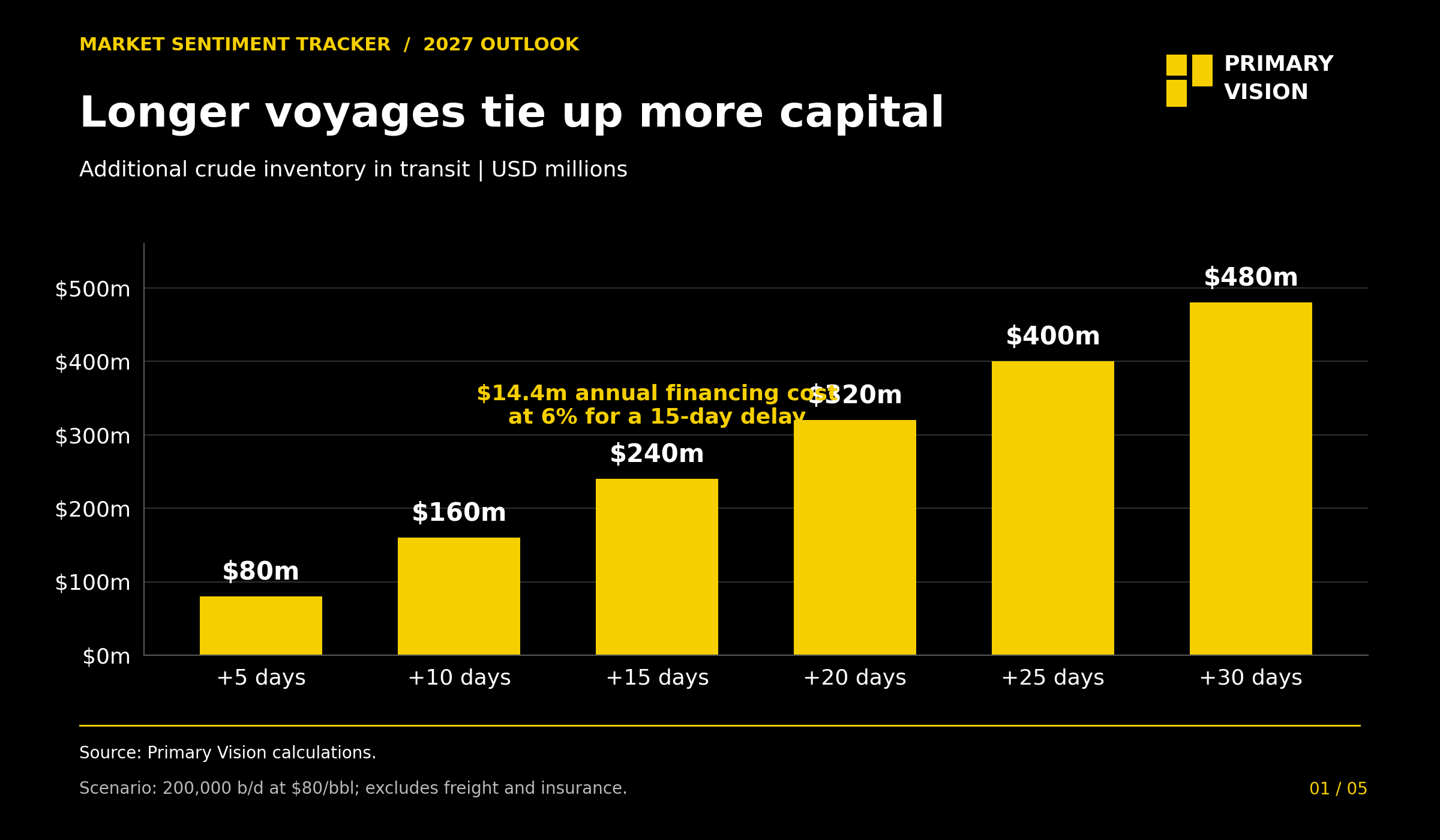
There is another dimension to this that receives relatively little attention: working capital. A refinery importing 200,000 barrels daily at $80 per barrel would need to finance an additional $240 million worth of oil in transit if shipping times increased by 15 days. At a 6% financing rate, that translates into $14.4 million in additional annual costs, without any change in production, consumption or commodity prices. For smaller commodity-importing economies already struggling with dollar shortages, this presents a particularly difficult situation. Longer shipping routes increase the amount of foreign exchange tied up in financing imports, even if import volumes remain unchanged.
There is also a lag involved. IMF research across 143 countries found that doubling freight rates increases inflation by around 0.7 percentage points, peaking after a year. Some inflationary pressures in 2027 could therefore originate from disruptions that occurred in 2026.
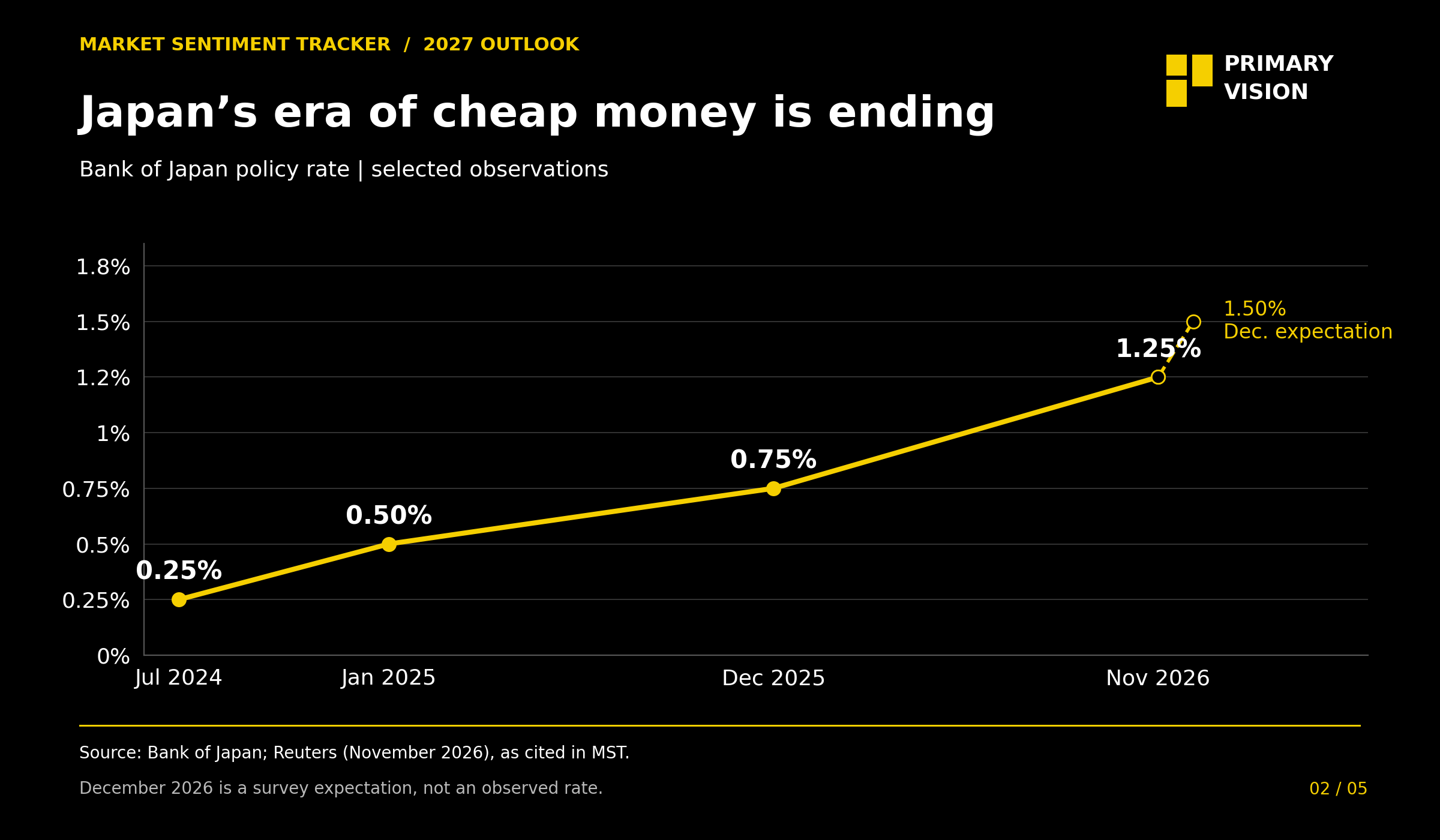
This brings me to Japan, which I have been following closely for months. Its policy rate is now 1.25%, and 86% of economists in a November Reuters poll expect 1.5% in December. Ten-year Japanese government bond yields were around 2.72% on November 24, according to Reuters.
For years, investors borrowed cheaply in yen to finance investments elsewhere. Higher domestic bond yields also make Japanese assets more attractive to insurers and pension funds, potentially reducing their demand for foreign bonds. An investor borrowing yen at 1.25% and earning 5% on a dollar asset would lose the entire annual carry advantage if the yen appreciated by roughly 3.7% in dollar terms, before fees. At five times gross exposure relative to equity, even small adverse currency moves can produce substantial losses and force asset sales. What interests me particularly is the possibility that the Federal Reserve could continue cutting interest rates in 2027 while long-term borrowing costs remain elevated. Japanese capital repatriation, alongside substantial government borrowing requirements, could contribute to such an outcome. This would have implications for a sector whose appetite for capital appears almost insatiable: artificial intelligence.
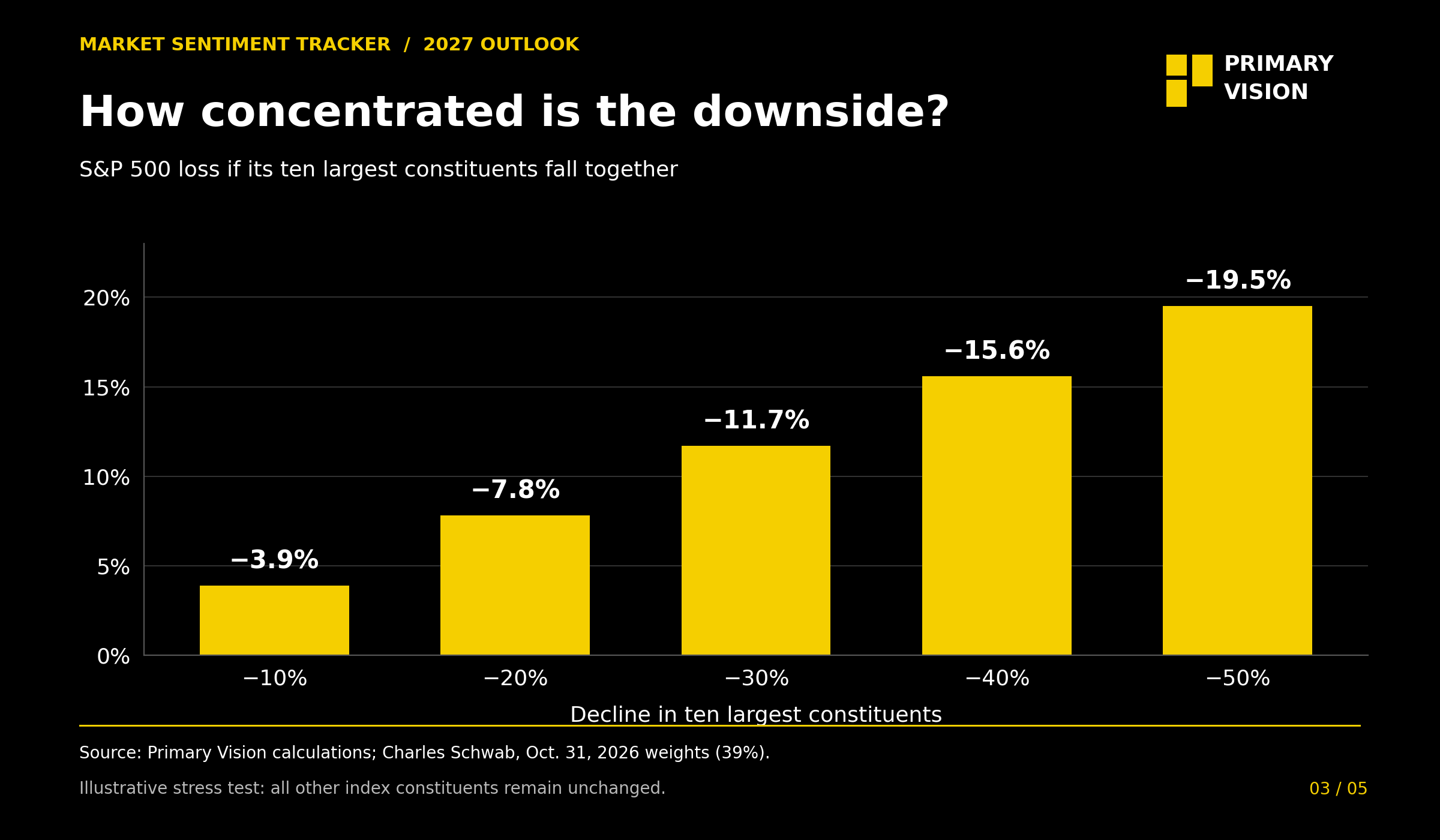
On November 23, Nvidia gained about $950 billion in market value following Jensen Huang’s return as CEO, according to The Guardian. What could happen in the opposite direction? Charles Schwab puts the ten largest S&P 500 stocks at 39% of the index as of October 31. A 30% decline in those stocks alone would erase 11.7% of the index, even if all others remained unchanged.
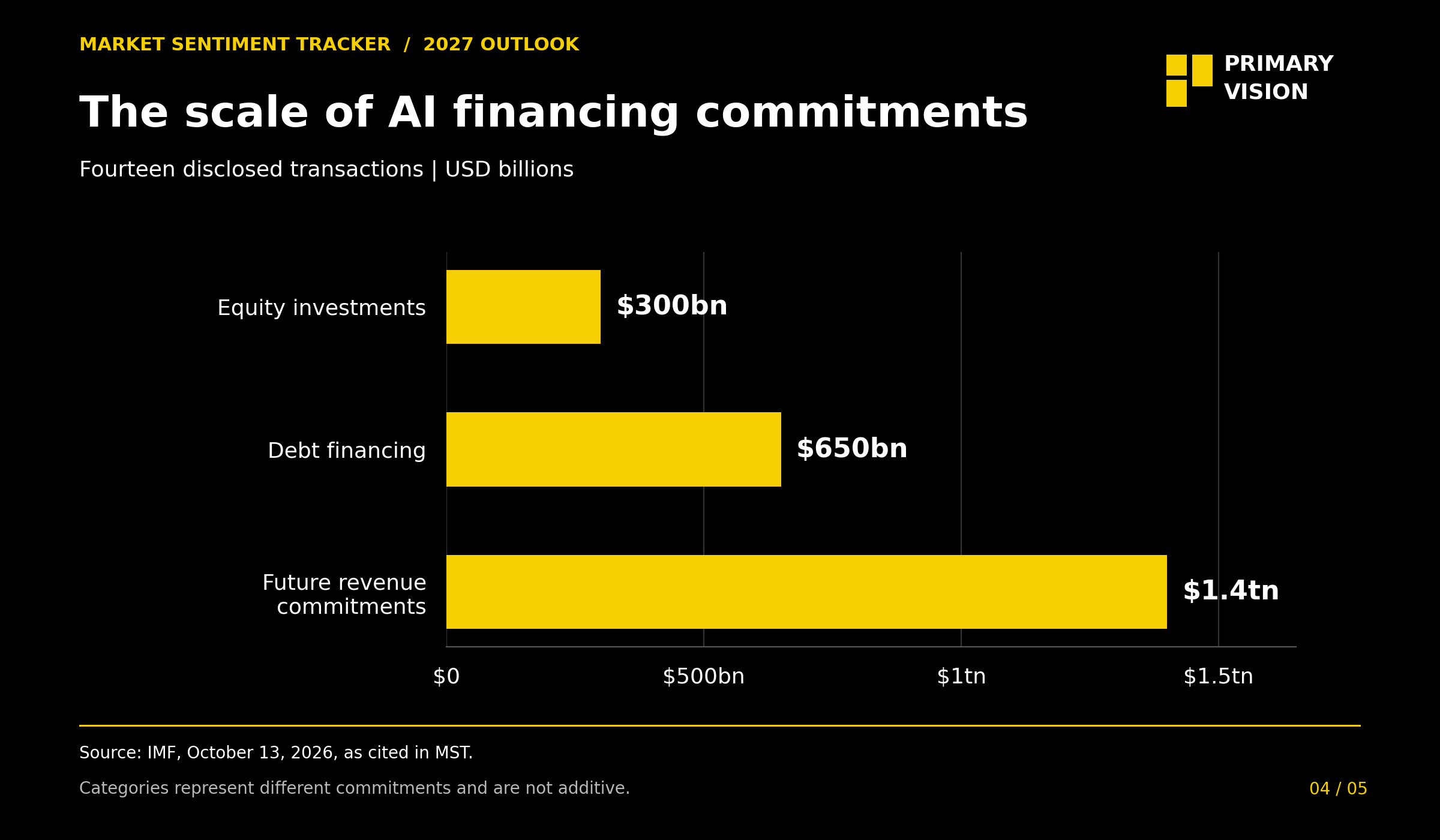
The IMF examined 14 AI financing transactions involving $300 billion in equity, $650 billion in debt and $1.4 trillion in future revenue commitments. Suppliers are financing customers whose spending underpins their own growth assumptions. If those customers disappoint, expected revenues and the value of investments can fall while debt obligations remain.
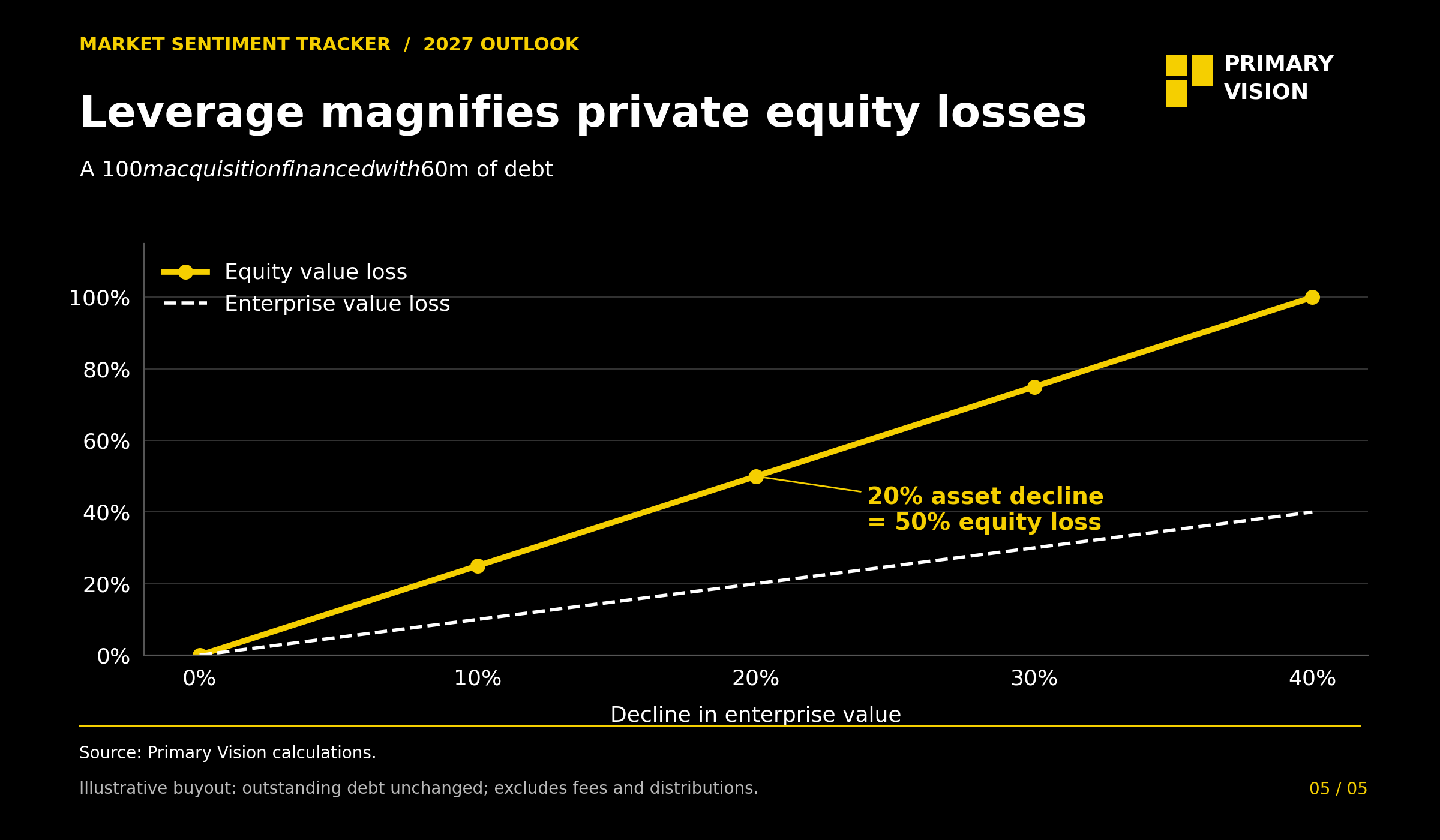
This is where private equity and private credit deserve greater scrutiny. Bain & Company reported 32,000 unsold portfolio companies worth $3.8 trillion in its 2026 report. Consider a $100 million acquisition financed with $60 million in debt: a 20% reduction in enterprise value destroys half the original equity investment. Unlike publicly listed companies, these businesses are not continuously valued by financial markets. Losses can take considerably longer to become visible. Moreover, pension funds receiving fewer distributions from private equity investments may have to sell liquid assets elsewhere to meet their obligations, allowing problems in private markets to spread into public ones. AI itself could accelerate the process. Software businesses vulnerable to AI substitution may struggle to service debt. The ECB has also highlighted gaps in private credit data that make systemic exposures difficult to assess. The technology inflating public equity valuations could simultaneously undermine privately held businesses.
In 2027, we may need to rethink how we measure economic vulnerability. Import dependence should be assessed through delivered costs rather than commodity prices, while financial stability assessments must incorporate cross-border capital flows and private market exposures. For businesses, securing affordable financing and reliable supply chains could become more important than pursuing growth itself.
Tags:
Permission denied
Upgrade to Pro Today and get…
• This article — plus dozens more each month, all within our full Research Module
• Frac Hits — our National-Level Frac Spread Count and Frac Job Count, updated weekly
• Frac Operator Monitor — detailed FSC & FJC by operator
• And so much more, designed to help you track, forecast, and outperform