Monday Macro View: Will U.S. Shale production decline next year?
By
Osama
on July 13, 2026
in
Market Sentiment
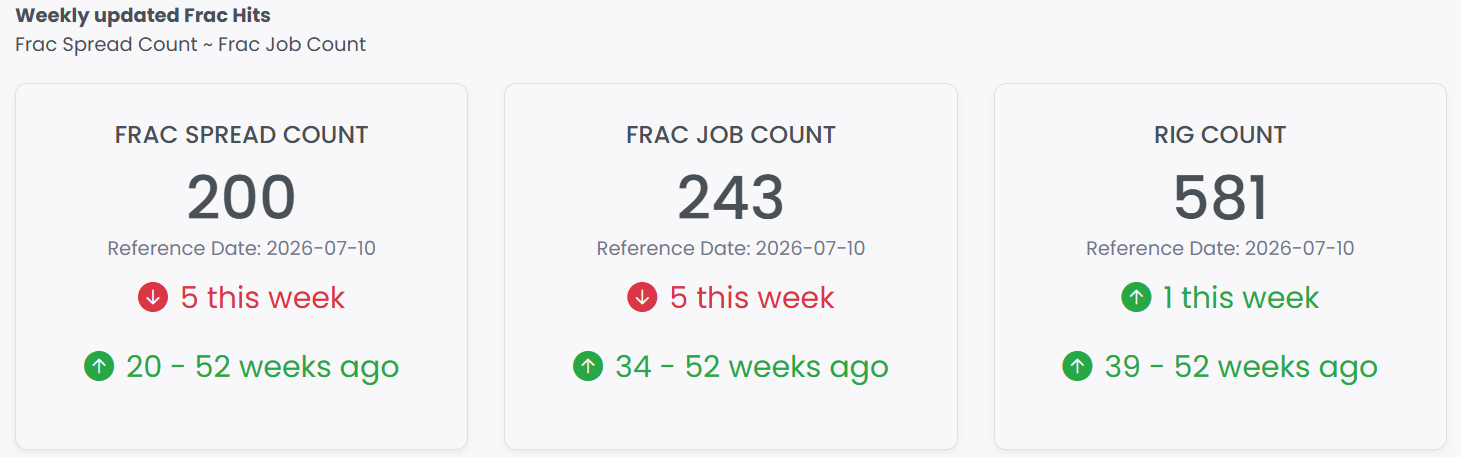
This week's frac spread and frac job counts came in a touch softer, FSC at 200 and FJC at 243, both down five from last week. The national print masks real basin rotation underneath. Baker Hughes' rig data for the week ending July 10 shows the Eagle Ford and the Gulf of Mexico each adding three rigs while the Permian lost five, with oil directed rigs holding flat at 445 overall. Basins are trading places in the activity mix rather than shutting down together, with the Gulf of Mexico and Eagle Ford absorbing capacity the Permian temporarily gave up.
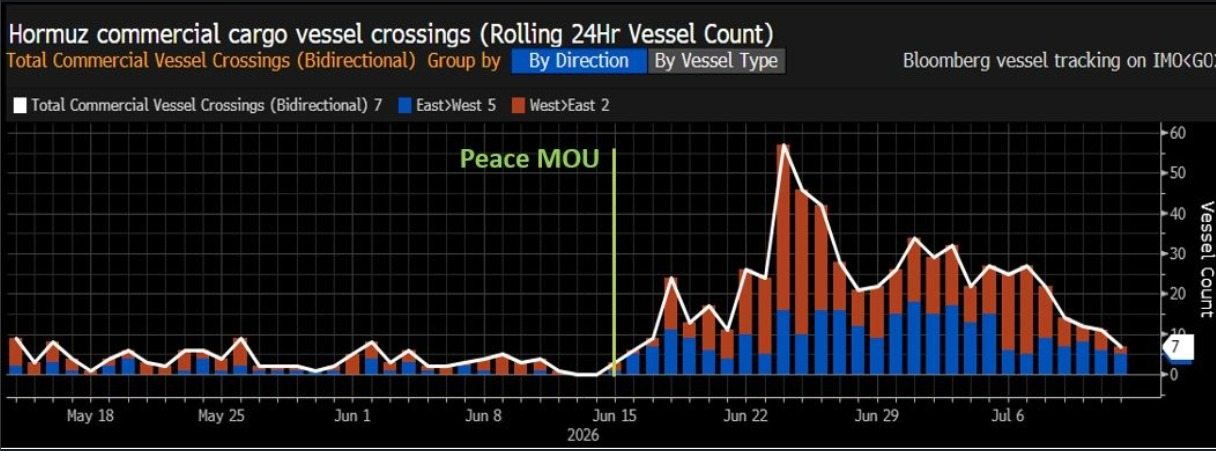
The Strait of Hormuz situation is the trickier piece right now. Commercial vessel traffic through the strait collapsed when the conflict began in late February, recovered gradually through the spring and early summer, and thinned out again this week as the United States and Iran traded fresh strikes. As of July 12, total crossings sat at just seven, down sharply from the triple digit daily counts the strait carried before the war, with Brent settling near seventy nine dollars the same day. Traffic has proven it can rebuild once the shooting stops, but every fresh exchange knocks it back down, and that back and forth is exactly why the price signal keeps whipsawing between the low seventies and high seventies instead of settling into a trend anyone can plan around.
The refined products market is telling its own story, and it is not a bearish one. The U.S. crack spread hit a record 64.58 dollars a barrel on July 8, and diesel futures were trading near 154 dollars a barrel this week, about 80 dollars over WTI. That gap behaves like a market pricing crude closer to 140 dollars than 79, driven by Russian export bans, refinery outages, and distillate inventories sitting near five year lows. Crude and diesel are telling two different stories right now, and the diesel side argues for continued tightness in the physical barrel market well beyond what the seventy nine dollar Brent headline suggests on its own.
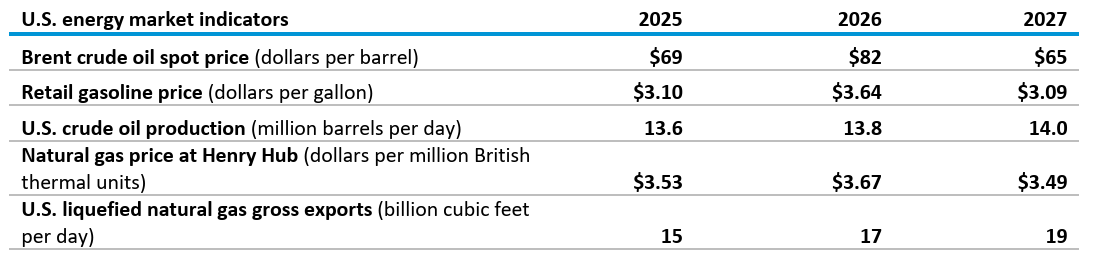
Coming back to US shale production itself, the outlook looks more bullish than the plateau narrative admits. The EIA's July outlook revised its second quarter production estimate up to 13.88 million barrels a day, well above the 13.73 million it had penciled in a month earlier, and raised its full year 2026 forecast to 13.78 million. ConocoPhillips' chief executive has said WTI in the fifties probably means slow decline and only the high sixties and up gets growth going again, and Chevron's chief executive has said output may already be plateauing in parts of the basin. Those views deserve a fair hearing, but the actual production numbers coming in have beaten expectations for two straight monthly revisions running, not fallen short of them, and that gap between commentary and data is worth sitting with.
None of this argues for reading too much into this week's five point dip in FSC and FJC either. Our own EFRACS forecast for the Permian frac job count sits at 120, up fifteen against last year and inside an uptrend that has held since 2025, which is the same message the basin rotation, the Hormuz traffic, the diesel market, and the production revisions all send from different directions. Rigs are moving to where the opportunity is rather than disappearing, physical fuel markets are pricing in real tightness, and actual barrels have come in ahead of forecast twice running. Primary Vision's constructive read on the completion cycle holds, and the next several weeks of data will show whether this broader picture keeps building.
Upgrade to Pro Today and get…
• This article — plus dozens more each month, all within our full Research Module
• Frac Hits — our National-Level Frac Spread Count and Frac Job Count, updated weekly
• Frac Operator Monitor — detailed FSC & FJC by operator
• And so much more, designed to help you track, forecast, and outperform