






Articles
- BLOG / Articles / View
- Articles
Market Sentiment Tracker: What is happening with Yen?
By Osama on August 4, 2026 in Market Sentiment
If you've been hearing "Yen" and "Japan" everywhere this week and aren't quite sure why it matters, you're not alone. Let's start with the basics before getting into what's actually happened.
The yen is one of the most heavily traded currencies in the world, and Japan is one of the largest economies carrying one of the largest piles of government debt anywhere. Bond yields are simply the interest rate a government pays to borrow money — and they matter here for two reasons. First, yields are supposed to reflect risk: more debt relative to the size of an economy should mean investors demand a higher yield to hold that debt, since more debt means more risk that it eventually gets harder to repay. Second, yields drive currency flows. When one country's bonds pay meaningfully less than what similar debt levels would justify elsewhere, money tends to drift out of that currency and into ones that pay more for a comparable amount of risk. That drift shows up as currency weakness. That's the backdrop for what's been happening to the yen.

Now the sequence. On July 30, Japan's central bank stepped directly into the market to support the yen, buying it against the dollar, sending it up as much as 3.3% intraday. The next day, it left interest rates unchanged at 1%, in an 8-1 vote, even while warning inflation could exceed its own target. That combination is unusual: if a currency is weakening and you want to defend it in a lasting way, raising rates is normally the more durable tool, since higher yields make holding that currency more attractive on their own, without needing to keep intervening. Japan skipped that option and intervened instead. Also on July 31, the U.S. Treasury Secretary confirmed the U.S. was joining that intervention effort and said it would not hesitate to do so again — a country stepping in to help defend a currency that isn't its own.
![May be an image of text that says "U.S. Dollar/Jjapanese Yen (USDJPY) 156.364-0.990 20:46 [FOREX] 156.357 156.388 CHART for Mon, Aug 2026 Symbol... Daily None 中中 AUSDJPY 1D- Indicators Compare T f(x) 1x1 Notes lyCharts Alerts Screen Chart Watch Actions Help ? Templates 황 ቦ 165.000 000 164.000 163.000 Bank of Japan Saves Yen 162.000 161.000 160. 000 U.S. Treasury Saves Yen 159.000 158.000 barchart Jul6 U.S. Treasury Saves Yen 5D 1M 2 3m 157.000 000 6M Jul13 9M 2Y 5Y 10Y 156.364 156.000 Jul20 20Y Max 白 Jul27 155.000 Aug3 も % loq"](https://scontent.flhe7-2.fna.fbcdn.net/v/t39.30808-6/761946556_1384062663702362_3905817193474464319_n.jpg?stp=dst-jpg_tt6&cstp=mx1256x825&ctp=p180x540&_nc_cat=102&_nc_map=urlgen_bucketless&ccb=1-7&_nc_sid=127cfc&_nc_ohc=aorHB9JVmkgQ7kNvwGgDbDp&_nc_oc=Adp2DBabL0kDiR_2RJWb4gpsb7hft9MBONnL2q_5mPONnEdyrwVmInW10Jksi7DtCTc&_nc_zt=23&_nc_ht=scontent.flhe7-2.fna&_nc_gid=44jpqpP9TePE-gt4xelFQA&_nc_ss=7a289&oh=00_AQFeA59DN67Vw3rP5zErZjqKo5C4FnQAkCheUQSao0kR4Q&oe=6A77881A)
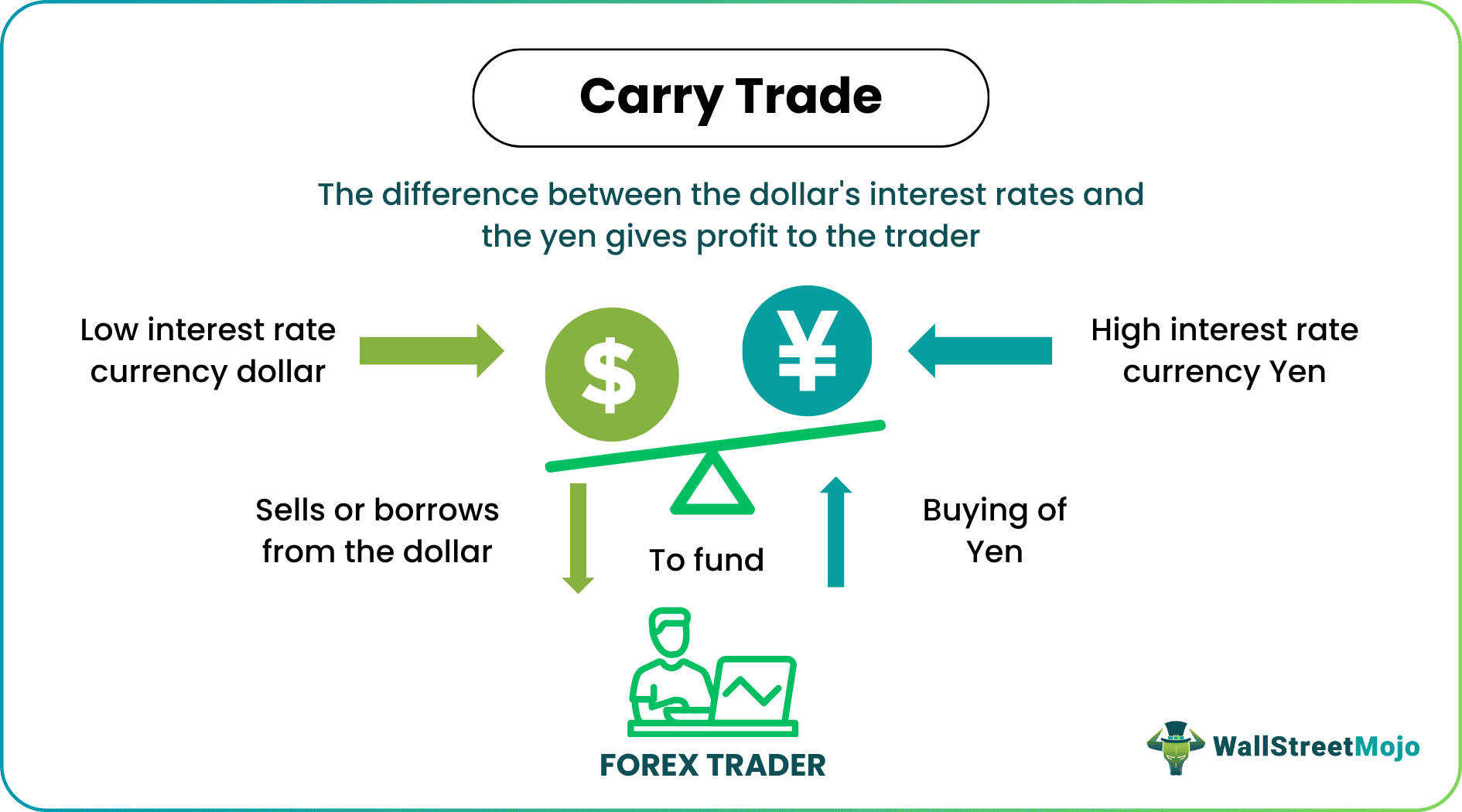
That joint involvement is the part worth sitting with, because it's not something that happens without a reason tied to U.S. interests as well. Japan is the largest foreign holder of U.S. Treasuries, and Japanese investors are also the primary funding source behind the yen carry trade — a strategy where money is borrowed cheaply in yen and invested in higher-yielding assets abroad, U.S. government debt included. If Japan had defended the yen entirely on its own, its central bank likely would have needed to sell some of those Treasury holdings to raise the dollars required to buy yen. By joining the intervention, the U.S. keeps some of that selling pressure off its own bond market instead of leaving Japan to generate it alone.

That also explains why interest rates were left untouched even while the currency was being defended. Raising Japanese rates would make the carry trade more expensive to fund, which would push the hedge funds and investors running that trade to unwind their positions — meaning they'd need to sell the U.S. assets, Treasuries included, that the borrowed yen had been used to buy. So the intervention ends up defending the currency without touching the one lever that would address what's actually pushing it lower in the first place.
And there is something structural doing that pushing. Japan's government bond yields are unusually low relative to how much debt the country is carrying, which goes back to the first-principles point above: yield is supposed to track risk. Looking at debt levels against long-term bond yields across the major developed economies, most countries line up fairly consistently — more debt, higher yield, roughly following the same trend line. Japan is the clear outlier. At roughly 215% of GDP in government debt, by far the highest of the group, its 30-year yield sits near 4.9%, well below the roughly 6.9% that level of debt would imply if Japan followed the same relationship every other country does. That gap gives investors a standing reason to move money out of yen-denominated bonds in search of better compensation for the risk elsewhere — and that's the steady outflow actually weakening the currency, not short-term speculation, a point one widely read analysis has been making for weeks now.
That distinction matters for reading the intervention's short-term success. Bets against the yen had grown unusually crowded over recent weeks, so a push back below 160 against the dollar wasn't surprising on its own — when a position gets that one-sided, a central bank stepping in can force short sellers to cover quickly, creating a sharp, fast move. But that's a positioning effect, a temporary unwind of a crowded trade, not a fix to the yield gap underneath it. That's also the same reason earlier rounds of yen intervention faded once their initial squeeze played out, and there's little in this round that structurally changes that pattern.
So where does this actually lead. If the yield gap stays where it is, the same outflow pressure returns once this round of short covering runs its course, and Japan ends up intervening again without the rate tool available to it — not while unwinding the carry trade still risks additional Treasury selling pressure landing on the U.S. bond market. There's already talk of Japan using an international repo facility as a workaround, a way to raise dollars to defend the yen without directly selling Treasuries. If that becomes the standard tool, it eases the immediate pressure on the Treasury market, but it doesn't close the yield gap either. The longer this continues, the more it points toward a choice Japan hasn't made yet: accept higher yields and the disruption of unwinding a very large, very established trade, or keep intervening episodically while the underlying pressure keeps building beneath it.
Tags:
Permission denied
Upgrade to Pro Today and get…
• This article — plus dozens more each month, all within our full Research Module
• Frac Hits — our National-Level Frac Spread Count and Frac Job Count, updated weekly
• Frac Operator Monitor — detailed FSC & FJC by operator
• And so much more, designed to help you track, forecast, and outperform