Monday Macro View: How We Saw the Surfactant Boom Coming Before Wall Street Did
By
Osama
on September 7, 2026
in
Market Sentiment
Something is happening in shale that most of the industry is only just catching onto, and the numbers behind it are significant. Executives have talked about surfactants on earnings calls more times this year than in the previous 2 decades combined. Surfactants work the same way dish soap lifts grease off a plate, breaking the surface tension that keeps oil trapped in shale rock even after a well is fracked. Up to 90% of the oil in a reservoir can stay stuck in the rock without help. Chevron is reporting production gains of up to 20% on treated wells and is racing to have every one of its Permian wells running surfactant treatments by next year.
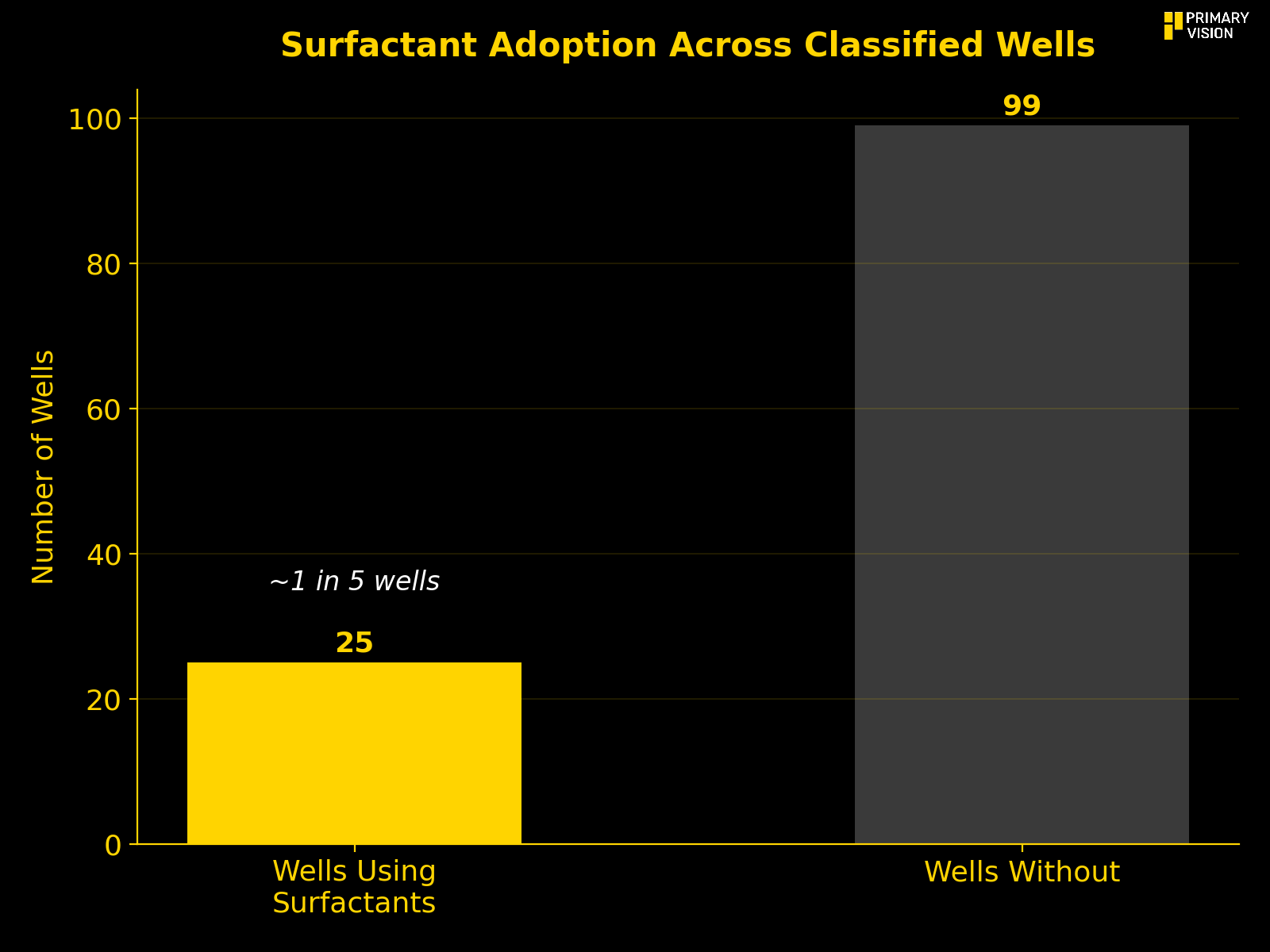
You don't have to wait for the next earnings call to see this trend. It's already sitting in the disclosure data, and our Frac Chemistry Inspector pulls it out directly. In our review of the wells classified in FCI so far, spanning wells across the Permian, Western Gulf, Anadarko, and other basins, 25 of 124 wells, roughly 20%, already show a surfactant treatment among their additives.
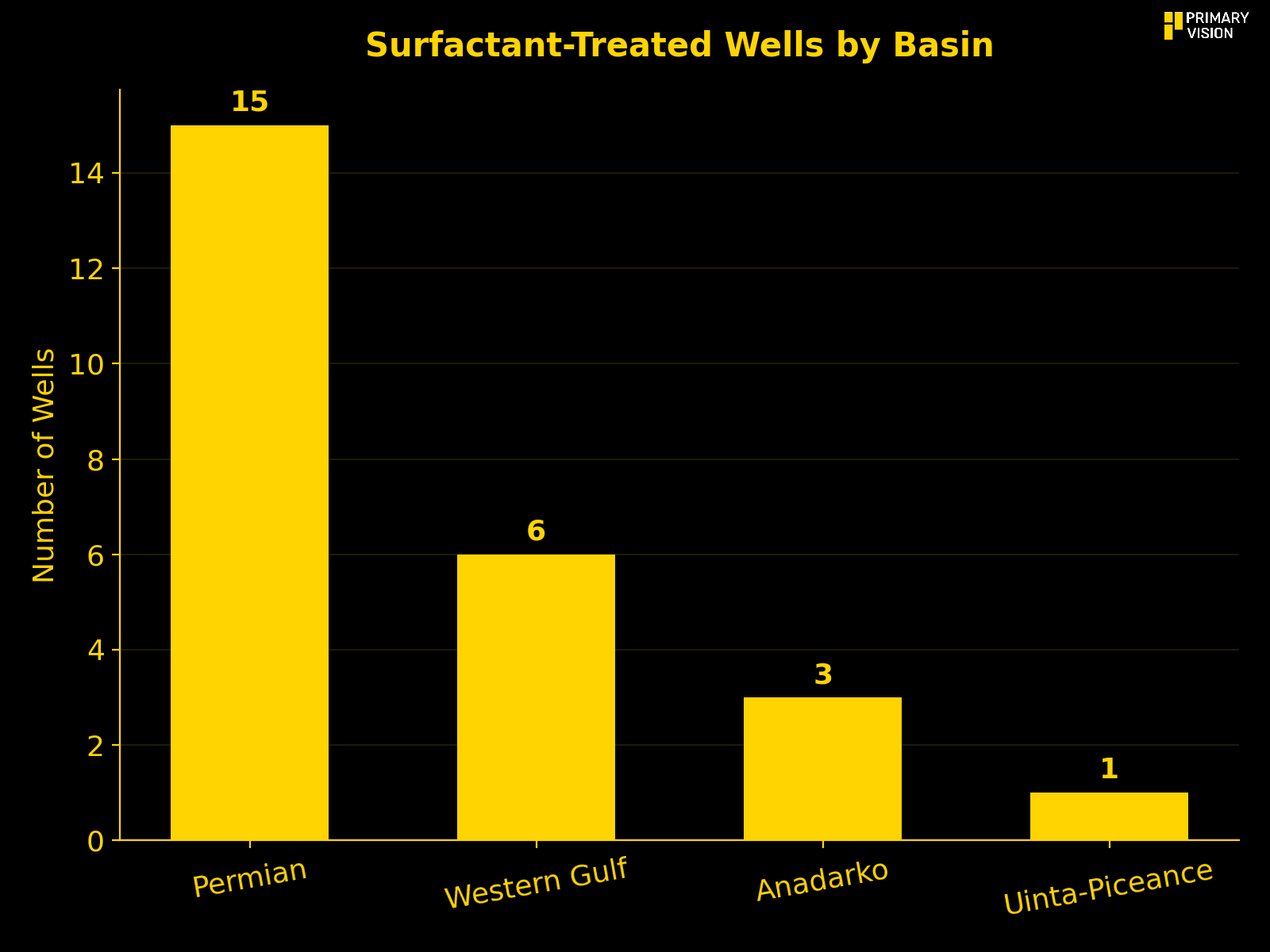
The basin breakdown lines up with what's being reported industry-wide. Of those 25 surfactant-treated wells, 15 sit in the Permian, or 60% of the total, with the rest split mainly between the Western Gulf (6 wells) and Anadarko (3 wells) basins. That matches the broader industry pattern, where most surfactant activity is concentrated in the Permian.
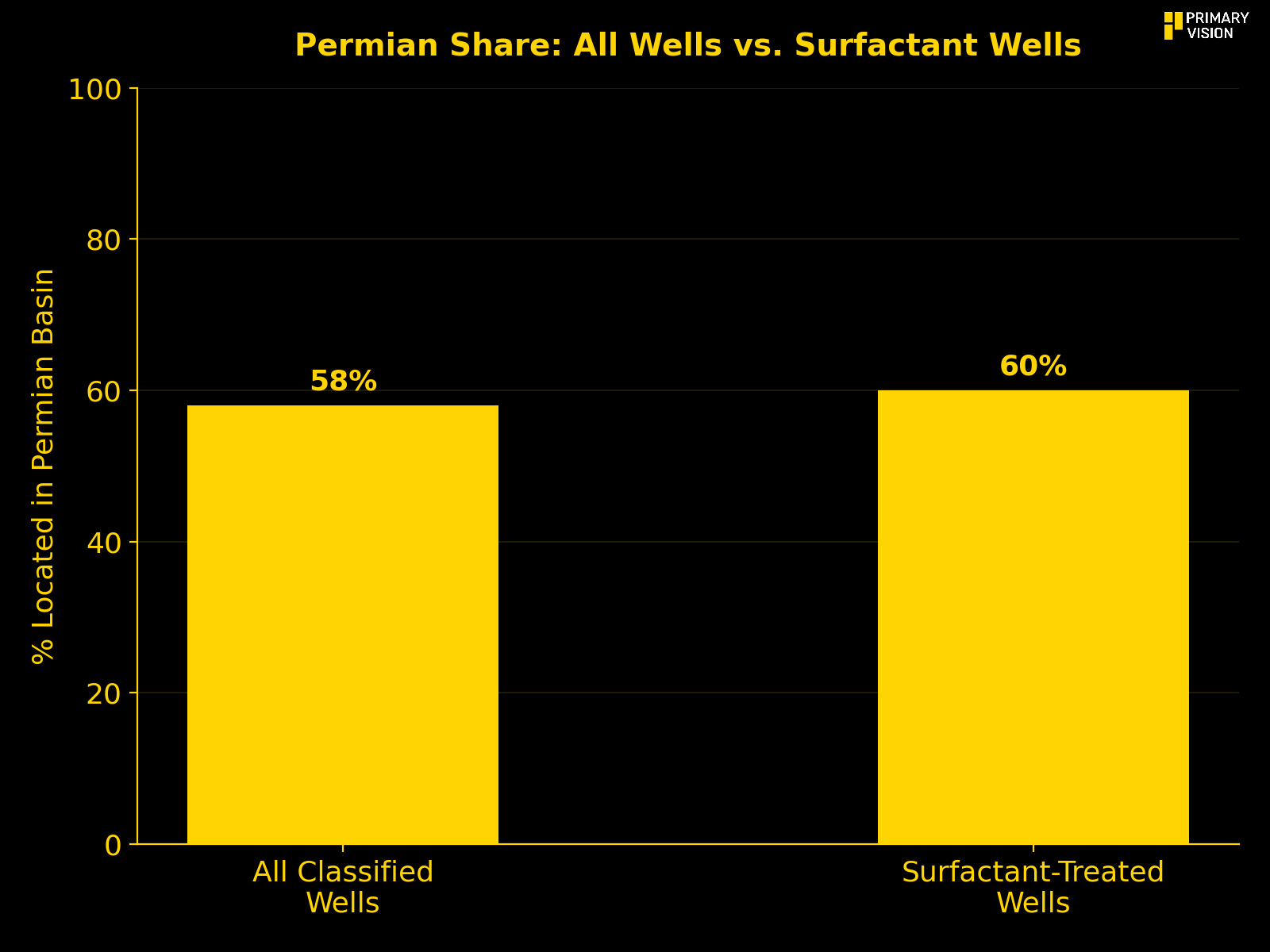
It's worth comparing that concentration against the baseline. Across all 124 wells in our dataset, regardless of chemistry type, 58% sit in the Permian. Among surfactant-treated wells specifically, that share climbs to 60%. The Permian isn't just where the most drilling activity happens to be. Surfactant adoption there is running slightly ahead of the broader base too, a 2 percentage point gap that would be worth checking again with an increased sample set - something I will be doing in a few weeks time.
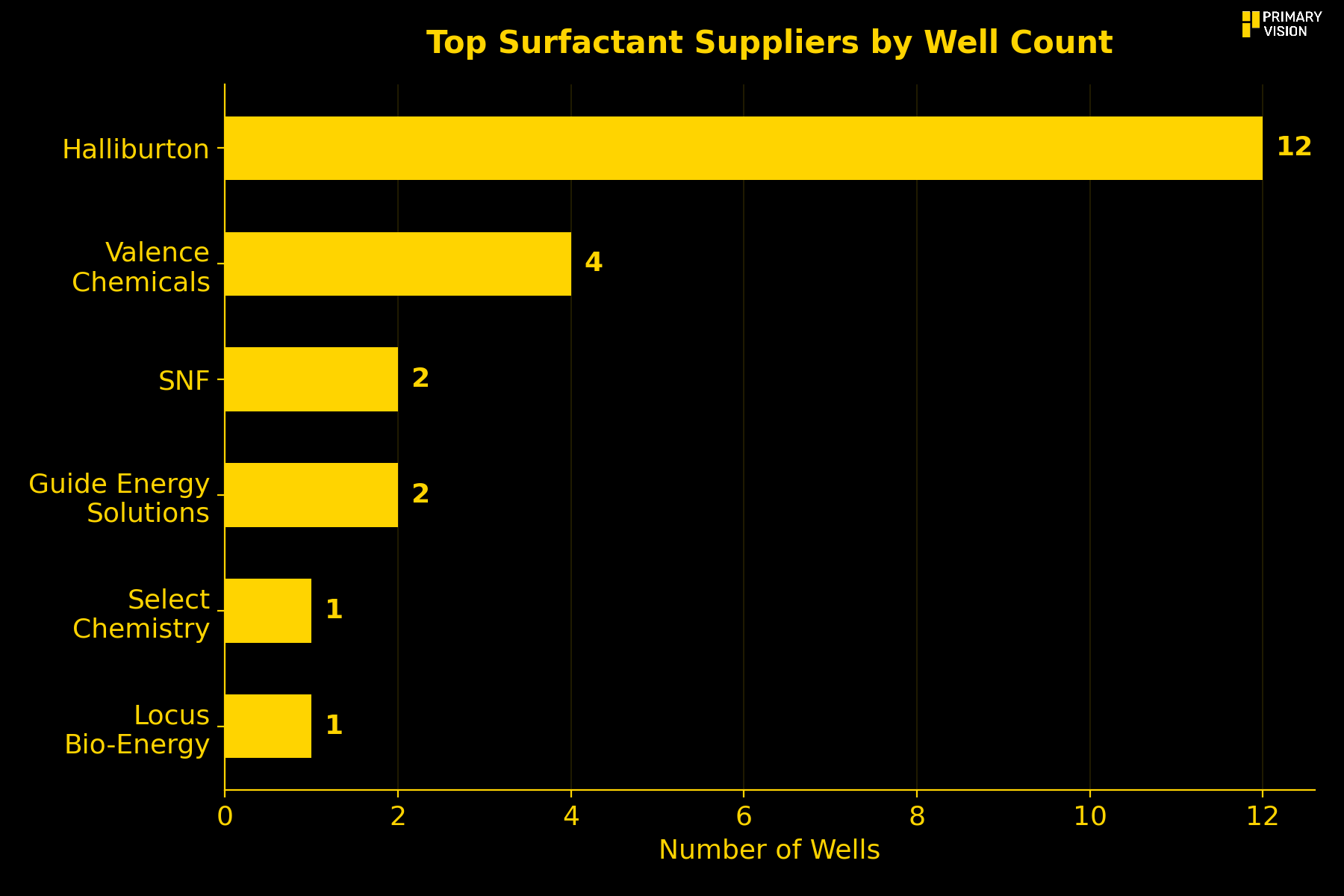
The supplier picture adds another layer. Halliburton dominates the surfactant field in our data, appearing on 12 of the 25 wells, consistent with its scale as a pressure pumper and chemistry provider. Valence Chemicals appears on 4 separate Western Gulf wells tied to Triple Crown Resources. SNF shows up on 2 Permian jobs for Greenlake Energy, and Guide Energy Solutions appears on 2 wells as well. Select Chemistry shows up once. Locus Bio-Energy, a company that's been expanding its lab specifically to keep up with surfactant demand, turns up in our data on a COG Operating well in Lea County, New Mexico, a direct confirmation of that growth showing up at the well level.
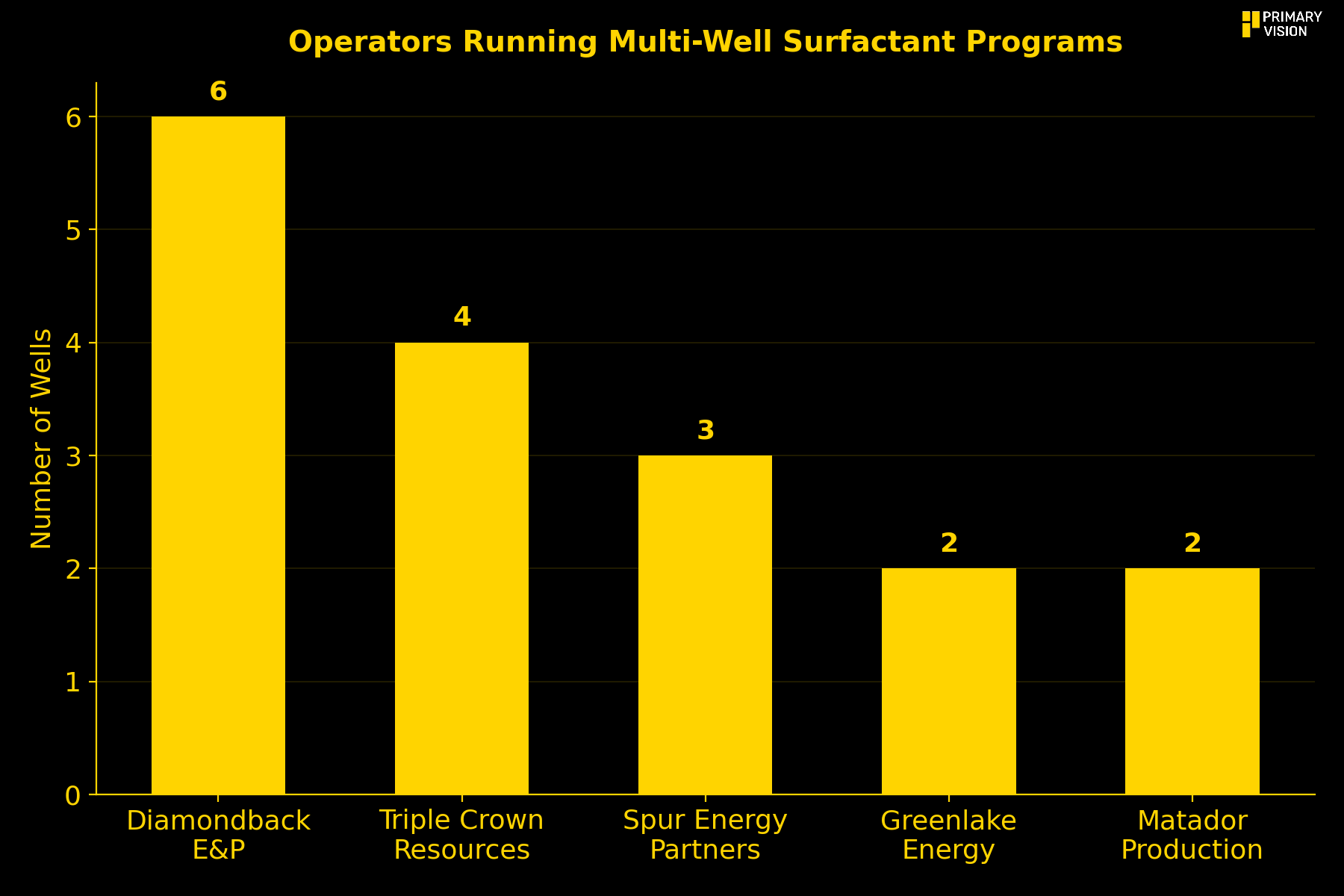
Operator activity is concentrated too. Diamondback Energy appears on 6 separate wells in our surfactant data, and Spur Energy Partners shows up on 3. That's a repeating pattern rather than a one-off test, which matters if you're a chemical supplier deciding where to focus sales effort next quarter.
None of this means surfactants are showing up on every well tomorrow. Operators like Diamondback and Permian Resources are still calling their results promising but early. For OFS companies, the practical use of this data is straightforward. If Diamondback or Spur Energy are running repeat surfactant jobs, any supplier or pumper already working with those operators has an opening to bring surfactant chemistry into the conversation. And if a supplier isn't showing up in this data yet despite being active in the Permian, that's a gap worth asking about directly, especially given how quickly the technology is moving from pilot programs to standard practice on some operators' pads.
With our Frac Chemistry Inspector, you can see exactly where it's happening, who's behind it, and who's supplying it, before it's obvious to everyone else.
Upgrade to Pro Today and get…
• This article — plus dozens more each month, all within our full Research Module
• Frac Hits — our National-Level Frac Spread Count and Frac Job Count, updated weekly
• Frac Operator Monitor — detailed FSC & FJC by operator
• And so much more, designed to help you track, forecast, and outperform