Monday Macro View: U.S. shale is responding to higher prices
By
Osama
on April 6, 2026
in
Market Sentiment
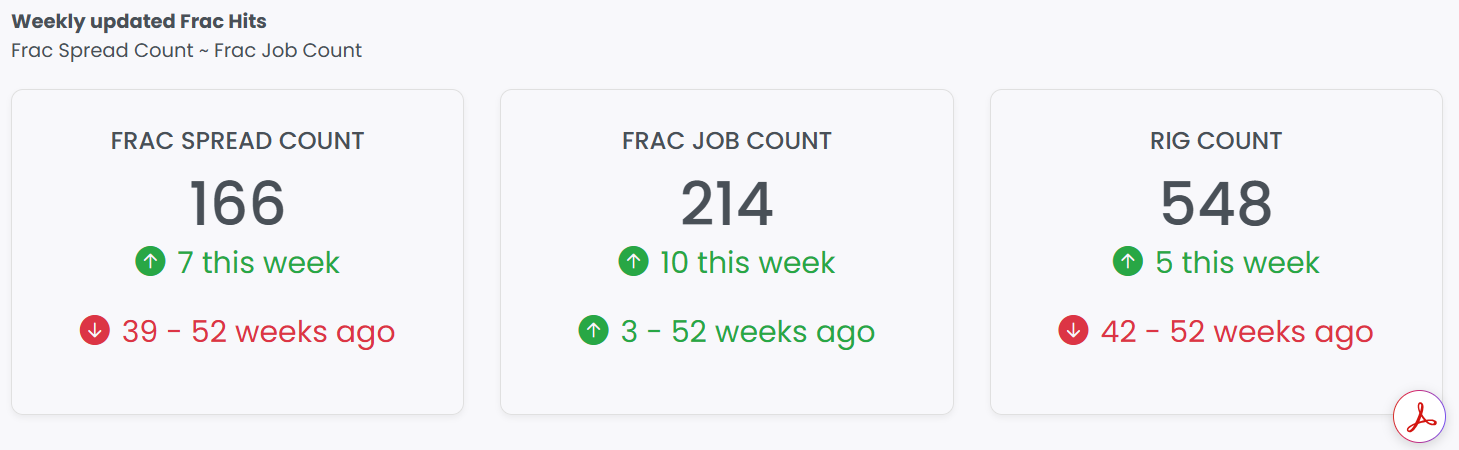
This week's MMV (Monday Macro View) arrives with the Frac Spread Count and Frac Job Count both posting gains after two consecutive weeks of softening — a recovery that, while modest in isolation, carries meaningful implications when read against the broader backdrop of what is unfolding in the oil market.
The Frac Spread Count came in at 166, up 7 on the week, while the Frac Job Count rose by 10 to reach 214. The FSC figure does remain 39 below where it stood the same time last year, but the FJC tells a more constructive story — down only 3 on a year-over-year basis, which is essentially flat. The Rig Count added 5 as well, settling at 548, though it too carries a year-over-year deficit of 42. What matters most in the near term is the directional shift. The losses of prior weeks have been recovered, and the trajectory has turned positive just as the macro environment begins exerting its own pull on operator behaviour.
For months, the question hanging over U.S. shale was whether elevated oil prices would translate into a genuine acceleration of activity, or whether the industry would pocket the margin improvement without committing incremental capital. That question is now beginning to find its answer. Continental Resources has become the first prominent U.S. producer to publicly announce plans to ramp up output, with the Iran conflict having sent crude futures up roughly 50% in four weeks to above $100 a barrel. CEO Doug Lawler confirmed the company is raising its capital budget with the explicit intent of growing production. The significance of Continental moving first should not be understated. Prior to the conflict, Continental had planned capital spending of $2.5 billion in 2026 — a 20% reduction from 2025 levels. The fact that this budget is now being revised upward signals that the price signal has crossed a threshold operators were waiting for.
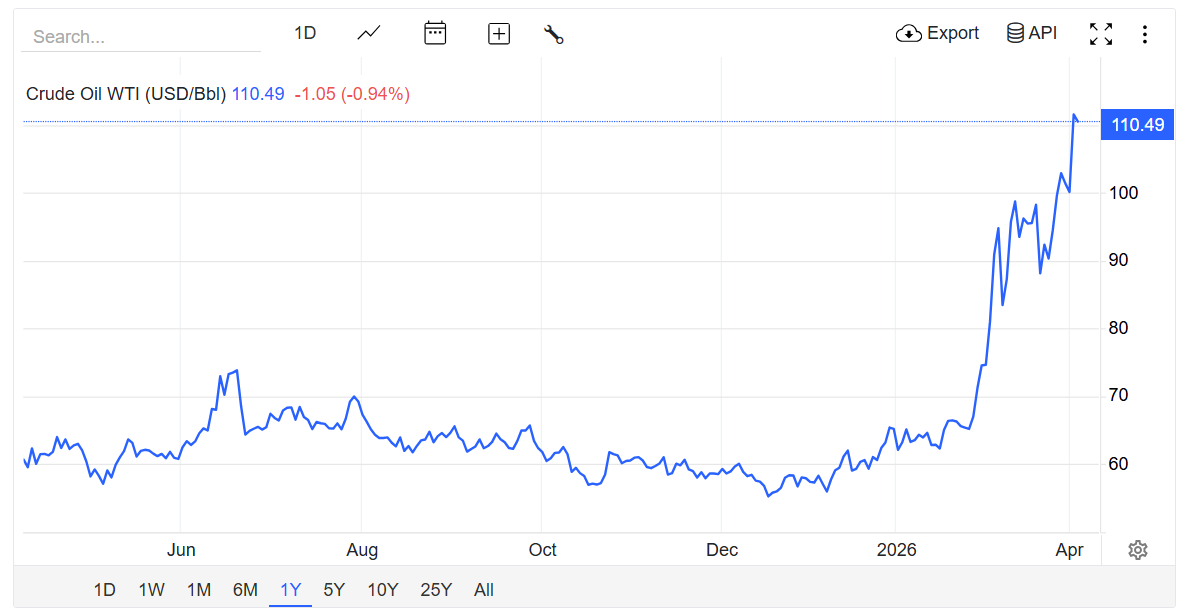
In the months preceding the U.S. and Israeli strikes on Iran, fears of a global crude glut had pushed oil prices down toward $60 and below, squeezing shale economics considerably. That environment bred caution, and the counts reflected it. WTI surged above $110 a barrel on Friday after President Trump signalled an escalation of military operations in the weeks ahead. At that price level, the calculus for operators changes materially, and Continental is not likely to remain alone in revising its plans.
The international majors are recalibrating as well. TotalEnergies has decided to reduce exposure to several offshore wind projects and redirect capital toward Gulf of Mexico offshore operations and U.S. shale production. The rationale, per the Department of the Interior, is to lower costs for American consumers while ensuring sustained domestic energy output — concentrating on projects that generate predictable returns using existing infrastructure. For a European major to pivot in this direction at this moment speaks to just how attractive the U.S. upstream has become relative to alternatives. Industry observers suggest this decision could reshape how international energy firms approach the U.S. market, with cost-effective and reliable projects taking precedence, a model that federal policymakers may follow.
The frac counts, read in isolation, show a single week of recovery. Read in context, they are the early numerical expression of a broader industry pivot — one being shaped by a price environment that has moved with unusual speed and force. Continental's budget reversal, TotalEnergies' strategic shift, and the uptick across all three activity metrics this week are converging signals. Shale is responding to the cycle, and if the price floor holds, the builds ahead may be considerably more sustained than a single week's data suggests.
Upgrade to Pro Today and get…
• This article — plus dozens more each month, all within our full Research Module
• Frac Hits — our National-Level Frac Spread Count and Frac Job Count, updated weekly
• Frac Operator Monitor — detailed FSC & FJC by operator
• And so much more, designed to help you track, forecast, and outperform