







Articles
- BLOG / Articles / View
- Articles
Monday Macro View: What Happens to Oil if the U.S. Stops Exporting Diesel?
By Osama on September 28, 2026 in Market Sentiment
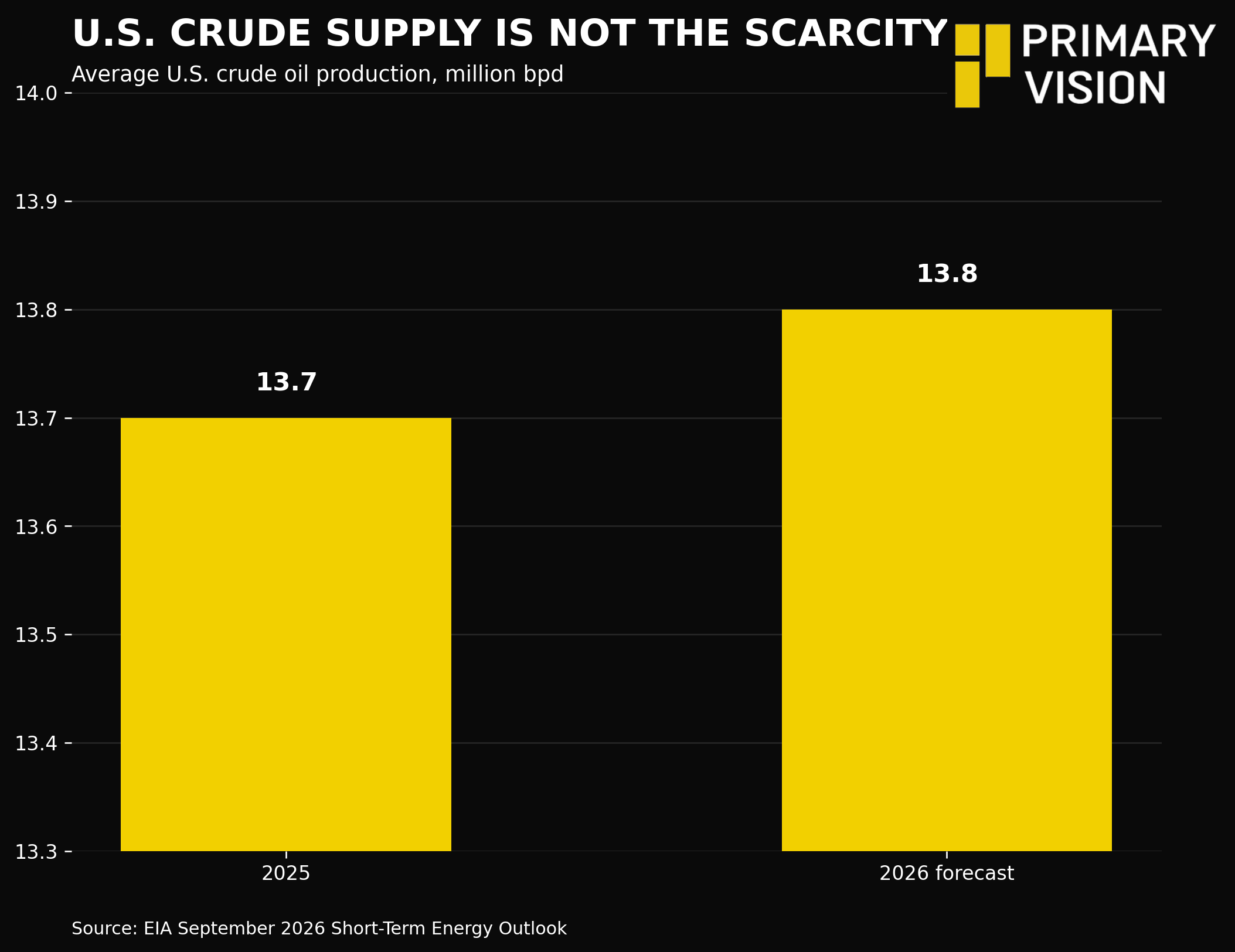
U.S. upstream activity moved higher again this week. Primary Vision’s Frac Spread Count increased by 8 to 195, while the Frac Job Count rose by 8 to 239 and the U.S. rig count added 4 to reach 599. The year-over-year comparison is more striking: there are now 16 more frac spreads, 31 more frac jobs and 50 more rigs than 52 weeks ago. EIA expects U.S. crude production to average a record 13.8 million bpd in 2026, including 6.8 million bpd from the Permian. The United States therefore enters the latest fuel-market problem producing more crude and carrying considerably more upstream activity than a year ago. The pressure is emerging further down the barrel.

Diesel is where that pressure has become increasingly visible. U.S. retail diesel has moved above $6 per gallon, while refiners are hardly sitting idle: utilization recently approached 97% of capacity, and distillate production has been running at its strongest level in years. Yet inventories remain unusually low relative to seasonal norms. The problem, therefore, is not simply that American refineries are failing to produce fuel. A global shortage has raised the value of exporting that fuel at precisely the moment domestic inventories have become uncomfortable.
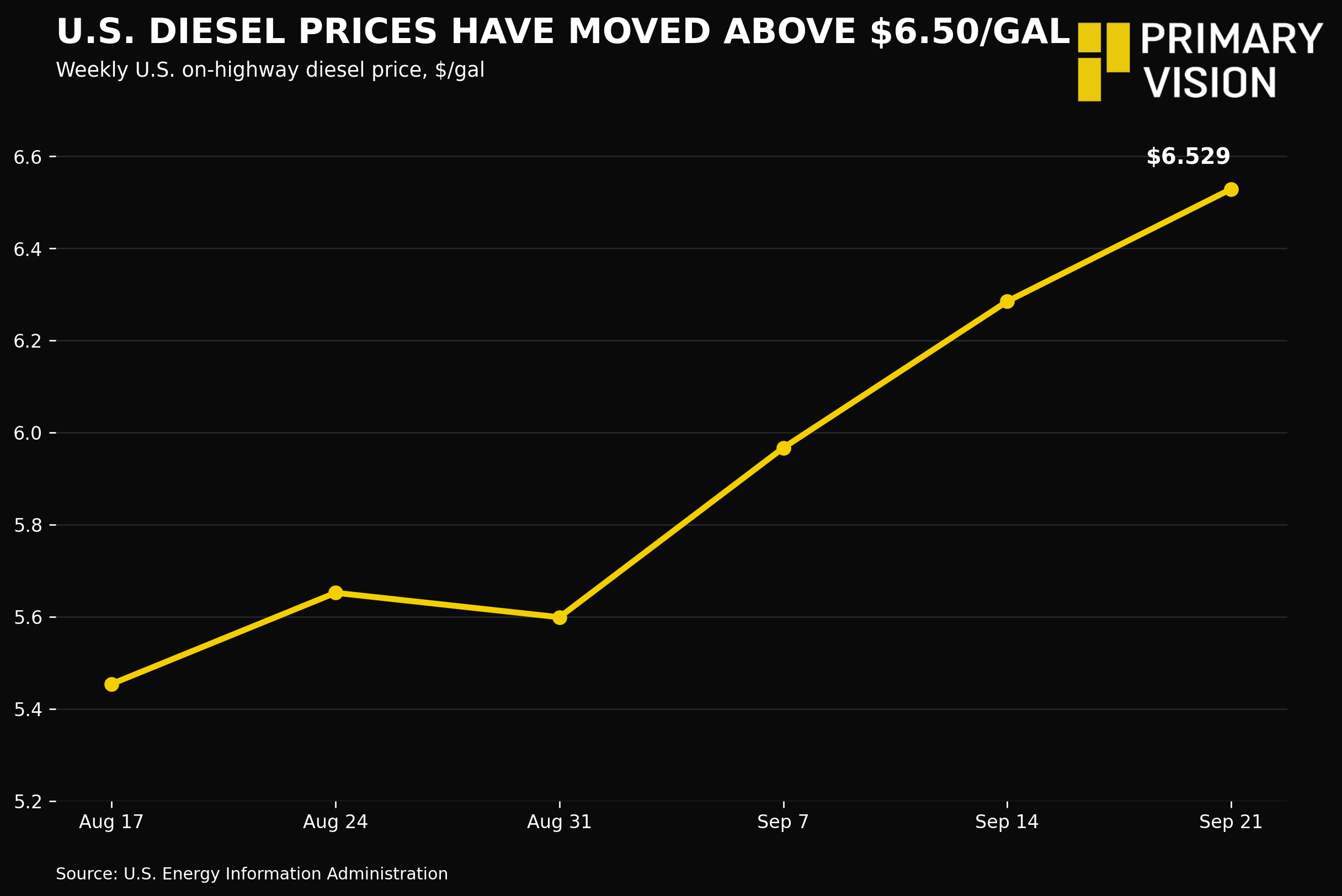
That explains the debate around restricting U.S. diesel exports. Reports suggested that a 90-day diesel ban was being considered, although the White House subsequently denied that a flat mandatory ban was being prepared. The immediate attraction is obvious. Prevent exported barrels from leaving the country, domestic supply increases, inventories rebuild and U.S. diesel prices should initially soften. The market demonstrated that sensitivity when U.S. ultra-low-sulfur diesel futures fell about 4% after reports of a potential restriction emerged.
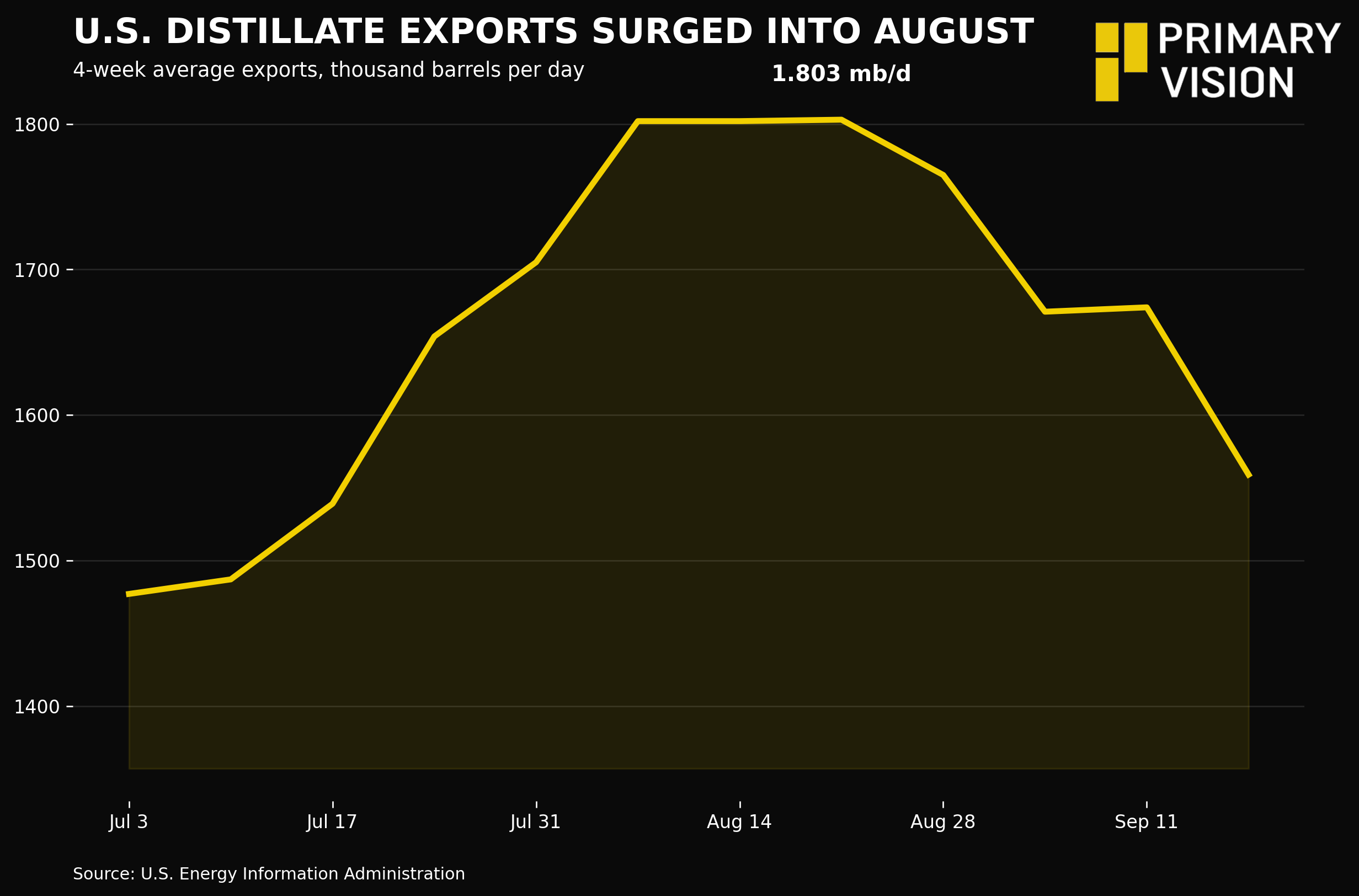
The more important question is what happens several weeks later. U.S. distillate exports climbed above 1.8 million bpd on a four-week average basis during August before retreating in September. Those are not incidental barrels; exports provide a major outlet for U.S. refinery production. If that outlet closes while refiners continue running near capacity, diesel begins accumulating domestically. Eventually the refinery calculation changes. Instead of asking whether another barrel can be produced profitably, the question becomes whether there is somewhere valuable to sell it. Once storage and margins become the constraint, refiners have an incentive to reduce crude throughput.
That is where a diesel policy becomes a crude-price story. Lower refinery runs reduce domestic demand for crude, leaving more U.S. barrels in storage or competing for buyers overseas. The pressure therefore need not be equally bullish for every benchmark. Discussion of the export restriction has already widened WTI's discount to Brent, reflecting concern that U.S. refiners could process less crude if diesel output becomes trapped domestically. In that scenario, WTI can weaken relative to Brent even while the global product market remains exceptionally tight. Reuters
Outside the United States, however, the mechanism runs in the opposite direction. Latin America and Europe would have to replace U.S. diesel barrels in a market where supply from Russia, the Middle East and China has already been disrupted and where many refineries have limited room to increase output. The global diesel shortage is therefore fundamentally different from a simple shortage of crude. Removing American exports could intensify competition for replacement product even if plenty of crude remains physically available.
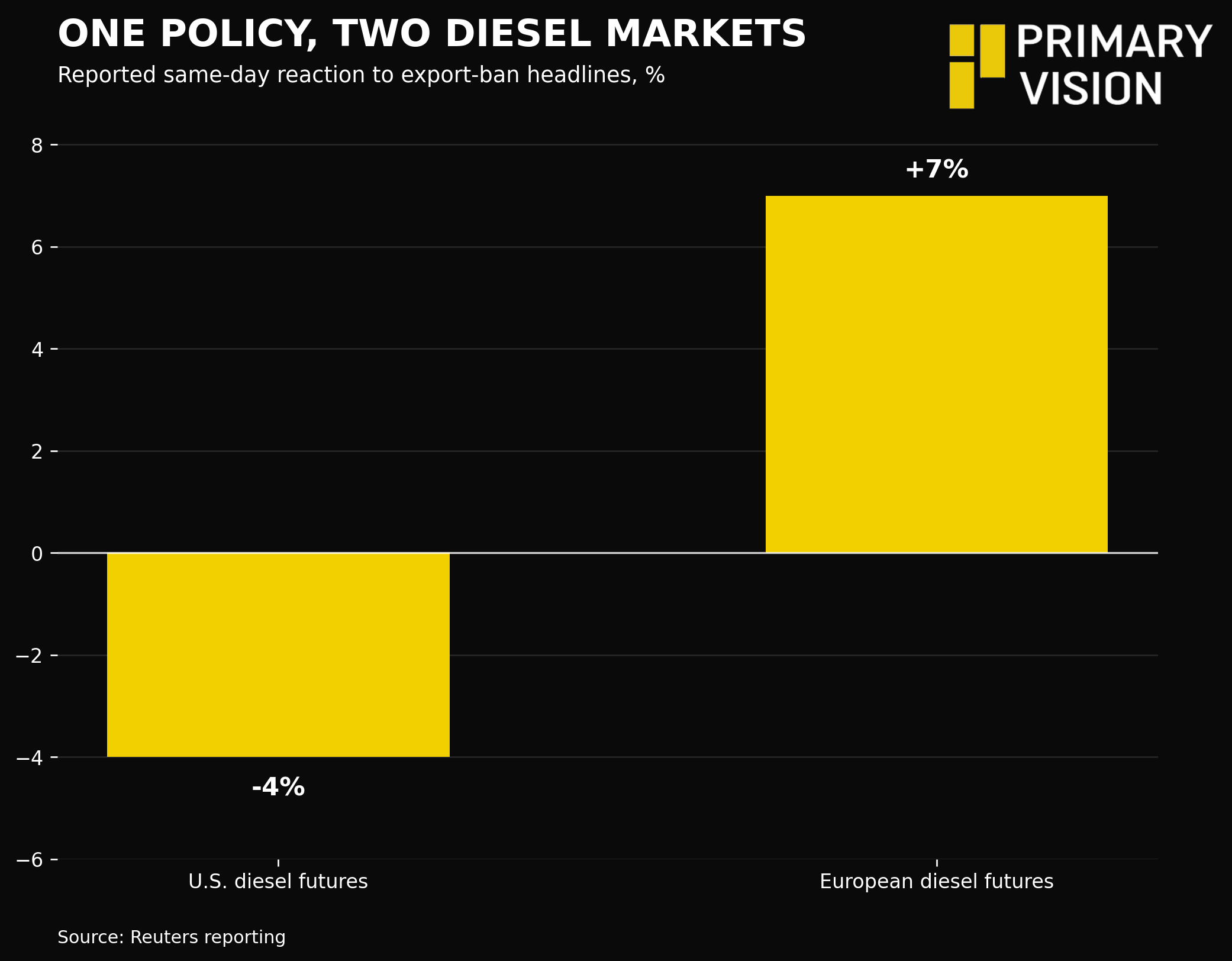
That creates the possibility of a remarkably fragmented market: U.S. diesel prices soften, overseas diesel cracks strengthen, WTI weakens relative to Brent, and non-U.S. refiners gain a stronger incentive to buy crude. A restriction intended to reduce one price would not remove scarcity from the system; it would change where that scarcity appears. In fact, analysts have warned that a ban could prove self-defeating for markets by disrupting established product flows without materially expanding the amount of fuel the global refining system can produce.
There is a final complication. Refineries cannot manufacture diesel independently of the rest of the barrel. Reducing crude runs also means producing less gasoline, jet fuel and other products. A prolonged restriction could therefore initially lower American diesel prices while eventually tightening other fuels. The larger lesson from the current market is not simply whether enough crude exists. The United States is heading toward record crude production while diesel remains exceptionally tight. The bottleneck has moved from producing the barrel to converting it, placing it and moving it to where the market needs it. An export ban might redistribute that problem. It cannot make it disappear.
Tags:
Permission denied
Upgrade to Pro Today and get…
• This article — plus dozens more each month, all within our full Research Module
• Frac Hits — our National-Level Frac Spread Count and Frac Job Count, updated weekly
• Frac Operator Monitor — detailed FSC & FJC by operator
• And so much more, designed to help you track, forecast, and outperform