






Articles
- BLOG / Articles / View
- Articles
Monday Macro View: What's Actually Being Done to Unlock More Oil From Shale
By Osama on July 20, 2026 in Market Sentiment
There's been a lot of confusion in the market lately over where shale actually stands. Some outlooks suggest production may already be flattening out; others push the peak out into the 2030s. That disagreement isn't really about the data — it's about how much of the oil already sitting in drilled rock can realistically be recovered with better technology. So rather than working off any single forecast, I went straight to the technical literature, the funding announcements, and the licensing deals from just the past few weeks to see what's actually being developed to answer that question. But before that, let's see the latest FSC and FJC figures.
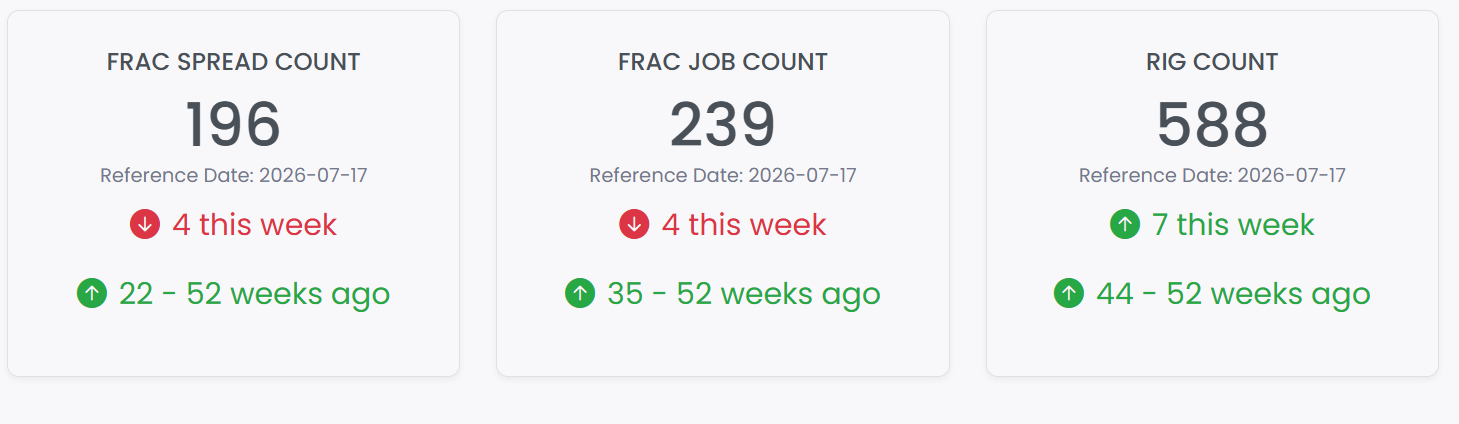
The Frac Spread Count dropped by 4 on a WoW basis to 196 and the Frac Job Count followed the same track with a drop of 4 and now standing at 239. One interesting thing about this week's data was the the rig count actually increased by 7. Rigs and frac spreads track different pipeline stages: rigs signal new drilling decisions, while frac spreads work through the existing drilled-but-uncompleted (DUC) well backlog. This week's rig gain reflects future completions demand, not immediate activity — so a same-week spread count dip isn't a slowdown signal. Baker Hughes data confirms this kind of divergence typically reflects routine scheduling variability, not a trend reversal.
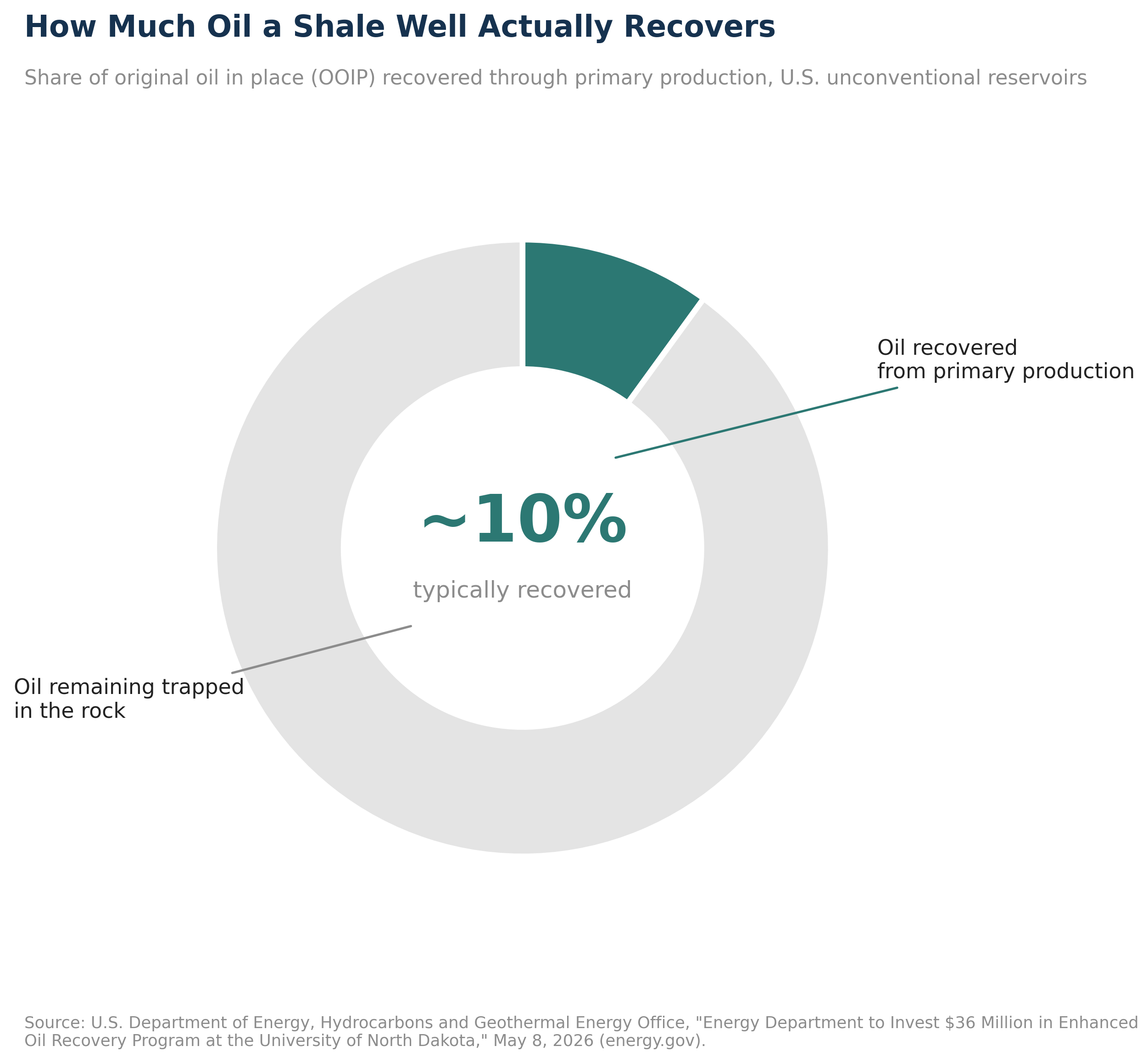
Now back to the topic. It helps to start with the number that makes all of this necessary in the first place: a typical shale well still recovers less than 10% of the oil in place. That statistic shows up in nearly every technical paper on the subject, and it's why enhanced oil recovery, EOR, has become one of the most active — and, increasingly, commercial — areas of research in unconventional.
Recently, Chevron licensed its proprietary EOR surfactant technology to ZL Chemicals, which will now commercialize it under the "Vantis" brand for operators across shale and tight-rock basins. Chevron had already applied the chemistry across roughly 600 Permian wells internally, reporting an average 10% production increase, so this deal is essentially about taking something proven and putting it in front of the entire market instead of keeping it in-house.
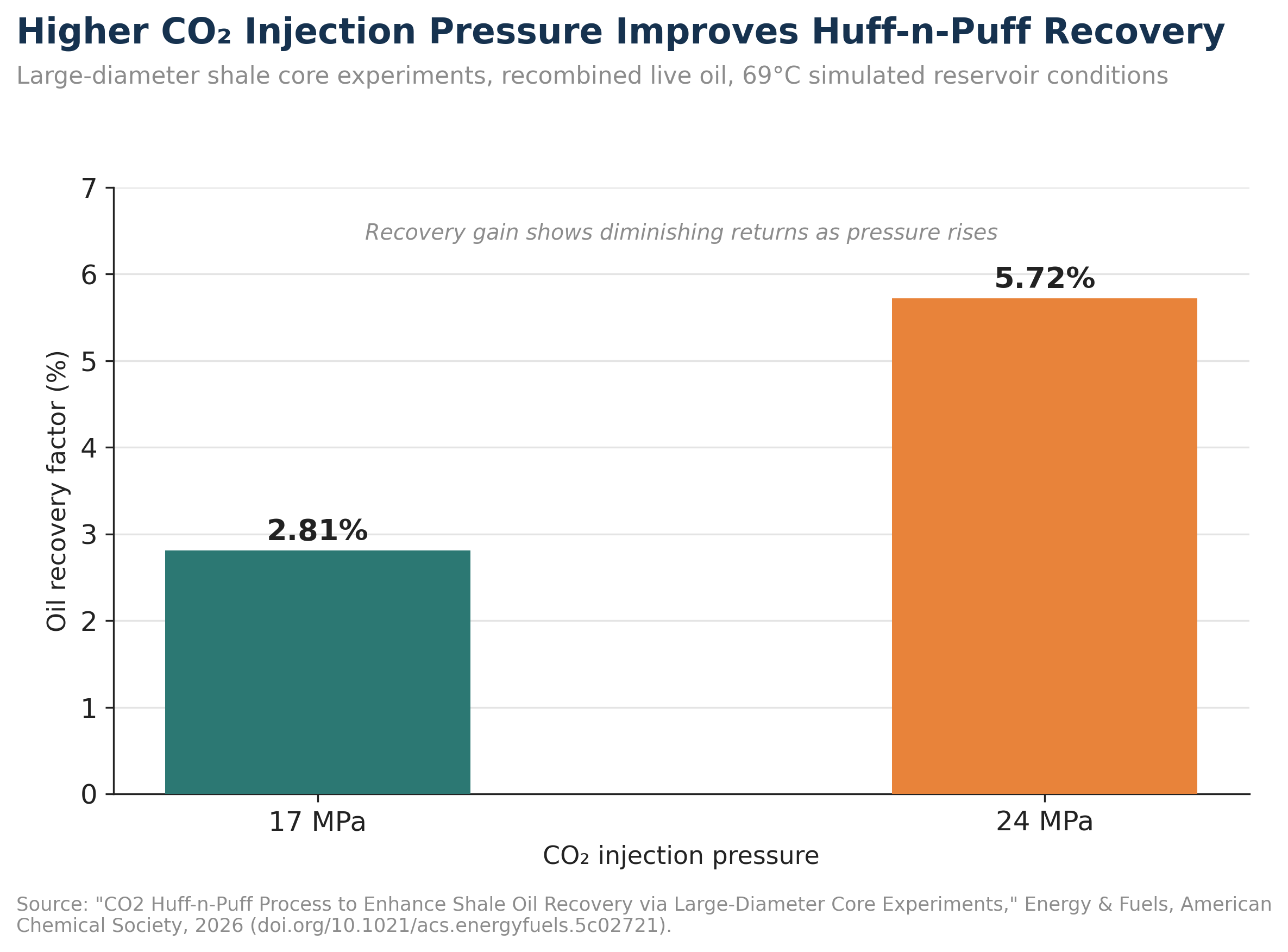
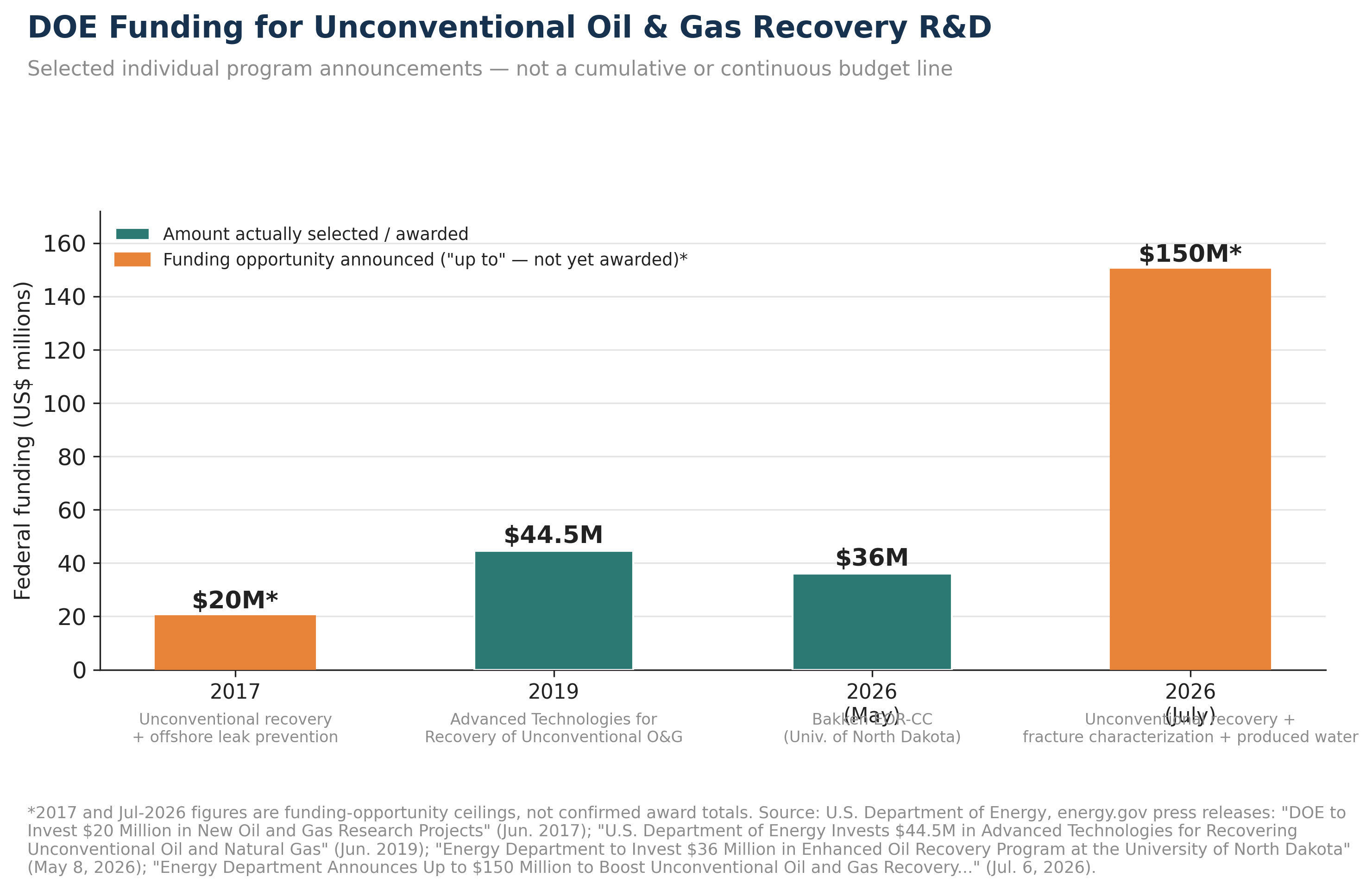
If Chevron's deal is what the commercial end of this looks like but the federal government is playing its part too, by funding the earlier-stage technologies that aren't commercial yet. Few weeks ago, DOE's Hydrocarbons and Geothermal Energy Office opened up to $150 million in new funding, aimed squarely at pushing unconventional recovery past that sub-10% ceiling, with CO2 injection named a priority pathway. That follows a $36 million award in May to the University of North Dakota, pairing captured CO2 from the state's coal fleet with AI-assisted modeling to inject it into the Bakken at commercial scale. The mechanism being tested, "huff-n-puff," pumps CO2 into the well, lets it soak into the rock and mix with trapped oil, then flows it back out. DOE's program is also studying re-injection of associated natural gas as a cheaper substitute where CO2 isn't available, which has the side benefit of cutting flaring.
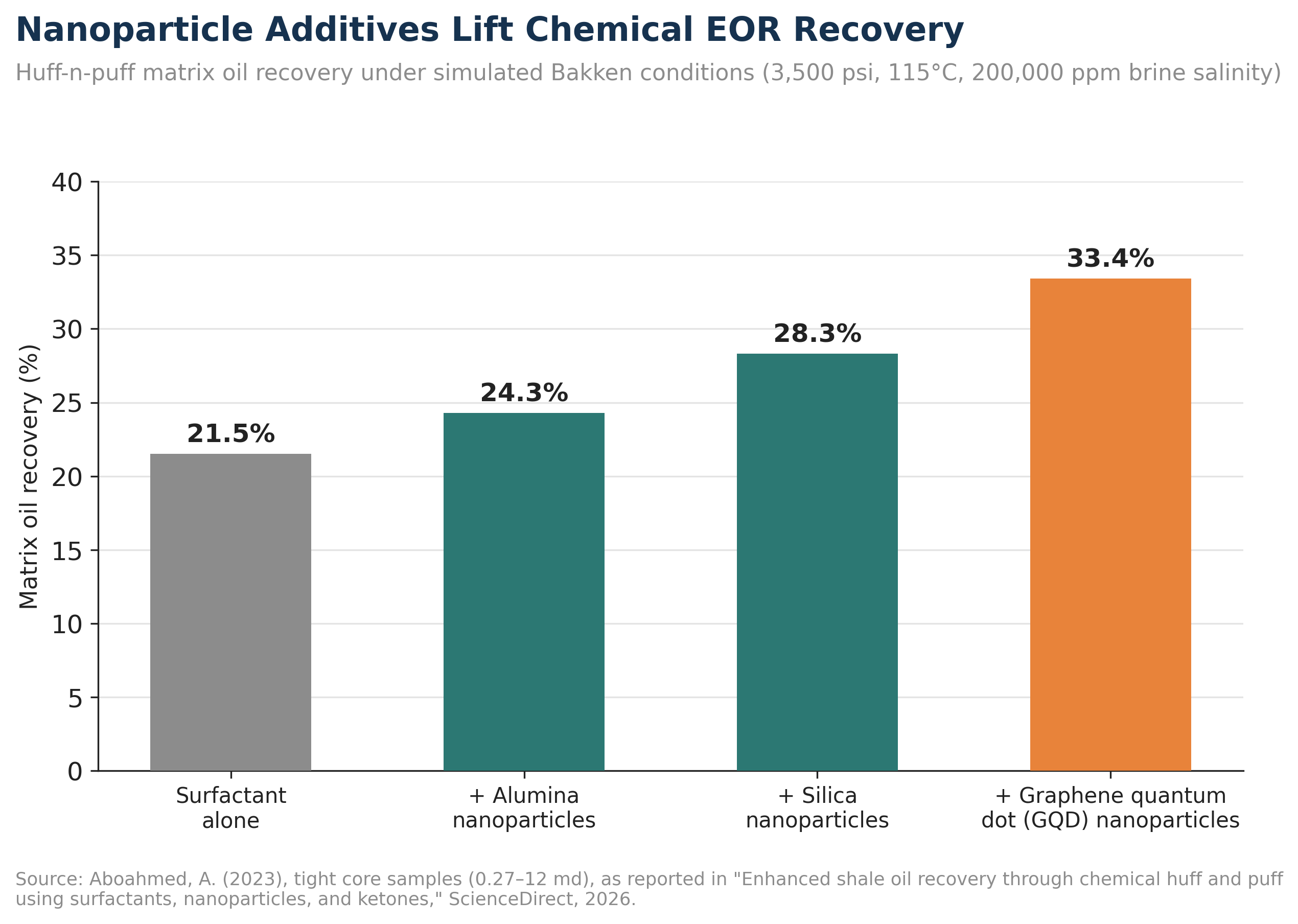
The Permian and Eagle Ford have both seen renewed use of cyclic gas injection over the past year, with operators using it specifically to stretch the life of wells heading into steep decline. It's quietly becoming a standard late-life tool rather than an experimental one, which says something about how confident operators already are in the mechanism. Alongside the gas side, the chemistry itself keeps getting pushed further too. A recent study comparing surfactants, nanoparticles, and ketones under Bakken-like pressure and salinity found that blending graphene quantum dot nanoparticles with surfactant pushed matrix oil recovery to 33%, versus 21.5% for surfactant alone — a meaningful jump for a fairly inexpensive additive. It's a lab result, so it doesn't mean wells are suddenly recovering a third of their oil.
Injecting something new into the rock is only half the story, though. The other half is getting back into rock that's already been touched once and finishing the job properly — which is where refracturing comes in. Instead of drilling new wells, operators are going back into wells completed a decade ago with narrower cluster spacing and re-stimulating rock that never got touched the first time. What's made this viable now, rather than just theoretically appealing, is the diagnostics: fiber-optic sensing and microseismic imaging let engineers see which sections of a lateral are depleted versus still holding oil, so the treatment can be targeted instead of brute-forced across the whole lateral.
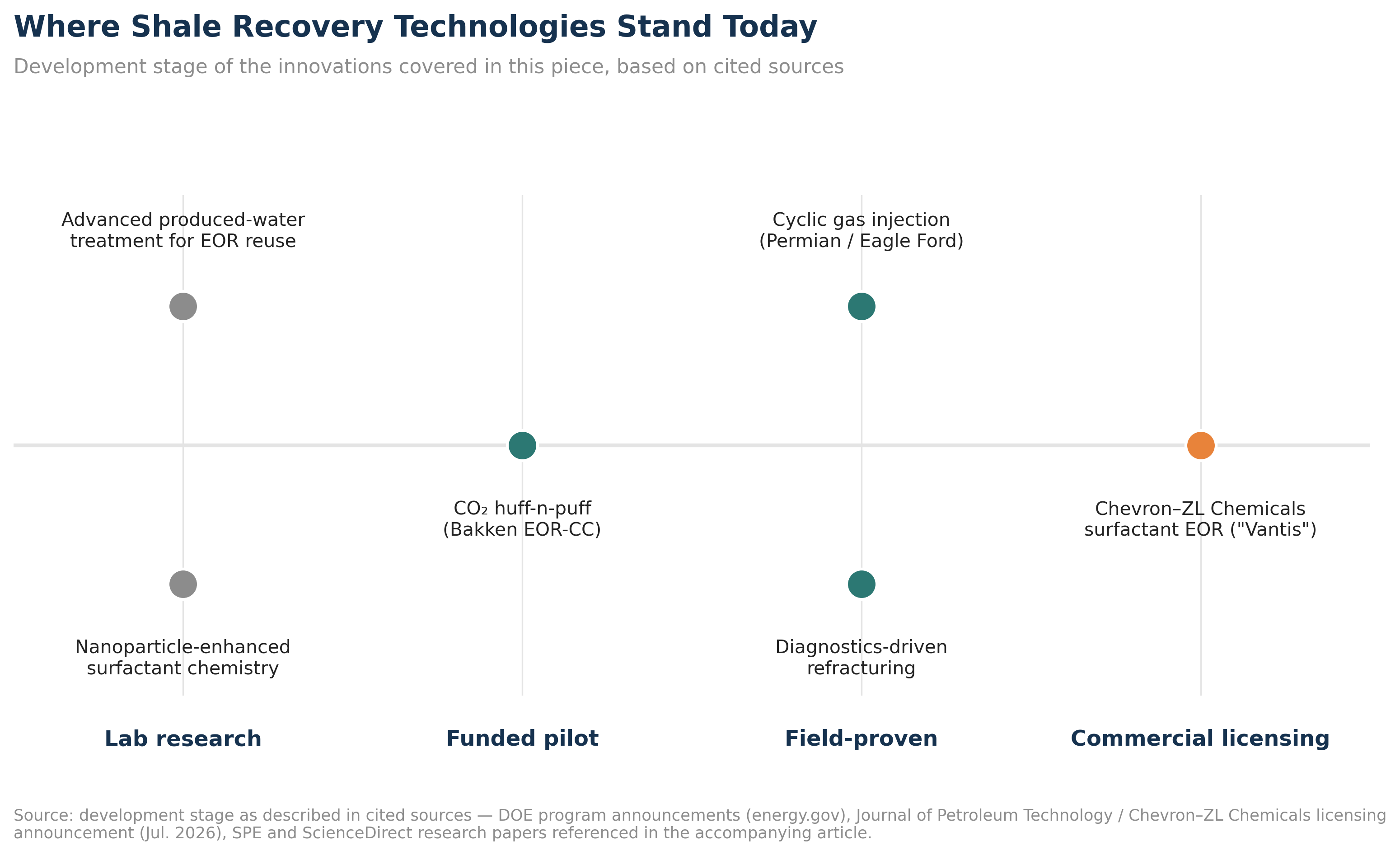
All of this — the injections, the chemistry, the refracs — produces a byproduct that's become its own research thread: water. With Permian produced-water volumes now topping 24 million barrels a day, DOE and university researchers are increasingly looking at treating and reusing that water as EOR injection fluid itself, rather than simply disposing of it. It's a case of one part of the recovery process feeding the next, instead of being treated as pure waste.
Put together, none of this is one single moonshot — it's a stack of overlapping bets at different stages of maturity. But the common thread running through all of it is the same: the next leg of shale growth looks less like new rigs on virgin Tier 1 rock, and more like crews and chemistry going back over ground that's already been drilled.
NOTE: PV's Frac Chemistry Inspector already tracks this refracturing trend directly — automatically flagging jobs as refracs based on the gap since the well's last treatment, the relative job size, and the diverter/scavenger chemistry used to reopen old fractures. It's worth checking whether refrac classifications are climbing in the basins you cover.
Tags:
Permission denied
Upgrade to Pro Today and get…
• This article — plus dozens more each month, all within our full Research Module
• Frac Hits — our National-Level Frac Spread Count and Frac Job Count, updated weekly
• Frac Operator Monitor — detailed FSC & FJC by operator
• And so much more, designed to help you track, forecast, and outperform