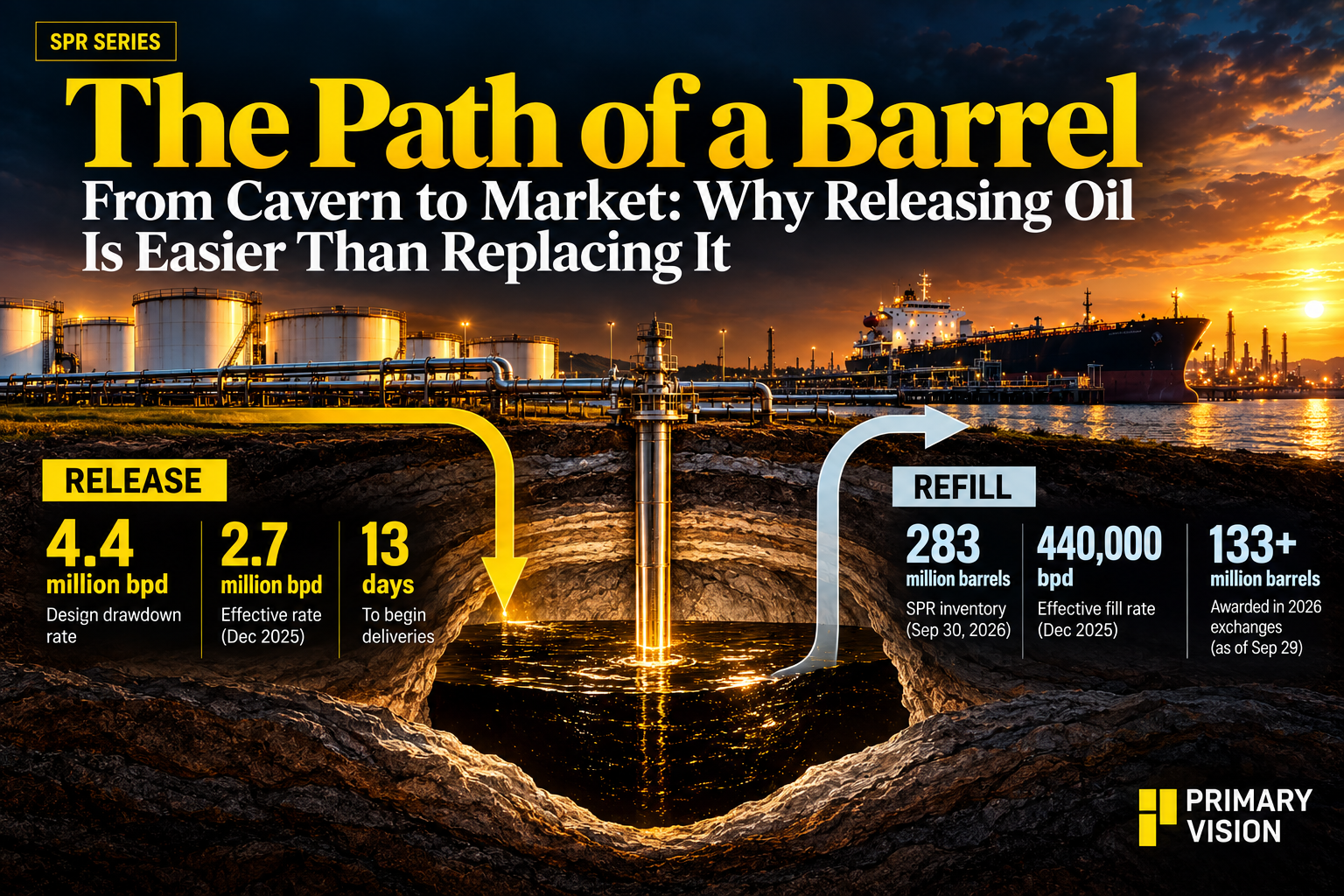
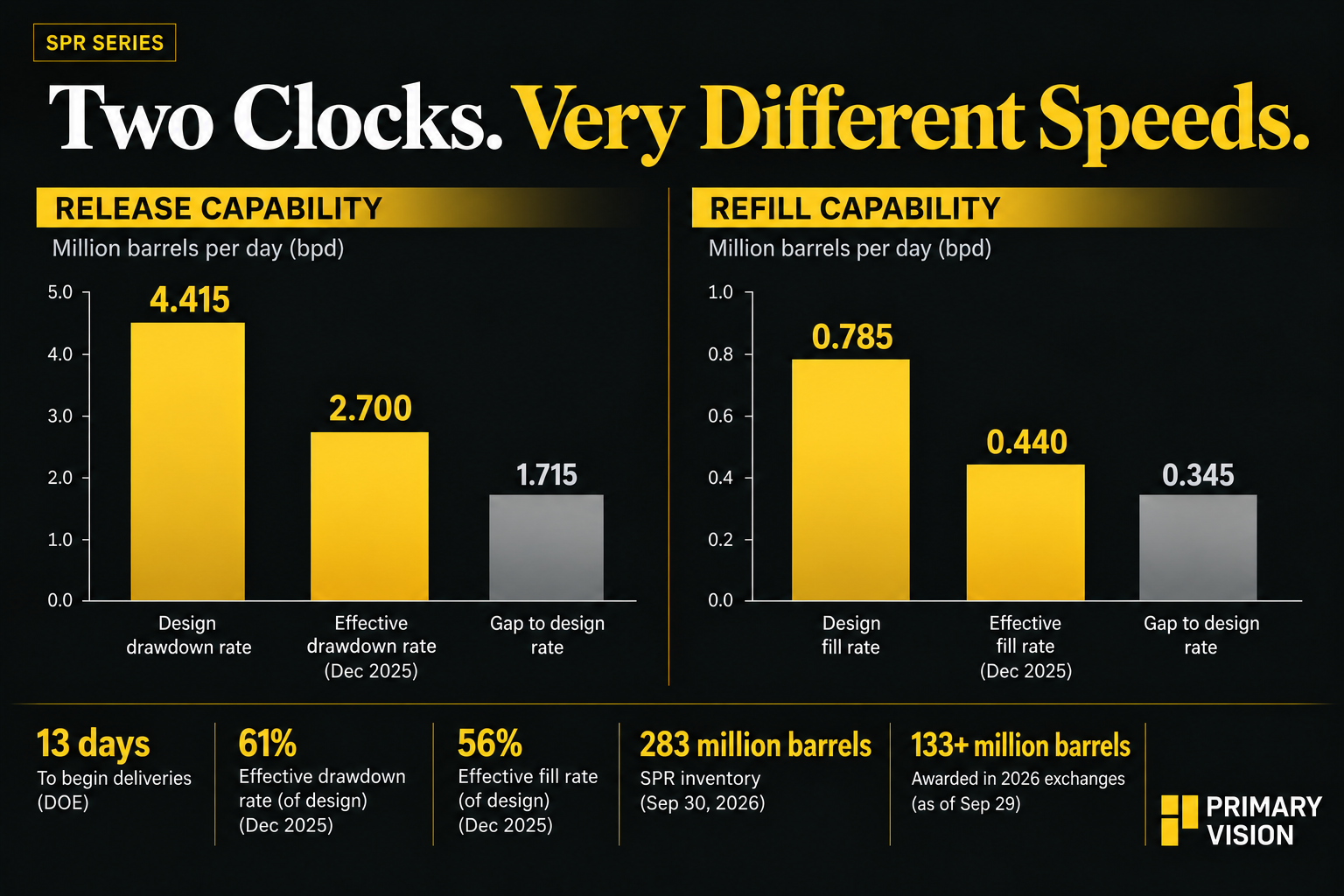
When the SPR releases oil, it is drawing on barrels already stored in underground salt caverns. DOE lists a design drawdown rate of about 4.4 million barrels per day, and deliveries can begin within 13 days of a presidential decision, subject to transport arrangements. But the design number is not the same as what the system can reliably deliver today. GAO’s May 2026 review put effective drawdown capability at 2.700 million barrels per day, based on December 2025 conditions—about 61% of the 4.415 million-barrel-per-day design rate.
That is still a substantial response capability, but it is not the headline rate. Construction outages, aging infrastructure and low cavern inventories contributed to the shortfall, while pipeline and refinery capacity can affect how quickly crude reaches the market. The important distinction is between starting a release and sustaining deliveries at the maximum design rate.
Refilling is a different clock
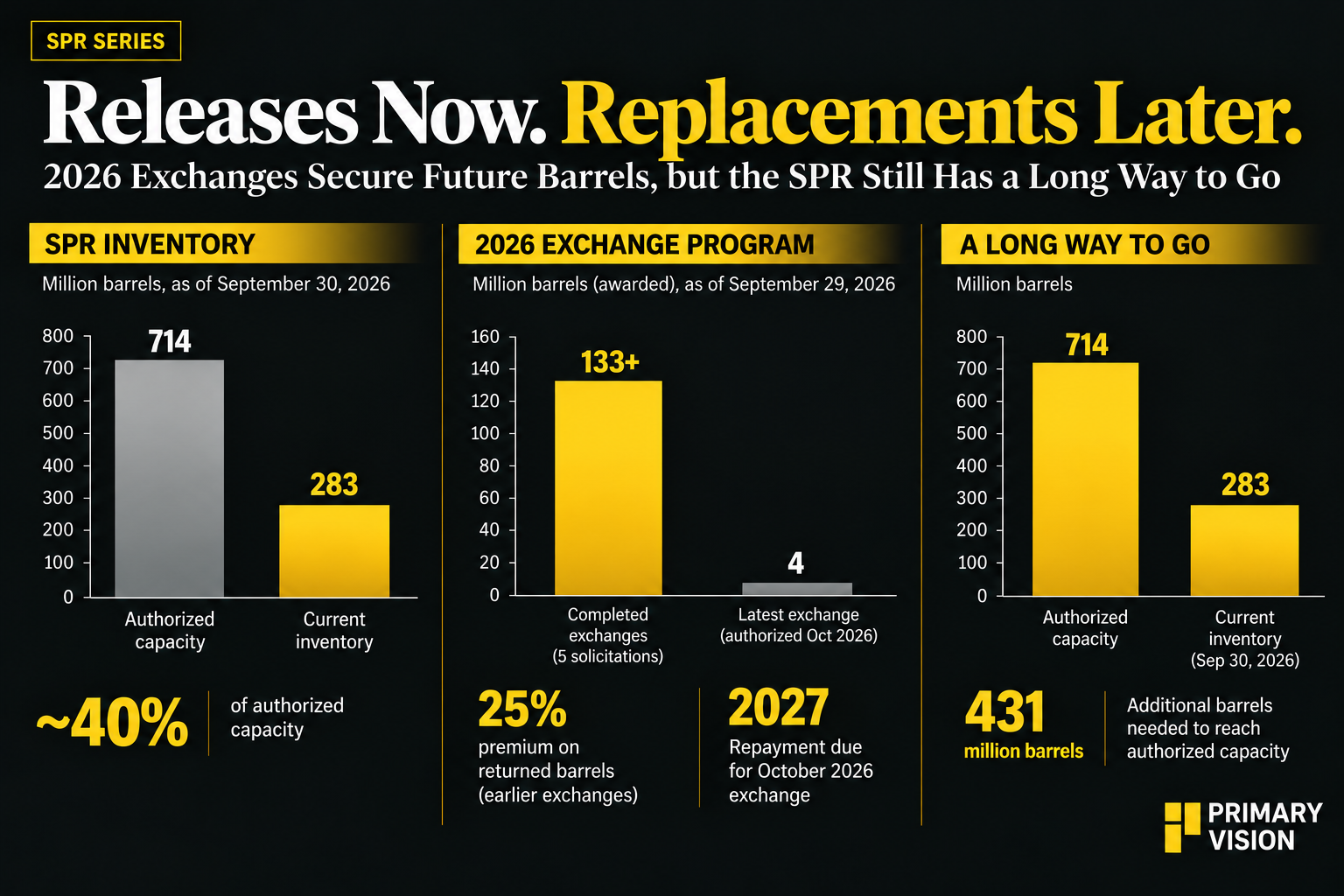
The refill side is more demanding. As of September 30, the SPR held 283 million barrels against authorized capacity of 714 million. That leaves a gap of roughly 431 million barrels to full authorized capacity. The inventory figure is current through September; the operating-rate comparison is older, based on December 2025 data.
DOE has used exchanges to get crude to market while arranging for barrels to be returned later, often with a premium. By September 29, the draft’s cited DOE update reported more than 133 million barrels awarded across four exchanges. A separate exchange of up to 4 million barrels was authorized in October, with repayment due in 2027. These figures describe different stages of the process: an award or authorization is not the same as a completed delivery, and a future repayment is not yet inventory in the caverns.
The bottleneck is not just buying crude
GAO’s latest published assessment put effective refill capability at 440,000 barrels per day, versus a design rate of 785,000 barrels per day. That is about 56% of design. Site constraints also played a role: Big Hill in Texas had no fill capability during a construction outage, while brine-disposal limits affected Bayou Choctaw in Louisiana and West Hackberry in Louisiana.
At that effective rate, the SPR cannot simply refill on a predictable calendar. Actual timing depends on how much crude DOE targets, when purchased or exchanged barrels arrive, and which facilities are available to receive them. The available evidence does not establish a current, sustainable refill rate for October 2026, so turning the design rate into a firm timeline would give a false sense of precision.
Key Takeaway
The SPR can release oil from existing inventory more readily than it can rebuild that inventory. Exchanges can help secure future barrels, but they do not remove the physical limits on receiving and storing them. The next question is where replacement barrels can come from—and which options can add supply rather than simply shift deliveries across time.
Upgrade to Pro Today and get…
• This article — plus dozens more each month, all within our full Research Module
• Frac Hits — our National-Level Frac Spread Count and Frac Job Count, updated weekly
• Frac Operator Monitor — detailed FSC & FJC by operator
• And so much more, designed to help you track, forecast, and outperform