






Articles
Explainer: Everything you need to know about Jet Fuel
By Osama on March 28, 2026 in Free Articles

What is jet fuel?
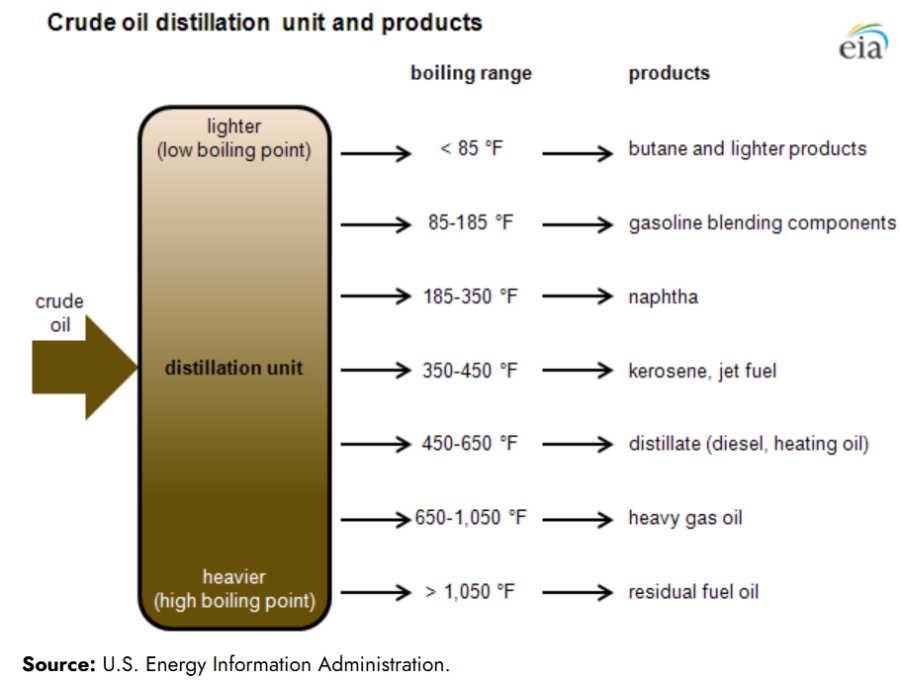
Crude oil comes out of the ground as a raw, unusable mixture. Before it becomes anything useful, it has to be processed at a refinery. The refinery heats the crude oil and at different temperature ranges, different products separate out gasoline comes off first, then jet fuel in the middle, then diesel, then heavier products like heating oil and asphalt toward the bottom.
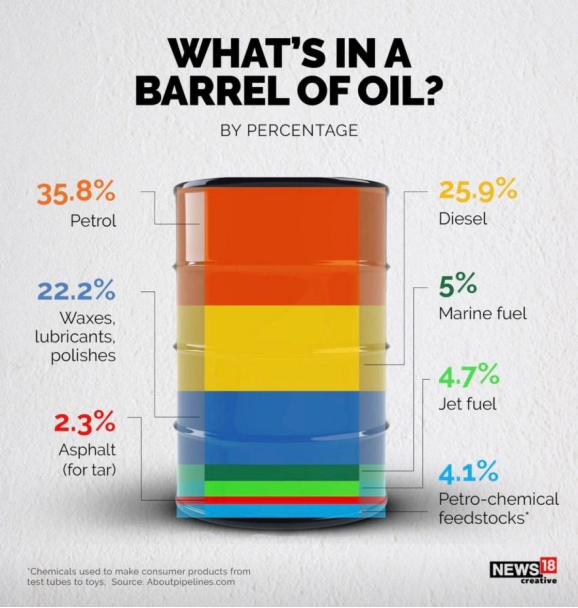
That middle cut is jet fuel. Technically classified as a "middle distillate," it has to meet IATA's strict global quality standards before it goes anywhere near an aircraft engine. The main commercial grades are Jet-A and Jet-A1, used across virtually all civilian aviation globally. Jet-B is used in colder climates, and TS-1 is the Russian equivalent. At their core, all of them are highly refined kerosene — just calibrated for different operating conditions.
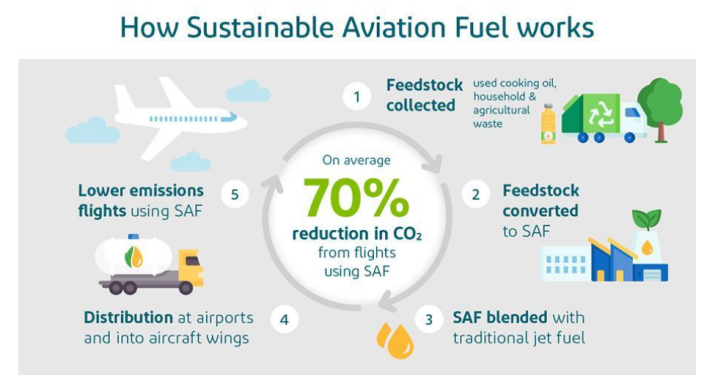
The emerging alternative is SAF (Sustainable Aviation Fuel), produced from feedstocks like agricultural waste, cooking oil, and ethanol. It can be blended with conventional jet fuel and produces lower emissions. However, it currently covers just 0.6% of global jet fuel consumption and costs two to four times more than conventional fuel. The direction is clear the scale is not there yet.
Why Does It Matter Financially?
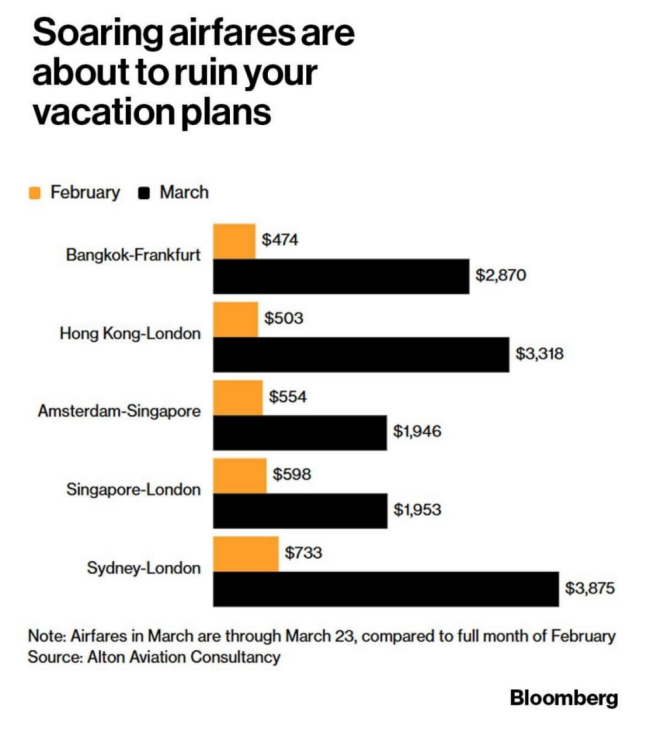
Jet fuel is the single largest operating cost in commercial aviation and aviation underpins a significant portion of global trade and tourism.
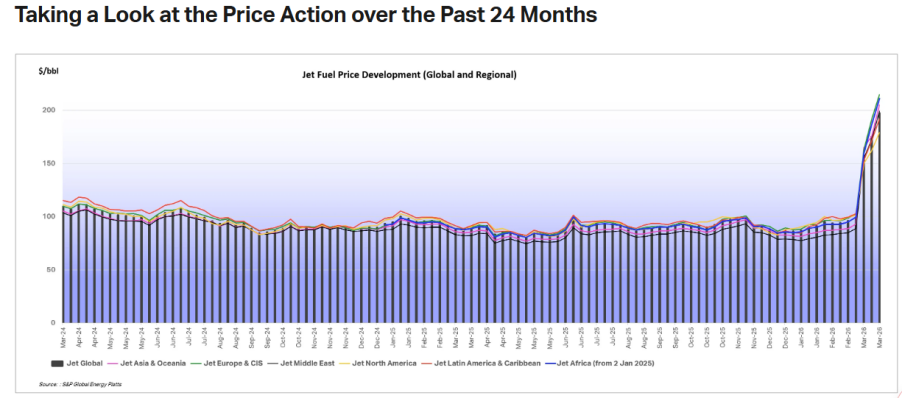
Fuel accounts for 25–30% of an airline's total operating expenses. Not labor, not aircraft, not airport fees — fuel. That means movements in crude oil prices translate directly into airline profitability, ticket pricing, and cargo rates. To illustrate the scale, one large North American carrier spent roughly over $11 billion on jet fuel in 2025 alone. The market is currently under significant pressure. Prices spiked to approximately $175–$197 per barrel in early 2026 — a jump of over 120% within weeks driven by escalating Middle East conflict disrupting shipping routes and widening refinery crack spreads globally. This follows a relatively stable 2025 when prices averaged $87–91 per barrel.
The global jet fuel market is valued at $216 billion in 2026 and is projected to reach $354 billion by 2031. Every airline ticket, air freight shipment, and international tourism dollar has jet fuel embedded in its cost structure.
Why Does the U.S. Sit at the Center?
Dominating the jet fuel market requires four things working together: crude oil production, refining capacity, distribution infrastructure, and export access. The United States has all four and at a scale that no other country fully replicates.
The U.S. Gulf Coast remains the center of the country's refining network. As shown in EIA refining capacity data, more than half of U.S. operable refining capacity is located in the Gulf Coast refining district, with Texas and Louisiana serving as the main hub and Mississippi also playing a supporting role. In jet fuel, EIA production figures show that the Gulf Coast remained the largest producing region in 2025, contributing about 1 million barrels per day. On the export side, U.S. refined product exports reached 6.3 million barrels per day in January 2026 — near record highs and up 10% year-over-year. The U.S. is not just the largest producer — it is the world's most consequential exporter of refined petroleum products.
Which Countries Produce the Key Components at the Lowest Cost?
Jet fuel competitiveness begins upstream with crude. The United States is the world's largest crude oil producer and, according to EIA jet fuel production data, U.S. refinery and blender net production of kerosene-type jet fuel averaged about 1.825 million barrels per day in 2025. The Middle East holds some of the world's lowest-cost oil and gas resources, which underpins the structural upstream advantage of major Gulf producers such as Saudi Arabia, Iraq, the UAE, and Kuwait. Russia remains a major crude exporter, but sanctions have shifted a larger share of its oil exports toward Asia. Canada is also strategically important because its crude exports to the United States amounted to 24% of U.S. refinery throughput in 2023, reinforcing its deep integration with the North American and U.S. Gulf Coast refining system. South Korea and the Netherlands demonstrate that owning crude is not a prerequisite — both import at world market prices, refine with exceptional efficiency, and export the surplus, competing purely on the value-added layer above the ground.
Who Are the Major Players
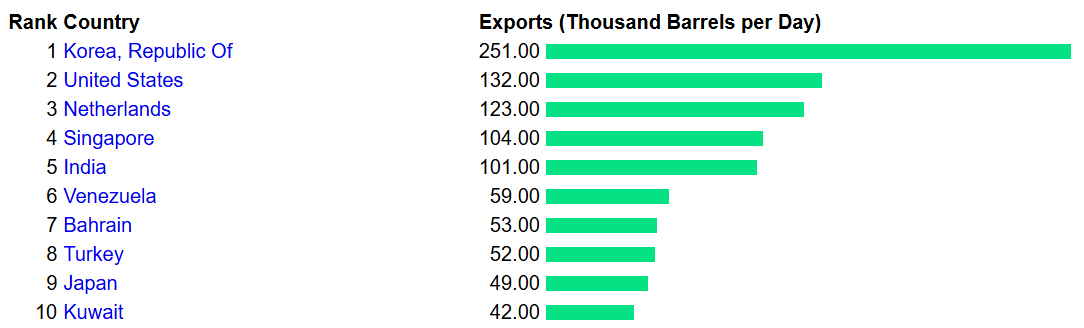
At the top of the jet-fuel value chain sit the integrated majors — Shell, bp, ExxonMobil, Chevron, and TotalEnergies — which combine refining, trading, and airport supply; Shell says it fuels aircraft at more than 900 airports in over 40 countries and refuels a plane every 12 seconds. In the United States, Valero and Marathon Petroleum are major refining players rather than crude producers, with roughly 3.2 million b/d and 3.0 million b/d of refining capacity respectively; Marathon's Galveston Bay refinery alone has 631,000 b/d of crude capacity, underscoring how central these companies are to Gulf Coast jet-fuel output. In China, Sinopec remains the key refining force, processing 250.33 million metric tons of crude in 2025, while Reuters describes China National Aviation Fuel Group as the country's dominant jet-fuel distributor. In the Middle East, Saudi Aramco stands out for its full-chain integration, noting in its 2025 reporting that its domestic refineries received crude directly from Aramco's upstream production and accounted for 63% of Aramco's net refining capacity. In South Korea, SK Energy and GS Caltex operate among the most export-oriented refineries in the world, processing imported crude with sufficient efficiency to make South Korea the largest seaborne jet fuel exporter globally.
Major exporters:
Major importers:
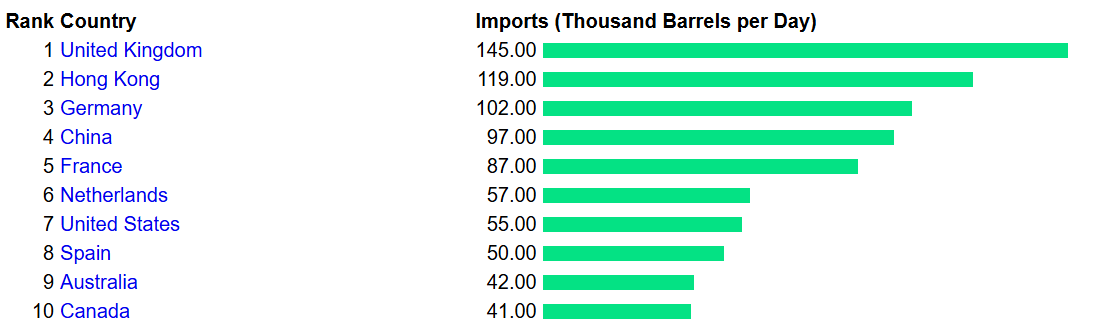
Source: IndexMundi
The jet fuel market has quietly become one of the most geopolitically charged commodities on the planet. Where it is refined, who exports it, and which nations depend on it will shape the cost of flying, the price of traded goods, and the resilience of global aviation for decades to come.
Tags: