







Articles
- BLOG / Articles / View
- Articles
In depth: How does Shale plan to increase efficiency?
By Osama on December 1, 2025 in Market Sentiment
The steady rise in efficiency across the U.S. shale sector has become a consistent theme in 2025, reflecting both technological progress and renewed focus on extracting more oil from existing wells. This trend is grounded in research and field experimentation rather than speculation. It invites a closer examination of the practical tools and material advances that are allowing operators to recover a larger share of hydrocarbons from tight formations. The improvements are incremental rather than dramatic, but together they form a clearer picture of how the next phase of shale development may unfold.
Shale and tight oil reservoirs are structurally different from conventional oil; the rock is dense, with very low permeability and porosity, often containing oil in nanopores. Traditional extraction methods left large portions of the oil unrecovered, because even after fracturing the rock, much of the hydrocarbon remained trapped in tiny pores or poorly connected zones. So the main task is to increase this percentage of oil recovery. In this regard, one area of progress lies in more advanced proppants — the grains (often sand, ceramic beads or other solids) that are pumped in during fracturing to hold cracks open. Conventional proppants tended to be heavy or crush under pressure, risking closure of fractures and limiting long-term flow. New “lightweight proppants,” sometimes derived from unconventional materials such as petroleum coke by-products, reduce density while preserving strength. This helps maintain fracture conductivity after pressure is released, improving the chance that hydrocarbons can migrate through fractures toward the wellbore.

Another key advance involves the fluids used in fracturing. Industry has long used “slickwater” — mostly water with small proportions of additives — to carry proppants into fractures. New research explores more advanced fluids, often with chemical additives (surfactants) designed to reduce the interfacial tension between oil and surrounding materials, alter wettability, and improve the ease with which oil can flow out of the rock. Laboratory experiments of surfactant injection (or flooding) in tight/shale reservoirs demonstrate that these chemicals can appreciably increase oil displacement from pores that otherwise trap oil due to high capillary forces.
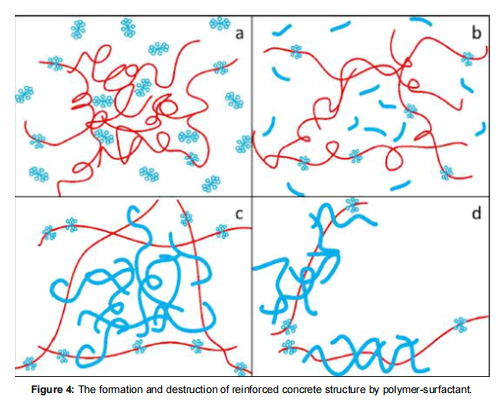
Source: Chai et al (2019), Oil & Gas Research
Beyond proppants and fluids, newer enhanced-oil-recovery (EOR) techniques are being adapted for shale. One method — cyclic gas injection (also known as “huff-n-puff”) — involves injecting gas (e.g. CO₂ or natural gas) under pressure into a well, letting it soak, then producing the well to draw out more oil. This can help because gas dissolves into the oil, reduces viscosity, swells the oil, and raises formation pressure — all of which can mobilize oil in nanopores or tight matrix areas that fractures alone can’t drain. Recent reviews note that gas–oil interactions, diffusion processes, and fracture-matrix connectivity become critical; in favorable reservoirs, this method has led to substantial incremental recovery.
NOTE: Subscribers can have access to our Frac Chemistry Inspector in the FRACTIVITY APPS.
.png)
Experimental approaches are also pushing nascent technologies such as nanomaterial-assisted fracturing and chemical EOR. Laboratory studies show that injecting nanoparticles (e.g. silica nanofluids) can significantly alter rock wettability and interfacial properties, which in turn improves microscopic flow and displacement in tight rock analogues — albeit mostly in controlled settings so far. Researchers argue that combining such chemical or nano-scale methods with fracture stimulation and gas injection could gradually bring more of the oil stored deep in matrix and nanopores to the surface.

Source: Sircar et al (2022), Petroleum Research, Science Direct
Nonetheless, challenges remain. Shale reservoirs are highly heterogeneous; very low permeability and complex pore/fracture networks mean that not all EOR methods perform equally well everywhere. Field-scale application of many newer methods is still limited; while cyclic gas injection has seen pilot use, chemical/nanomaterial flooding often remains at the laboratory or pilot stage. Economic viability is another constraint — the cost of advanced proppants, specialized fluids or nano-agents, and injection operations must be justified by sufficiently increased recovery.
In sum, the “4.0” wave reflects incremental but meaningful technical progress: lighter, stronger proppants; surfactants and improved fracturing fluids; gas injection schemes; and experimental chemical or nanotechnology-aided EOR. These techniques together may enable operators to recover a larger fraction of oil from shale formations — including oil previously considered uneconomical or inaccessible. If carefully applied to appropriate reservoirs, these advances could raise the recovery efficiency of shale oil production, altering the supply dynamics of oil globally.
I will dig deeper into this topic using our very own data on Consumables and share the recent patterns.
Tags:
Permission denied
Upgrade to Pro Today and get…
• This article — plus dozens more each month, all within our full Research Module
• Frac Hits — our National-Level Frac Spread Count and Frac Job Count, updated weekly
• Frac Operator Monitor — detailed FSC & FJC by operator
• And so much more, designed to help you track, forecast, and outperform