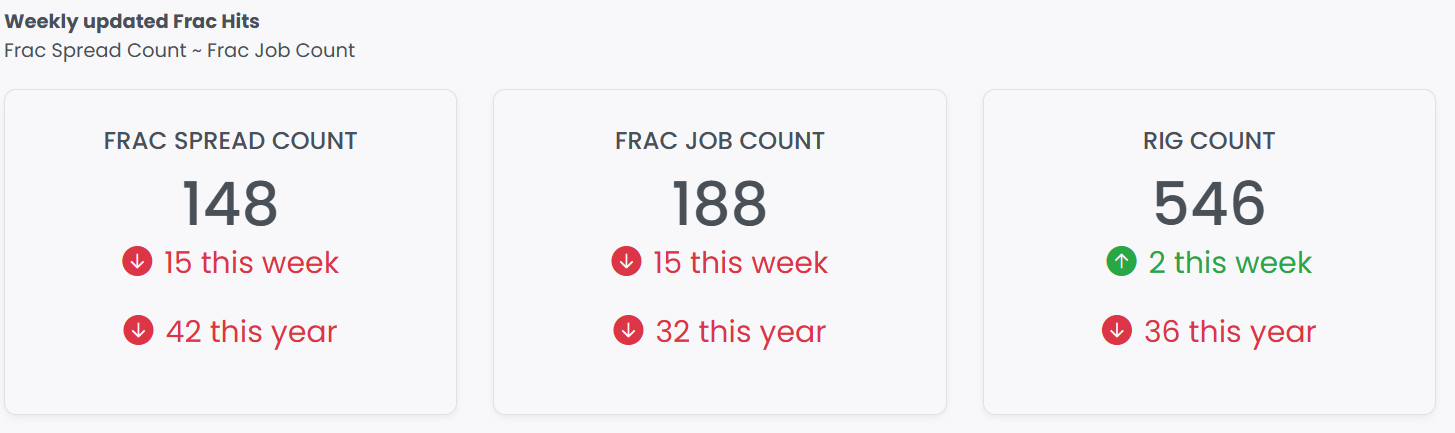
The latest weekly update from Primary Vision shows a sharp decline in U.S. frac activity, with both the Frac Spread Count and the Frac Job Count posting significant week-over-week losses. As of the most recent release, the Frac Spread Count stands at 148, down 15 on the week, while the Frac Job Count declined to 188, also down 15. These changes are larger than typical weekly movements and require contextual interpretation to avoid overstating their significance.
The primary driver of the decline is a broad winter weather event that intensified across much of the United States in late January 2026. A sustained Arctic air intrusion brought prolonged sub-freezing temperatures, widespread ice and snow, and repeated hard freezes across the Southern Plains, Gulf Coast-adjacent basins, and parts of the Midcontinent. Unlike short-lived cold snaps, this system persisted long enough to disrupt power availability, slow logistics, restrict crew mobility, and increase freeze-off risk across producing regions.
Operational impacts from this weather pattern have been uneven but broadly distributed. Southern and Midcontinent basins, which are less structurally insulated against extended cold, experienced the most pronounced reductions in frac starts and active spreads. The Permian, Haynesville, and Eagle Ford showed elevated sensitivity as road conditions, water handling constraints, and equipment reliability issues compounded over several days. Northern and cold-adapted basins remained active but saw efficiency losses rather than full stoppages, as pumping schedules and completion timing were disrupted by weather-related delays. These dynamics are visible in the reported data but should be understood as transient operational effects. Weather-driven dislocations operate primarily through duration, not through changes in operator intent or underlying capital allocation. When cold conditions persist for a full reporting cycle or longer, near-term frac counts can fall sharply even as backlog work accumulates. The resulting data reflects interruption rather than cancellation of activity.
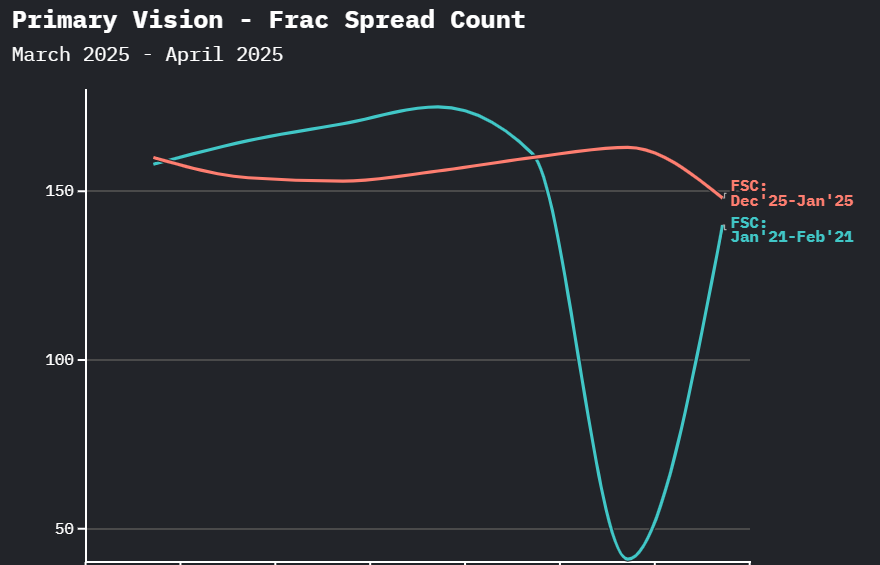
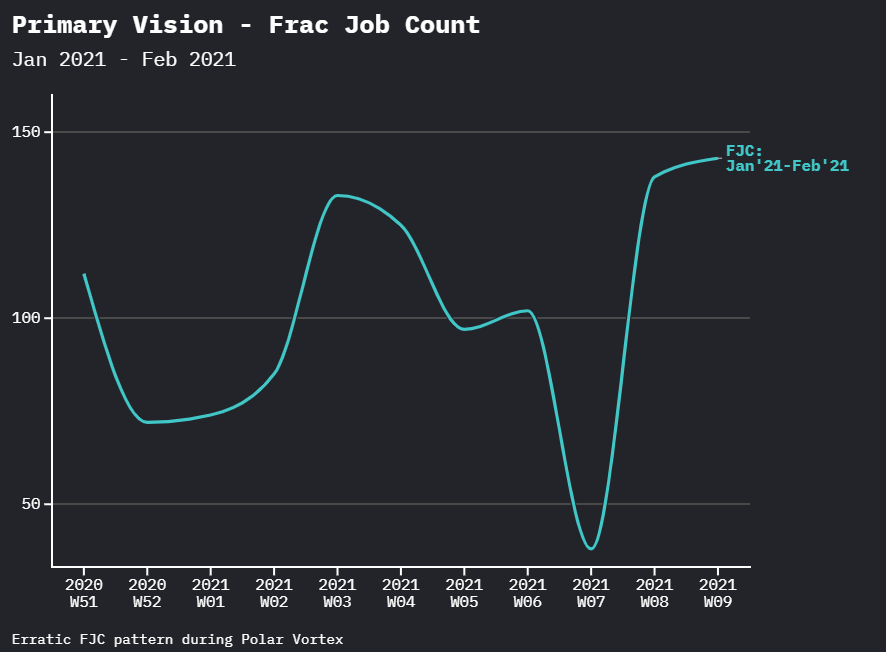
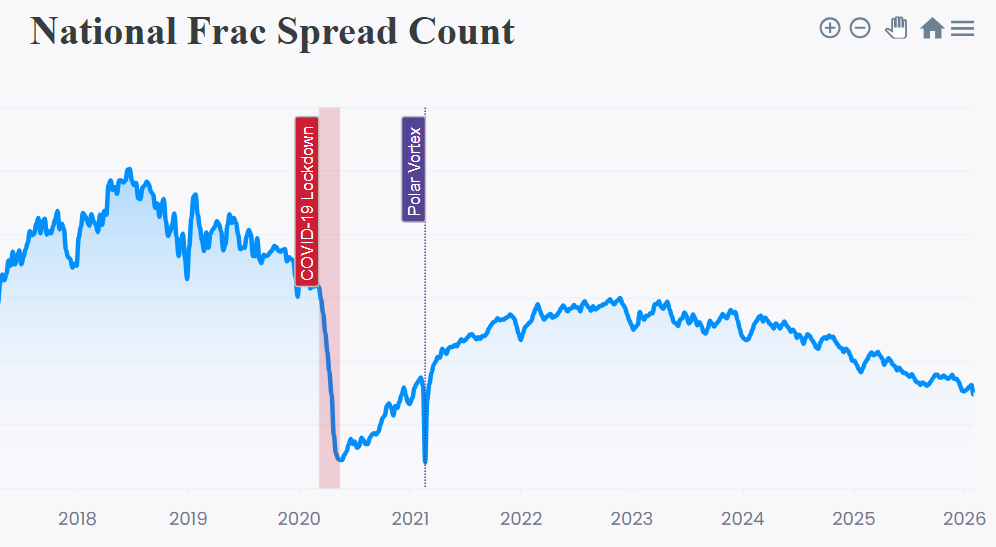
Historical precedent supports this interpretation. During the February 2021 polar vortex, the Frac Spread Count declined from 161 on February 12 to 41 by February 19 as extreme cold and power outages halted operations across multiple basins. That episode represented one of the most severe short-term dislocations in the historical record. Importantly, activity rebounded quickly once conditions normalized, with the Frac Spread Count rising to roughly 165 by March 5, 2021, as deferred completions resumed.
The comparison highlights the importance of distinguishing between structural shifts and episodic disruptions. Events requiring manual exception handling in frac activity data are rare and typically associated with system-wide shocks such as COVID-19, extreme weather clusters, or major infrastructure failures. The January 2026 winter event qualifies due to its multi-basin scope and persistence and is expected to influence at least two reporting updates.
We will continue to report activity transparently while providing context around real-world operating conditions. In this environment, near-term declines should be interpreted cautiously. Weather-driven weakness compresses activity into a narrow window rather than signaling a sustained slowdown. As temperatures normalize and logistical constraints ease, frac spreads and job counts are likely to reflect a corresponding recovery, offering clearer insight into the underlying trajectory of U.S. completion activity.
Upgrade to Pro Today and get…
• This article — plus dozens more each month, all within our full Research Module
• Frac Hits — our National-Level Frac Spread Count and Frac Job Count, updated weekly
• Frac Operator Monitor — detailed FSC & FJC by operator
• And so much more, designed to help you track, forecast, and outperform