






Articles
- BLOG / Articles / View
- Articles
Monday Macro View: U.S. Frac'ing Activity Jumps Significantly
By Osama on February 16, 2026 in Market Sentiment

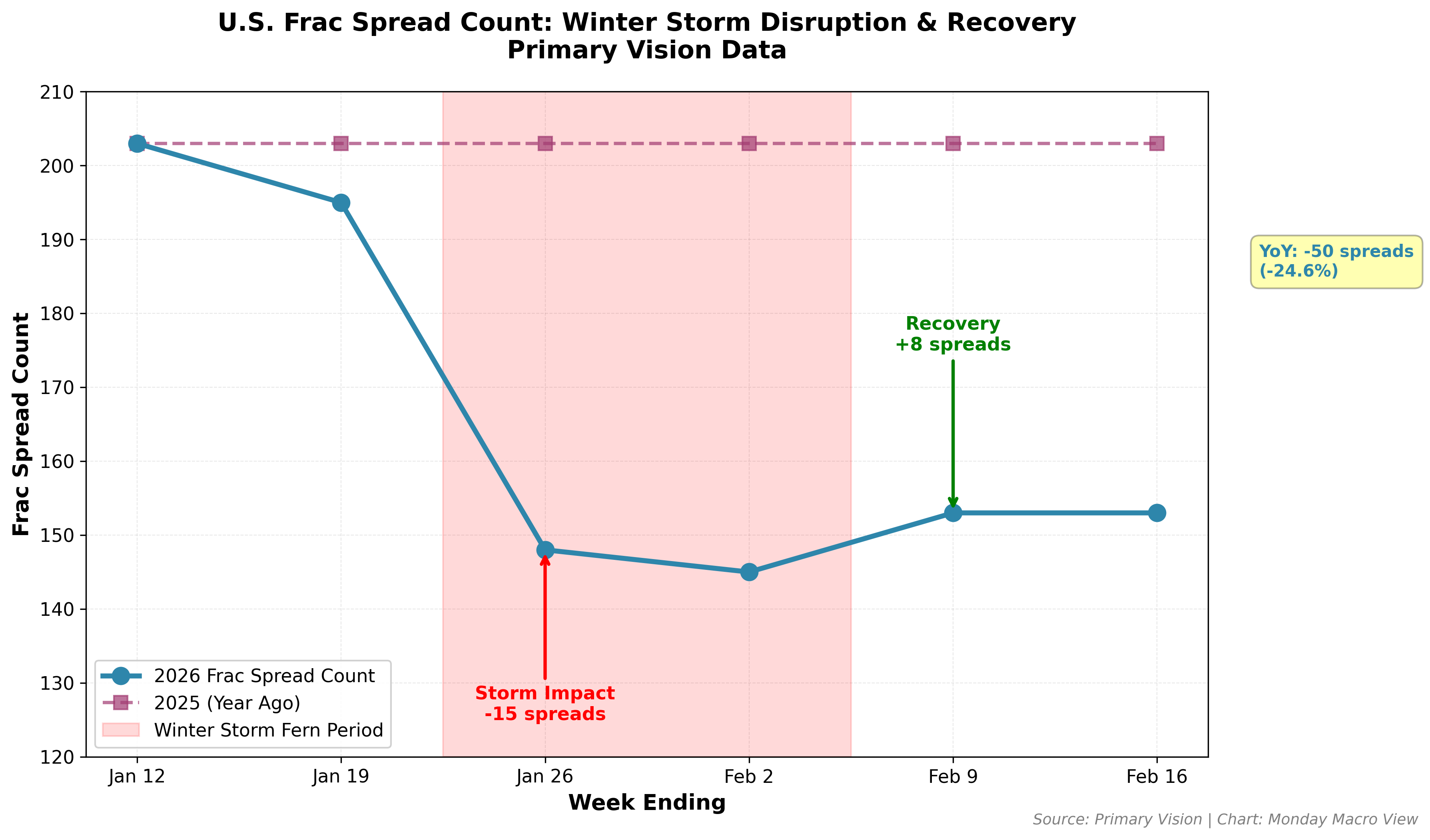
Primary Vision's latest data shows U.S. completions activity stabilizing after a weather-driven disruption in late January. The Frac Spread Count stands at 153, up eight on the week, while the Frac Job Count reached 194, climbing 13. These sequential gains represent a 5.5 percent increase in spreads and a 7.2 percent increase in frac jobs, confirming that operators have brought crews back online following Winter Storm Fern's temporary halt to operations.
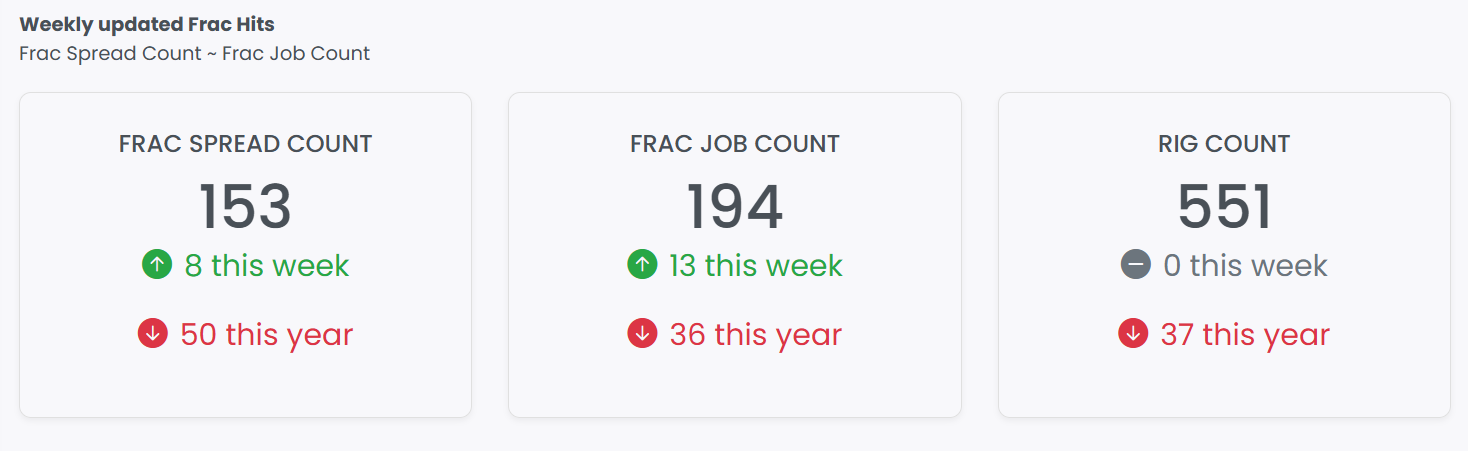
As I noted a few weeks ago when the Frac Spread Count plunged 15 spreads to 148 amid the storm, these week-to-week swings reflect operational logistics rather than fundamental shifts in capital allocation. During the February 2021 polar vortex, the FSC collapsed 75 percent from 161 to 41 before rebounding to 165 within two weeks—a pattern demonstrating that severe weather creates sharp but transient dislocations. The current recovery, though less dramatic given Fern's more limited geographic impact, follows the same operational playbook of deferred completions resuming as conditions normalize. The underlying trend remains one of consistent activity consistent with a stable domestic production environment. At 551 rigs, Baker Hughes' latest count sits 37 rigs below year-ago levels.
The question of where future production growth originates continues to evolve. In late January, I examined American producers deploying horizontal drilling expertise internationally, characterizing these efforts as strategic probes structured to limit upfront exposure. The pace of commitment has since accelerated. Recently, Chevron secured an exploration license for the onshore Sirte 4 basin in Libya—Contract Area 106—marking its formal return after exiting the country in 2010. Libya's National Oil Corporation awarded licenses to five companies in its first licensing round since 2007, with Eni, Repsol, QatarEnergy and Nigeria's Aiteo also winning blocks. The Sirte Basin accounts for roughly 95 percent of Libya's recoverable oil reserves and benefits from established infrastructure. Libya is simultaneously planning to launch shale gas exploration operations in the second half of 2026, aiming to increase natural gas production to one billion cubic feet per day within five years.
Argentina's Vaca Muerta gas output crossed 7 billion cubic feet per day in early 2026, a milestone analysts expected in late 2027, driven by improved midstream capacity and high-intensity completion designs. The velocity of capital deployment abroad suggests operators view domestic inventory constraints as significant - a shift with implications for global completion intensity if these international commitments translate into sustained drilling programs.
In other news, China continues to increase oil inventories raising concerns and questions regarding the actual reason behind this accumulation. Are they anticipating further tension in Middle East? Closure of Hormuz? Or the country itself planning something for Taiwan? Rumors are rife. The country amassed 400 million barrels or 1.1 mbpd of oil in 2025.

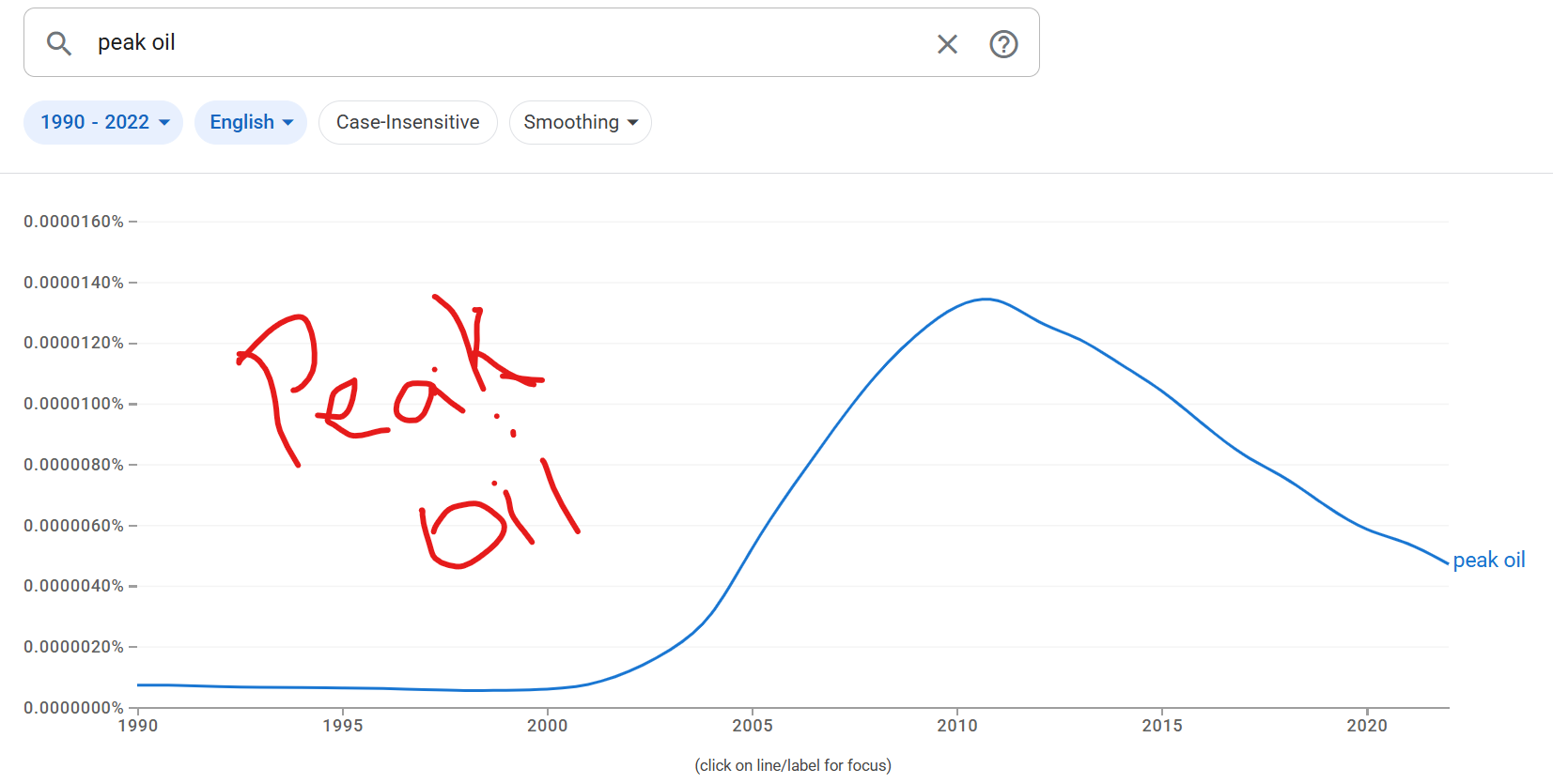
I would like to end the article by circling back to the topic of U.S. shale and whether the geology at home will exhaust soon and that is why we are seeing the interests abroad. This is a very important question one that requires a comprehensive answer. Working on that as well. But think of the times when similar narrative became viral. Before the shale revolution, many analysts believed U.S. oil production was in irreversible decline. Through the late 1990s and early 2000s, “peak oil” advocates argued that the United States had permanently peaked in 1970 and would never meaningfully grow again. Organizations such as ASPO (around 2000), prominent analysts like Matthew Simmons in 2005, and numerous peak-oil conferences in 2006–07 reinforced the view that North American output was structurally declining. Yet beginning around 2008, horizontal drilling and hydraulic fracturing unlocked massive shale resources in the Bakken, Eagle Ford, and Permian—driving U.S. production sharply higher and overturning those earlier peak-decline claims.
Tags:
Permission denied
Upgrade to Pro Today and get…
• This article — plus dozens more each month, all within our full Research Module
• Frac Hits — our National-Level Frac Spread Count and Frac Job Count, updated weekly
• Frac Operator Monitor — detailed FSC & FJC by operator
• And so much more, designed to help you track, forecast, and outperform